
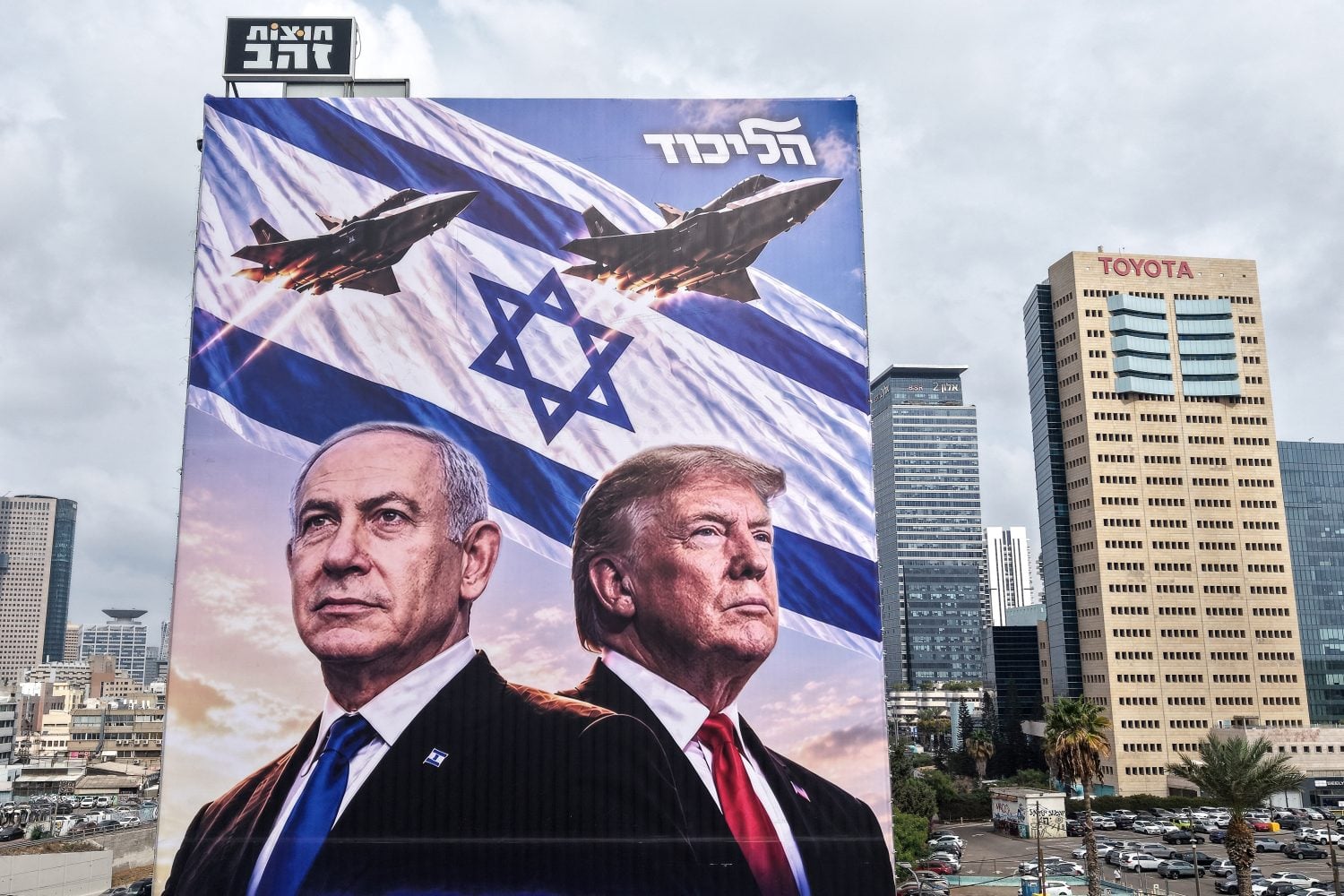
While Israelis were still coming to terms with the uncertain outcome of their own Oct. 27 elections, U.S. President Donald Trump chose the day of the U.S. midterms to further discombobulate the Israeli public. On Fox News, he announced not only that he was ending U.S. military assistance to Israel by the end of the year but also that Israeli Prime Minister Benjamin Netanyahu had agreed that the assistance should end. In an interview with Fox & Friends, Trump remarked: “As far as paying Israel, Bibi Netanyahu and I … made a deal months ago that we’re stopping, and they’re fine with it.” It is true that Netanyahu told the Economist in January that he hoped to “taper off” Israeli dependence on U.S. military aid over the next decade. But he has given no indication of any agreement for military assistance to terminate as soon as this year. Feeling the pressure, Netanyahu’s office is now spinning the end of U.S. military assistance as a “transition out from aid towards partnership and mutual investment." While Israelis were still coming to terms with the uncertain outcome of their own Oct. 27 elections, U.S. President Donald Trump chose the day of the U.S. midterms to further discombobulate the Israeli public. On Fox News, he announced not only that he was ending U.S. military assistance to Israel by the end of the year but also that Israeli Prime Minister Benjamin Netanyahu had agreed that the assistance should end. In an interview with Fox & Friends, Trump remarked: “As far as paying Israel, Bibi Netanyahu and I … made a deal months ago that we’re stopping, and they’re fine with it.” It is true that Netanyahu told the Economist in January that he hoped to “taper off” Israeli dependence on U.S. military aid over the next decade. But he has given no indication of any agreement for military assistance to terminate as soon as this year. Feeling the pressure, Netanyahu’s office is now spinning the end of U.S. military assistance as a “transition out from aid towards partnership and mutual investment.” The backlash in Israel was immediate. Trump’s announcement raises critical questions regarding what political price was negotiated—and specifically, whether any agreement to end U.S. aid served as the quid pro quo for Trump’s endorsement of Netanyahu in Israel’s election. Former Prime Minister Ehud Barak accused Netanyahu of concocting “a stinking deal” that traded U.S. military assistance for a presidential endorsement, concluding that Netanyahu had “exceeded his authority” and was “utterly unfit to lead a country.” Opposition leader Gadi Eisenkot, who may yet replace Netanyahu as prime minister, was less conspiratorial but equally scathing. “Israel’s special relationship with the United States is a central component of its national security,” he wrote on X. “The fact that the security establishment is learning, together with Israeli citizens, about a change in the strategic relationship through the media shows just how much Benjamin Netanyahu’s conduct is a real danger.” That Trump chose to make this announcement on Election Day speaks volumes about the collapse of Israel’s standing across the U.S. political spectrum. He evidently believed that it would resonate with voters amid rising public anger over inflation and the cost of living. The question of why a high-tech powerhouse requires billions in taxpayer-funded military aid carries growing political weight, even if much of the aid is reinvested in the U.S. defense industry. The real elephant in the room, however, is the ongoing war with Iran and anger over U.S. support for Israel. Prominent Republicans, including Vice President J.D. Vance, have openly identified the conflict as the principal catalyst for the party’s electoral thrashing. Writing on X in the immediate aftermath of the vote, Vance broke ranks with traditional White House messaging, declaring bluntly: “The reason we lost is the war. … [E]veryone knows why we lost. And any honest conversation about where we go from here must start there.” He also claimed that voters wanted to see a change in the relationship with Israel. Vance highlighted internal polling showing that 2024 Trump voters who defected to the Democrats in the midterms specifically cited an end to the war, economic relief from soaring fuel prices, and a fundamental shift in Washington’s relationship with Israel as their primary demands. In an interview with CBS’s 60 Minutes on Sunday, Trump did not disagree with Vance’s observation that the Iran war caused the Republican defeat in the midterms, adding that “there is a great dislike, incredibly, for Israel.” While it was Trump who launched a war against Iran in February, Netanyahu never concealed his desire for a joint campaign. Even following Operation Epic Fury, he has consistently tried to persuade Trump to renew the war, treating the Iranian threat not merely as an existential regional issue but as a political prop to distract the Israeli electorate from his leadership failures in the lead-up to and aftermath of Oct. 7, 2023. Ahead of the midterms, the New York Times published a report claiming that Israel had shared intelligence with the United States and Gulf countries about possible Iranian plans to use chemical weapons against them. U.S. officials met the intelligence with skepticism, believing it was part of a coordinated effort by Netanyahu to push Trump toward renewed strikes. Netanyahu’s rhetoric on Iran is riddled with glaring contradictions. Having publicly trumpeted historic success in dismantling Iran’s nuclear capabilities in June 2025, he has reversed course to manufacture an immediate, existential urge for military confrontation. On Oct. 25, Netanyahu posted an AI-generated image depicting a nuclear blast over Tel Aviv, warning voters that rejecting his leadership invited a “second Holocaust.” Political opponents accused him of manufacturing a crisis with Iran as an attempt to delay the election. This triggered an unprecedented rift with Israel Defense Forces Chief of Staff Eyal Zamir, who resisted political orders that risked sparking an immediate, unwarranted regional conflagration. Yair Golan of the Democrats declared that Netanyahu lacks “the necessary public trust” and “moral legitimacy or even basic capability” to lead such a campaign, while former Israeli Ambassador to Germany Jeremy Issacharoff noted that Netanyahu’s political machinations over Iran “severely damage Israel’s credibility abroad.” During the opening session of the new Knesset on Tuesday, Netanyahu insisted that while his government had removed the immediate existential threat, Iran was renewing its nuclear program and had not given up on its intent to destroy Israel. He declared that the only way to remove this existential threat was by toppling the regime, trumpeting for good measure that his government had “changed the face of the Middle East.” Netanyahu’s endgame is clearly at odds with the objectives of the Trump administration, which views military force primarily as leverage to reopen the Strait of Hormuz and force Tehran to climb down over its nuclear program. In his incendiary speech, Netanyahu also asserted that only a national unity government—presumably under his leadership—would enable Israel to meet the upcoming challenges, while accusing Israel’s Arab lawmakers of seeking the nation’s destruction. Eisenkot countered immediately, stating that Netanyahu’s “hate-filled” speech demonstrated that he was unfit for office. He has clearly failed to internalize the fact that, even among his erstwhile allies in the Republican party, his political standing is becoming increasingly toxic. Netanyahu retains power for now as a caretaker prime minister while Eisenkot seeks to form a new government. Renewed hostilities with Iran in coordination with the United States would have been highly convenient for Netanyahu, as this could have delayed the opening of the newly elected parliament and formation of a new government. His overarching goal remains to block an opposition coalition that includes or is supported by Arab parties, who emerged as pivotal kingmakers in this election. Deploying the Trump playbook to contest the election results, Netanyahu’s loyalist Shin Bet security chief, David Zini, has targeted Arab opposition lawmakers with unfounded investigations, raising grave constitutional alarm. Even though Eisenkot has received the mandate to form a government, his narrow victory and the opposition’s lingering hesitation toward joining forces with the Arab parties make coalition-building highly uncertain. While right-wing factions in Israel view Netanyahu’s relationship with Trump and a renewed U.S.-Israel campaign against Iran as a strategic win, the long-term fallout could be severe. In putting all his eggs into the Republican basket, Netanyahu has wrecked U.S. bipartisan support for Israel. Following a decisive Democratic shift in Congress, he finds himself dangerously exposed: He faces fierce critics on the American left and an angry Republican base looking for a political scapegoat. Trump is now signaling that a renewal of war is “highly unlikely” if talks with Iran show progress. Yet after last week’s midterm collapse, his close ally Chris Ruddy noted on the BBC, there was an 80 percent chance that the U.S. president could still authorize military action against Tehran. Netanyahu thus retains every incentive to gamble on regional escalation in order to entrench his political survival, even at the direct expense of Israel’s democratic resilience and its international standing. It appears that he has nowhere left to run. An unpredictable lame-duck U.S. president may feel that he has little left to lose, but for Netanyahu and an increasingly isolated Israeli public, the stakes could not be higher.
How Netanyahu Lost His Bet on Trump
Full Article
Original Source
Read the full article at Foreignpolicy →KhanList aggregates and links to publicly available news content. We do not host full articles from third-party sources. Always verify important information with original sources.