
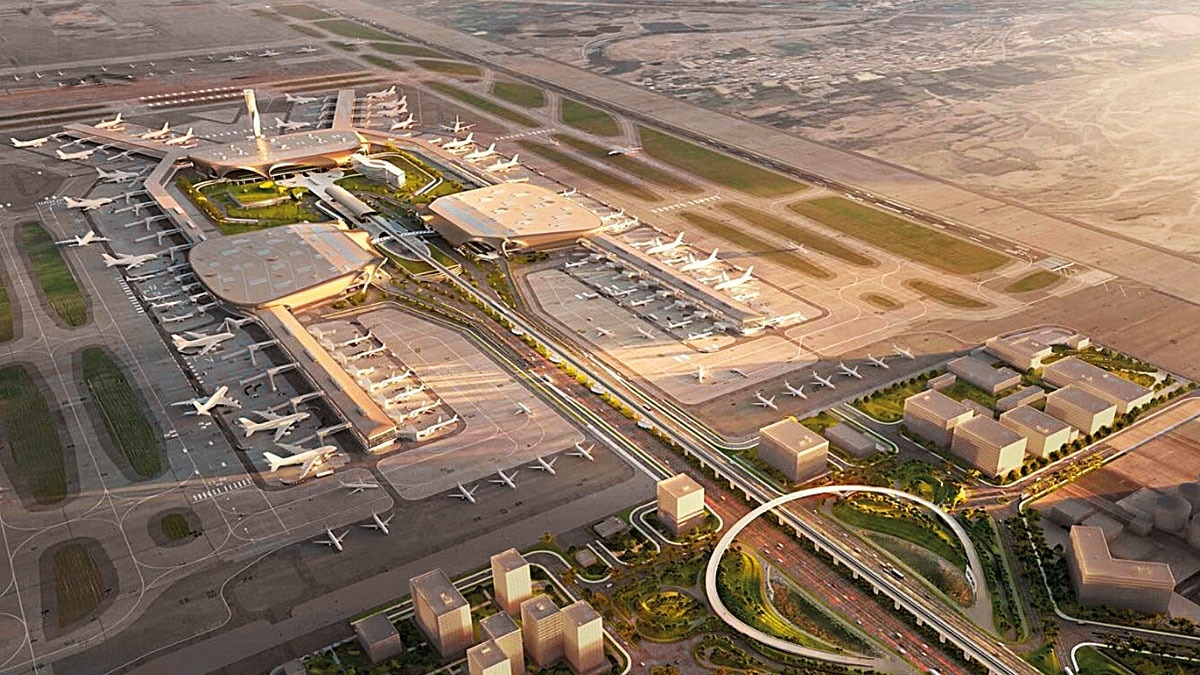
The government wants the airport operator and airlines to fix a concrete plan before the planned large-scale migration of flights to Navi Mumbai, but uncertainty prevailsAdopting a middle ground between airlines and the Adanis, who control airport operations in Mumbai, the Union government has called for the plan to shift out a third of the international departures to the new Navi Mumbai International Airport to be deferred by a few weeks, and urged the airport and airlines to have a concrete plan in place before the planned large-scale migration.The ministry of civil aviation, during the meeting chaired by civil aviation secretary Samir Kumar Sinha on October 6, requested airlines and the airport operator to work out the operational details of the transition. A second consultation is scheduled for October 13, with a meeting to discuss the final plan to take place around October 20. This has cast doubt on a scheduled rollout date of October 25-26, although no new date has been confirmed as yet.The nearly 90-minutes-long meeting had representatives of Adani Airport Holdings Ltd (AAHL), Airports Authority of India, Federation of Indian Airlines and domestic carriers in attendance. IndiGo, Air India and Akasa Air informed that they had been discussing the transition with the airport operator for the past 18 months.The move to Navi Mumbai is happening during an unusually contentious aviation debate wherein most of the parties focus on the solution rather than the problem. There has been broad consensus that the old Terminal 1 (T1) at Mumbai’s Chhatrapati Shivaji Maharaj International Airport is in need of redevelopment. The dispute is about the space the Mumbai International Airport Ltd (MIAL) is planning to create during the redevelopment: to move domestic passengers from T1 into T2 and to create space by dropping about a third of T2’s international departures.MIAL’s plan would call for the withdrawal of 265 of the 770 weekly international departures from Mumbai, which would impact approximately 46 airlines. Airlines have been given to understand that they could either use the Navi Mumbai airport to run the affected flights or keep them suspended until capacity becomes available again in Mumbai. That final bit is what has turned into a flashpoint.According to AAHL, it is up to the airlines to relocate or not to Navi Mumbai. But airlines and the International Air Transport Association (IATA) say the situation is forced since the alternatives are to move or suspend an existing Mumbai service.The entire exercise is based on the planned redevelopment of the northern part of Terminal 1B at Mumbai, which will start in January 2027. There is substantial evidence of deterioration in parts of the terminal. An assessment by IIT Bombay had identified corrosion, seepage, cracking, concrete spalling and exposed reinforcement in parts of T1B. Earlier, the Airports Economic Regulatory Authority of India (AERA) had assessed that its demolition was required on safety grounds.Officials say the first phase of the transition will remove about five million passengers worth of T1’s annual capacity. Once redevelopment is completed, T1’s capacity is expected to increase from 15 million to 20 million passengers a year.The debate starts with the question of how to deal with those in-between years. MIAL’s plan calls for moving domestic traffic impacted by the T1B work to T2. In order to facilitate this, 265 weekly international departures (about 35 per cent of the current 770) would be removed from T2.For some carriers, the impact is significant. Under the proposal, IndiGo would see 74 of its 224 weekly international departures out of Mumbai withdrawn while Air India would lose 33 of 100 and Akasa Air 11 out of 32 weekly departures. Emirates and Etihad would see a cut of 10 weekly departures each while British Airways would lose seven of 21 weekly departures.The impact for carriers with fewer frequencies could be more complex. For example, Air France, SWISS, Qatar Airways and Turkish Airlines would each have three of their seven weekly departures withdrawn under the proposal.The withdrawn flights would have to be either shifted to Navi Mumbai airport or suspended and, if the remaining flights continue to operate in Mumbai, then the service could be divided between the two airports.Air France-KLM has said it does not make operational sense to split its teams and operational arrangements between the two locations. Questions have also been raised by airlines about how the loss of about five million passengers’ worth of domestic terminal capacity translates into the withdrawal of about a third of Mumbai’s international departures.The Airline Operators Committee, an IATA-guided collaborative group, has asked for actual monthly utilisation figures for both terminals, their declared and available passenger-handling capacity, the methodology that has been used to come up with the 33 per cent reduction, and a phase-by-phase assessment of the impact of redevelopment on operations. It has also requested for records of consultations with airlines.The discussions regarding T1’s future have been ongoing since 2020, and the redevelopment was discussed with AERA and included in the approved tariff framework, says AAHL.The consultation on redevelopment does not mean the same as agreeing to the specific allocation of international flights now being proposed, say airlines. The fact that there have been talks for 18 months, as IndiGo, Air India and Akasa confirmed at the October 6 meeting, does not resolve the question of whether and how the affected international carriers consented to the proposed cuts.There is a further underlying disagreement on who should be deciding what flights move. Airlines have said that if a certain number of services are to be shifted out of Mumbai on account of redevelopment, it should be decided by airlines and not the airport operator, and could be domestic or international. In contrast, MIAL’s current proposal specifically identifies international departures at T2 for withdrawal to provide space for domestic operations displaced from T1.There are real-world issues, too. Airlines plan months ahead—flight schedules, deployment of aircraft, ticket inventories, crews, ground handling and maintenance. The original transition date coincided with the winter schedule kicking in on October 25, with many of the impacted flights already having passengers booked on them.IATA has also questioned widebody parking, ground handling equipment, aircraft-specific maintenance approvals, catering, cargo, crew accommodation, transport and connectivity at Navi Mumbai.One concern has shifted since it was originally expressed. Navi Mumbai airport, on October 6, announced its TajSATS flight kitchen is already catering to over 40 departing flights daily and can produce 7,500 meals daily, which could be increased to 15,000. It can provide catering services to domestic and international airlines as well.During the meeting, AAHL also made its case that Navi Mumbai is ready to serve about five million international passengers a year, citing airport connectivity, catering, hotels, lounges and other supporting services.However, there is also a possible price consideration for passengers. Navi Mumbai, being a new airport with new infrastructure, has significantly higher User Development Fees than the existing Mumbai airport, and airlines have pointed out that the move could lead to higher ticket rates.Navi Mumbai has offered a 100 per cent landing-fee rebate on new international flights, and AAHL has proposed the issuance of cash vouchers to make up the gap between the User Development Fees of passengers using the two airports. The landing-fee concession also has regulatory backing. AERA’s September 2026 tariff decision allows a 100 per cent landing-charge waiver in the first year for qualifying new international flights from Navi Mumbai International Airport, with subsequent concessions depending on distance and year.The civil aviation ministry is still working on a decision regarding User Development Fees. AAHL has also been trying to put into perspective the magnitude of the disruption. It states the Mumbai airport caters to approximately 55 million passengers each year and that during its redevelopment, about five million passengers’ worth of capacity would be impacted, with approximately 91 per cent of the entire passenger traffic remaining undisturbed.It has pledged to restore historic slots when the terminal reopens and to provide further capacity after its reconstruction. For international carriers, however, “temporary” could come to last for several years: MIAL has said that the rebuilt T1 will be commissioned in 2029-30.The immediate impact on passengers, for the time being, is a state of uncertainty. The allocation of the 265 withdrawals is a withdrawal plan and does not mean that all these flights have moved to Navi Mumbai. No final airline-by-airline changes have been announced.When the plan is finally executed, travellers on impacted international services may have to board from Navi Mumbai rather than the airport from which they have been booked. Others may experience a change of flight times or, if an airline determines it is not commercially or operationally feasible to move a service, a service may be suspended.Passengers shifted to Navi Mumbai could also face the higher User Development Fees unless the proposed mechanism to offset the difference is approved and implemented. The ministry has asked for a concrete plan for such a transition, suggested additional time for the airlines and summoned them back on October 13 for further negotiations.Subscribe to India Today Magazine- Ends
How Mumbai airport upgrade plan threatens to land flyers in a soup
Full Article
Original Source
Read the full article at Indiatoday →KhanList aggregates and links to publicly available news content. We do not host full articles from third-party sources. Always verify important information with original sources.