
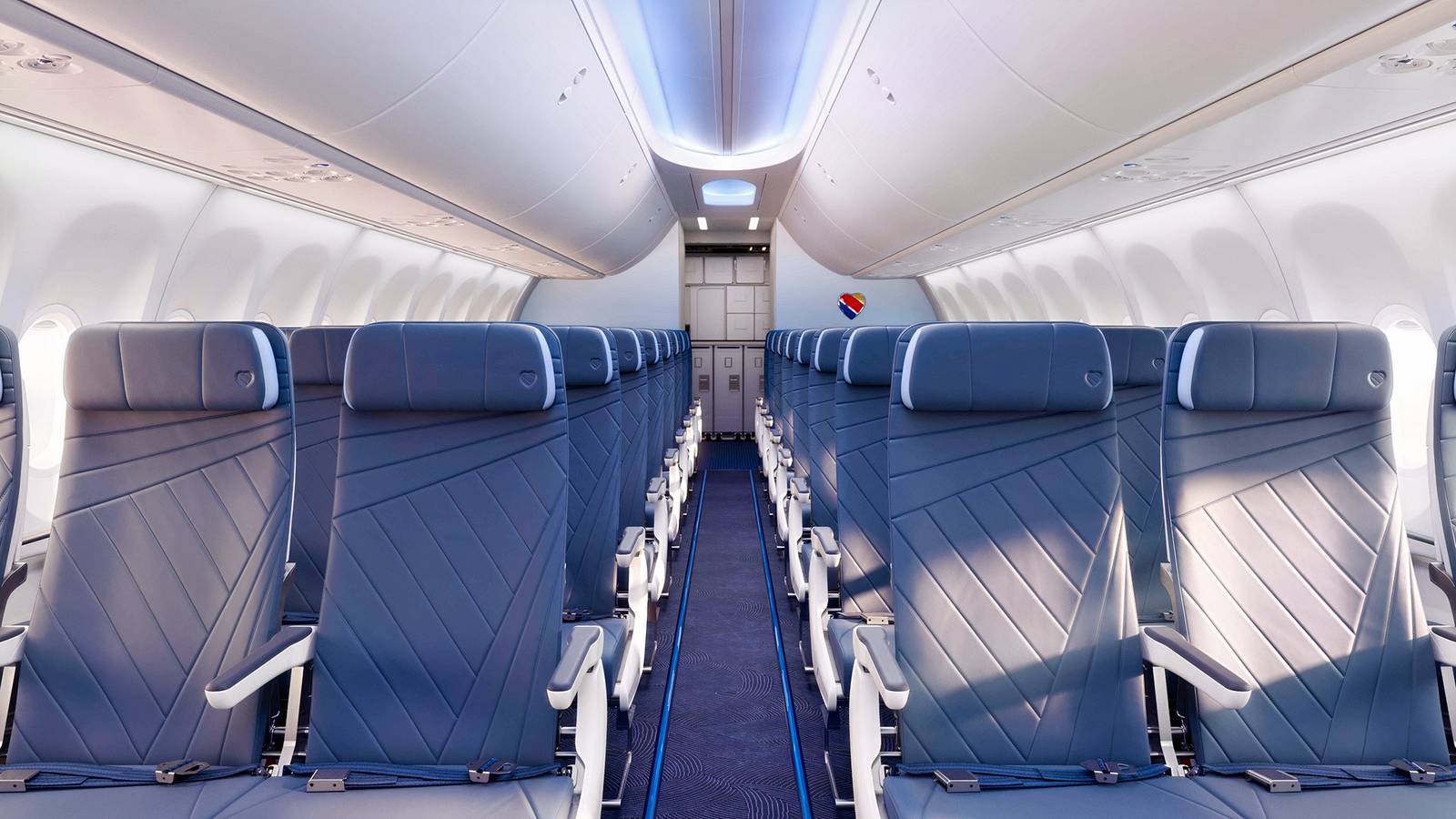
Published Nov 28, 2026, 10:00 PM EST Journalist - Steven has a varied background in communications, and it was this passion for writing combined with his in-depth knowledge of the aviation industry that led him to Simple Flying. A keen linguist, he also has experience in translation and interpreting. Based in Palma, Spain Southwest Airlines has made one of the biggest changes to its business model in the carrier's history, moving away from policies that once distinguished it from other major US airlines. The introduction of checked baggage fees and assigned seating has transformed how passengers pay for their journeys, creating significant new income streams while bringing the airline closer to the commercial practices of its competitors. Although Southwest does not disclose exactly how much revenue it earns from individual seat and baggage charges, the carrier has indicated that these two initiatives are contributing more than $2 billion to annual operating profit in 2026. The Financial Impact Of Southwest Airlines' New Fees Credit: Denver International Airport Southwest Airlines' decision to introduce additional charges has proved considerably more rewarding than initial expectations suggested. Chief Financial Officer Tom Doxey explained at an investor conference in September 2026 that baggage fees and assigned seating together were generating more than $2 billion in additional annual operating profit, demonstrating the scale of the airline's commercial transformation. This figure is particularly significant because Southwest Airlines previously built much of its reputation around a straightforward pricing structure. Passengers could traditionally check their first two bags without additional charges, while the airline operated an open-seating system that allowed customers to select available seats when boarding. Both policies distinguished it from competing carriers but limited opportunities to generate additional ancillary revenue. The airline's management has now confirmed that the financial contribution from these changes is meeting, and sometimes exceeding, expectations. The carrier has benefited from charging passengers for services previously included in the standard ticket experience, while encouraging customers to purchase higher-priced fares offering additional benefits. This combination has strengthened passenger revenue and improved overall financial performance. Importantly, the $2 billion figure represents additional operating profit rather than a separately reported revenue total. Southwest Airlines has not published a precise breakdown of the money collected from individual seat purchases and baggage charges. Nevertheless, management's financial guidance demonstrates just how important these commercial initiatives have become to the company's profitability. Southwest Airlines' Baggage Fees Are Generating Around $1 Billion Credit: Robert V Schwemmer | Shutterstock One of the most controversial changes involved Southwest Airlines ending its long-standing policy of allowing most passengers to check two bags without additional charges. The airline introduced fees for the first and second checked baggage on tickets purchased in May 2025, marking a significant departure from its traditional approach to customer service and pricing. The decision was driven partly by the opportunity to increase revenue without relying entirely on higher ticket prices. Checked baggage represents a valuable additional service that passengers can purchase according to their individual requirements. Southwest Airlines recognized that charging for this service could produce substantial financial returns, particularly given the number of passengers traveling across its domestic network. By October 2025, the carrier's management was already reporting that baggage fees were generating approximately $1 billion annually, slightly ahead of the airline's original expectations. This demonstrated that passengers continued purchasing checked baggage despite the introduction of additional charges, providing the low-cost carrier with a considerable new income stream. The financial contribution has subsequently received another boost following increases to baggage fees during 2026. During its third-quarter earnings discussion in October, management indicated that the approximately $1 billion target was tracking ahead of expectations. Although the airline has not disclosed a definitive revised figure, the continued growth suggests that baggage charges are becoming increasingly important to its financial performance. Assigned Seating Has Become Another Major Revenue Generator Credit: Angel DiBilio | Shutterstock Southwest Airlines' move towards assigned seating represents an equally important change, particularly because its open-seating policy had been one of its most recognizable characteristics for decades and distinguished it from competitors such as Frontier Airlines. Under the previous system, passengers received boarding positions and selected seats after entering the aircraft. However, the airline decided that allowing customers to purchase specific seats could unlock substantial additional earnings. Tickets featuring assigned seating and extra-legroom options became available for purchase in July 2025, with the new arrangements applying to flights departing from January 2026. This introduced a more familiar booking experience for passengers who prefer choosing their seats in advance, while allowing Southwest Airlines to charge additional amounts for more desirable locations. The carrier's CEO, Bob Jordan, previously indicated that assigned seating was expected to deliver more than $1 billion in additional operating profit during 2026. The airline subsequently established a longer-term target of approximately $1.5 billion annually by 2027. These expectations demonstrate that seat selection is not simply a minor adjustment to the booking process but a major part of Southwest Airlines' revenue strategy. During the October 2026 earnings call, management confirmed that the initiative remained on track, if not slightly ahead of expectations. Extra-legroom seating is particularly important because it gives passengers another reason to pay more when booking. Rather than relying exclusively on premium fares, Southwest Airlines can generate additional income from customers seeking greater comfort without upgrading their entire ticket. Southwest Airlines is the world's largest operator of the Boeing 737. The latest data from ch-aviation shows that the carrier's fleet is made up of a total of 803 737s, including 343 737 MAX 8 aircraft. The carrier is also due to operate a sizeable fleet of Boeing 737 MAX 7s, once the aircraft eventually enters service. Aircraft Number In Fleet Number On Order Boeing 737-700 271 - Boeing 737-800 189 - Boeing 737 MAX 7 - 269 Boeing 737 MAX 8 343 167 More Passengers Are Now Paying For Additional Services Perhaps one of the most revealing figures provided by Southwest Airlines concerns the proportion of passengers purchasing additional services. Historically, fewer than 20% of customers paid for extras such as checked baggage, preferred seating, or additional legroom. Following the introduction of the new arrangements, that proportion has increased to approximately 60%, representing a considerable change in passenger purchasing behavior. This helps explain why the airline has generated such substantial financial returns from its revised business model. A much larger proportion of passengers are now contributing additional revenue beyond their initial ticket purchases. Even relatively modest charges can produce significant amounts when applied across millions of journeys, particularly when customers have several optional services available during booking. The change also allows Southwest Airlines to offer different experiences to passengers with varying budgets and preferences. Customers primarily interested in obtaining the lowest available fare can consider cheaper ticket options, while those seeking additional convenience can pay for baggage, assigned seats, or extra legroom. This gives the airline more opportunities to generate income without increasing the advertised price of every ticket. Southwest Airlines' Overall Financial Performance Has Improved The financial benefits of the new baggage and seating arrangements are becoming increasingly visible in Southwest Airlines' wider earnings results. Its third-quarter 2026 performance was particularly notable, with operating revenue reaching a record $8.4 billion. This represented an increase of approximately 21.2% compared with the corresponding period in 2025, highlighting the strength of its improved commercial performance. Passenger revenue also increased substantially during the first nine months of 2026, rising by $3.3 billion, or 17.8%, compared with the same period a year earlier. Southwest Airlines attributed the improvement to several factors, including more customers choosing higher-priced fares and the introduction of baggage fees and assigned seating. Consequently, the results reflect a broader transformation rather than the contribution of just one new charge. Another important measure is revenue per available seat mile, commonly abbreviated as RASM. This figure helps airlines understand how much operating revenue they generate relative to available passenger capacity. Southwest Airlines reported that its RASM increased by 16.4% to 17.92 cents during the first nine months of 2026, reflecting stronger passenger yields and the financial benefits of its revised commercial strategy. Adjusted earnings per share also increased considerably, reaching $0.66 in the third quarter, approximately 500% higher than a year earlier. These results represent a notable improvement compared with 2025, when Southwest Airlines recorded full-year adjusted earnings before interest and taxes of just $574 million. Although fuel prices and operating expenses continue to influence profitability, additional commercial revenue streams are helping strengthen its financial position. What The New Charging Structure Means For Southwest Airlines' Future Credit: Denver International Airport Looking ahead, Southwest Airlines appears determined to make its new charging structure a permanent part of its commercial strategy. The airline has demonstrated that customers are willing to pay for additional services, even when those services were historically included in the standard ticket price. Management's confidence in the performance of baggage and seating initiatives suggests these changes will remain central to its financial planning.The expected increase in assigned seating profitability from more than $1 billion in 2026 to approximately $1.5 billion in 2027 is particularly important. It indicates that the airline believes there is still considerable potential to improve financial returns from its new seating arrangements. As more passengers become familiar with the booking system, Southwest Airlines could benefit from greater demand for preferred seating and extra-legroom options across its ever-expanding network.The airline is also looking beyond individual seat and baggage charges to strengthen its wider loyalty business. Its updated partnership with Chase provides another opportunity to generate income through its co-branded credit card program and customer loyalty arrangements. The carrier's Chief Financial Officer, Tom Doxey, indicated that the more than $2 billion contribution from baggage and seating initiatives did not include additional loyalty revenue associated with the updated partnership. Ultimately, Southwest Airlines has demonstrated how dramatically an established airline can change its financial model by reconsidering which services should be included in a standard ticket. The company does not provide an exact combined revenue figure for seat and baggage fees, but its projected contribution of more than $2 billion to annual operating profit in 2026 demonstrates their importance. With baggage charges performing ahead of expectations and assigned seating targeting approximately $1.5 billion in annual operating profit by 2027, these changes have become two of the airline's most valuable commercial initiatives.
How Much Revenue Southwest Airlines Now Makes By Charging For Individual Seats & Bags
Full Article
Original Source
Read the full article at Simpleflying →KhanList aggregates and links to publicly available news content. We do not host full articles from third-party sources. Always verify important information with original sources.