
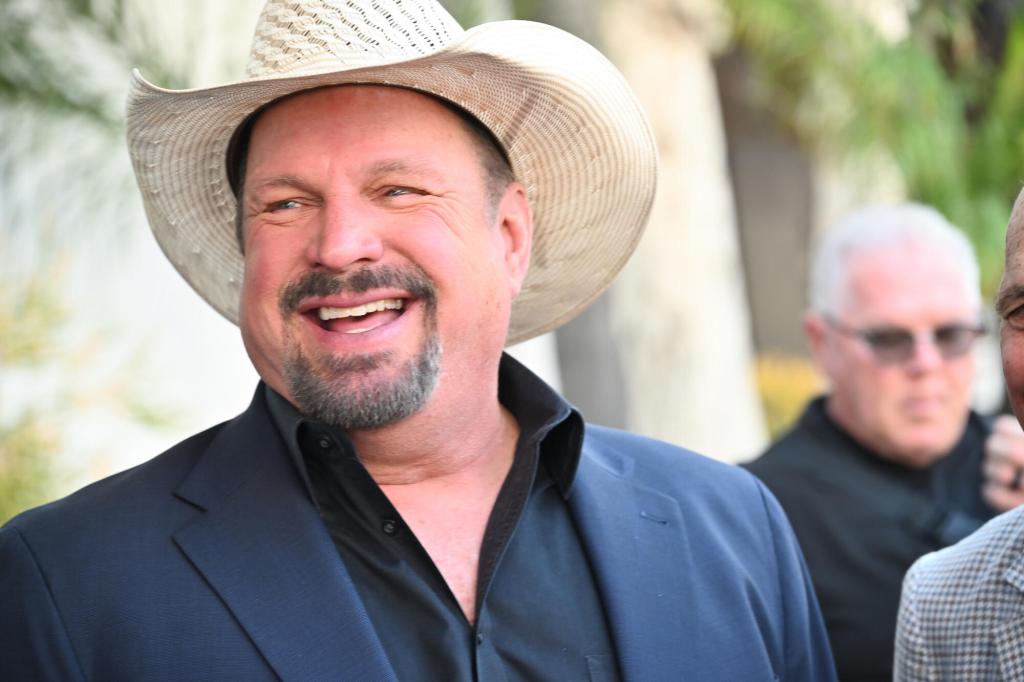
Trending on Billboard The passing of Dolly Parton last month inspired a flood of stories about her musical legacy. On the financial side, this coverage included valuations of her estate — which also led music investors to reconsider the June news that another country music giant, Garth Brooks, was considering selling his music assets. When Billboard looked at Parton’s music assets, i.e., her master recording and publishing catalogs, we estimated that her master recordings generated about $11 million in revenue annually between 2022 and 2025 and that her publishing generated about $6.5 million annually over the same period for a total of $17.5 million. Consequently, Billboard estimated that those assets carry a valuation of $220 million, with about $103 million coming from the recordings and $117 million coming from the publishing. Related If Parton’s assets are worth some $220 million, how do Brooks’ music assets, for which he’s seeking a reported $1 billion to $2 billion, shape up against her catalog? First off, Parton’s annual U.S. consumption units averaged 643,000 units over the last six years (2020-2025), which is nearly 45% greater than Brooks’ 445,000 units. Globally, her catalog’s streaming consumption is two and a half times as large, averaging nearly 1.141 billion streams annually, versus annual streams of 414.6 million for Brooks’ catalog. If you look at just the last three years (2023-2025), the numbers are even more in Parton’s catalog’s favor at 644,000 U.S. album consumption units annually versus Brooks’ 375,000 units. Meanwhile, Parton’s global streams are three times larger: 1.305 billion versus Brooks’ 432.3 million annually.Clearly, Parton’s catalog is outperforming Brooks’ catalog, which raises the question: If her catalog is worth an estimated $220 million by Billboard’s reckoning, how can Brooks’ catalog be worth upwards of $1 billion, as first reported by The Wall Street Journal? Firstly, a catalog’s numbers are not the whole story in determining valuations. We also have to compare what assets are owned by Brooks and the Parton estate. For example, Parton owned her later-career albums, but most of her big hit albums — representing the bulk of the activity generated by her catalog — are owned by Sony Music, which means she gets paid a percentage of royalties — perhaps a superstar rate of 33%. Meanwhile, Brooks owns his entire recorded catalog and appears to distribute it on his own. That means that after CD and vinyl production costs, he is getting nearly 100% of the revenue from his sales to merchants, which likely means his recorded music catalog is more valuable than Parton’s.On the other hand, Parton’s publishing appears more valuable than Brooks in that she has had a hand in writing some 3,000 songs, either by herself or with co-writers. Billboard also estimates she has a 75% co-writer share of the songs on her albums. Meanwhile, Brooks’ catalog is heavily dependent on outside songwriters, although he generally wrote one or two songs per album and would collaborate with other songwriters on another two or so songs per album. Overall, Billboard estimates Brooks’ songwriting share at about 20% of the publishing royalties generated from the sales and streaming activities from his albums. Since Parton’s catalog sees more action than Brooks’ catalog, and since Parton was a much more active songwriter, it seems logical that her publishing has a greater valuation than Brooks’. Yet another factor comes into play when estimating Brooks’ revenue versus Parton’s revenue: According to Luminate, 47% of Parton’s streams are in the U.S., which means that 53% come from outside the U.S. Meanwhile, nearly 90% of Brooks’ streams occur in the U.S. In other words, when extrapolating to come up with global revenue, Parton comes out with way more revenue than Brooks gets, according to Billboard’s calculations. Related Looking at Brooks’ activity over the last three years, Billboard estimates that his recorded catalog’s global streaming and sales generated an annual average of about $4 million in revenue. Billboard further estimates that the publishing royalties generated from his catalog’s sales and streaming activity generated another $1.81 million. Instead of estimating how much of that nearly $6 million in revenue would be Brooks’ take-home pay, let’s consider the $1 billion that has been floated as the bottom-range valuation Brooks was said to be seeking if he sells his catalog. As Billboard readers are aware, valuations are usually based on a multiple of net publisher and net label share, and while most deals generally come in with multiples ranging anywhere from 12 times to 18 times, superstars with iconic songs have been known to command 20 to 25 times multiples. These multiples represent the average amount of annual revenue a catalog produces for the investor. So when investors are considering buying a music asset and they look at a catalog’s track record, one of the questions they want answered is: How many years will it take to make back the money we paid to buy the assets? Note that this question doesn’t even take into account potential profits they hope to make from their investment. Investors ask that question because there is another key factor to consider. In the U.S., for music released in 1978 or later, copyright carries a 35-year term. At the end of that period, the creator or their heirs can file for copyright termination and reclaim ownership of the catalog. In other words, a private equity firm buying a catalog only has 35 years to get back what they paid for the assets and to hopefully make a profit beyond that. (There is an ongoing lawsuit right now that could determine if the copyright reversion only applies to the U.S. or worldwide.) Say an investor paid $1 billion for Brooks’ music assets. In order to get back just that amount, a catalog would have to generate $28.572 million annually in net publisher and net label share. By Billboard’s estimation, Brooks catalog’s revenue activity falls far below that benchmark. Related However, it must be pointed out that while Billboard’s valuation for Brooks is based on his current numbers, it overlooks one big factor: Brooks’ catalog is mainly distributed through Amazon and to brick-and-mortar stores, which combined might be only about a 25% market share. Brooks, because of his belief in the sanctity of albums, has missed out almost completely on the whole streaming phenomenon, as the only place his music is available for streaming is through Amazon. His catalog’s activity numbers today belie what a humongous economic force he has been in the echelon of music superstars. If you look at his historical numbers, Brooks was a revenue-generating juggernaut when music sales were king. His catalog since 1991 has accumulated nearly 76 million album consumption units in the U.S., according to Luminate. Meanwhile, he has 10 albums that have diamond certifications (10 million copies) from the RIAA, including Double Live, which has been certified double diamond. And this is just for the U.S., although his international sales might not be that big given that country music wasn’t so popular outside the U.S. during Brooks’ commercial peak. All told, his RIAA album certifications add up to 200 million units. That makes him the highest-selling artist in the U.S., surpassing The Beatles, whose certifications add up to 183 million. Those certifications testify to how big Brooks once was. But the question is: How big will Brooks’ catalog be going forward? That’s tough to assess because Brooks — through his own choices — has mostly missed out on the streaming era. Another unknown is his rigidity when it comes to synch, in that he hasn’t really allowed his music to be used in commercials and only seldom in movies. While an investor with a higher tolerance for risk might be willing to shell out big bucks for Brooks’ catalog, it’s likely Brooks could realize an even bigger payday if he had a three-to-five-year track record from global distribution, including at all of the digital streaming service providers — the benchmark music investors use when assessing an asset. They want to see at least a three-year track record, but the more data they have, the more comfortable they are when making big bets on buying an artist’s music catalog. Now would have been the perfect time to make his music widely available on streaming services, as he is currently on a sold-out arena tour that will last through the end of October. This kind of high-profile activity could have turbo-charged streaming activity even beyond the expected windfall that would likely come from making his catalog suddenly available through widespread streaming distribution. Related Without that streaming track record, more than a few music asset buyers Billboard has talked with say they are skeptical that the catalog is worth $1 billion. When Brooks’ asking price is brought up, those skeptics ask: “Beyond ‘Friends in Low Places,’ how many Garth Brooks songs can you name?” Furthermore, sources suggest that without a track record from global distribution that truly measures what the activity could be for his catalog, there is likely only one way Brooks can get a bigger payday today than his current numbers suggest: by entering into a deal structure with earn-out targets. In other words, a buyer would pay a certain amount today, and then, based on how the catalog performs when it is widely distributed, Brooks would earn supplemental payouts. That’s one way of doing a deal. But if Brooks really desires a bigger payday, he might want to make his music available through all digital services on a global basis. Not only would that provide a track record that would help establish a valuation for when he sells, he would reap the revenue windfall that would likely come from widespread distribution. In other words, if he continues to own his music assets while establishing a track record for them by releasing them to all streaming services, he would likely make a lot of money in the next three to five years — to potentially make a lot more money down the line when he sells. A representative for Brooks didn’t respond to a request for comment.
How Much Is Garth Brooks’ Music Catalog Worth?
Full Article
Original Source
Read the full article at Billboard →KhanList aggregates and links to publicly available news content. We do not host full articles from third-party sources. Always verify important information with original sources.