
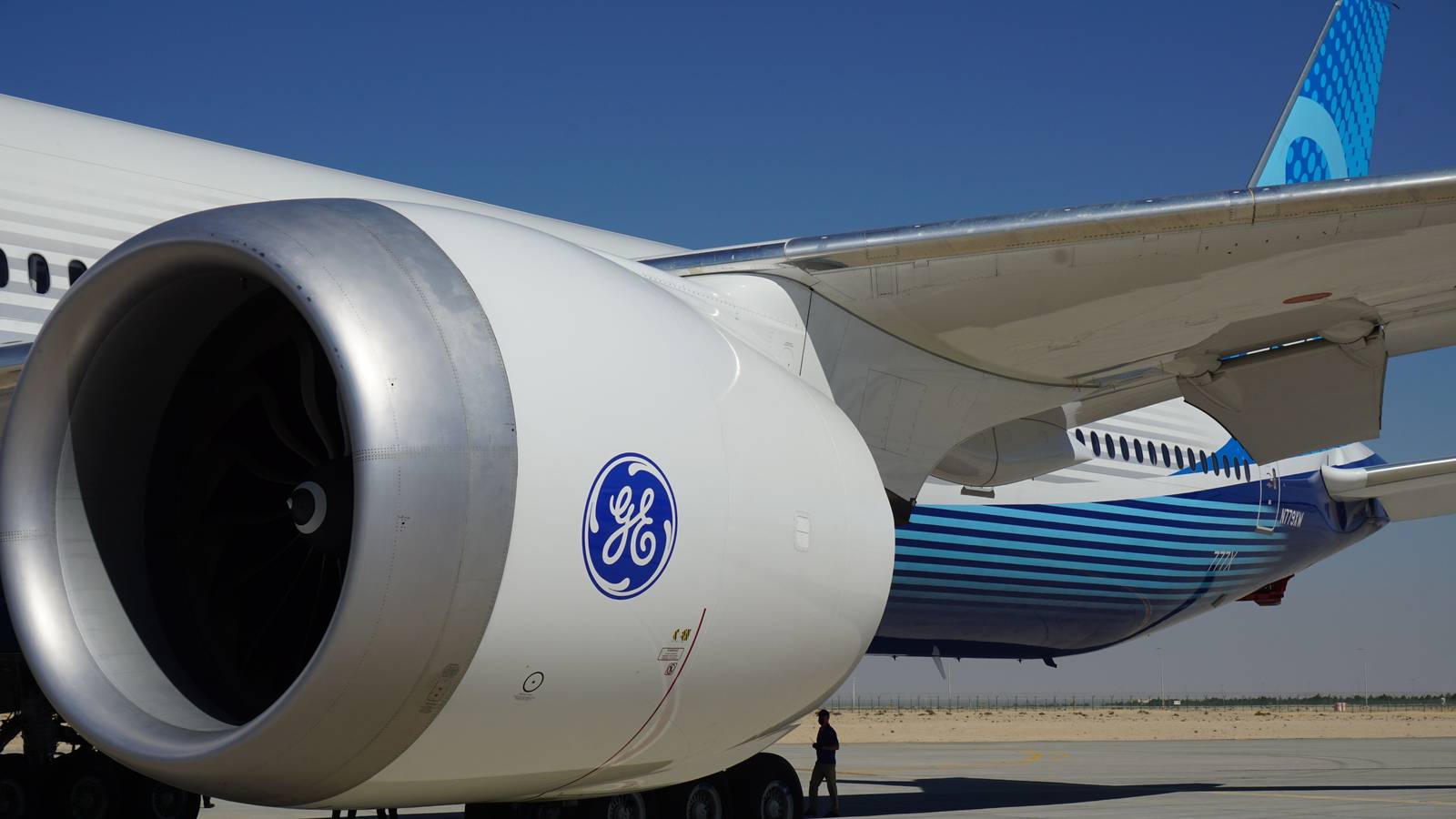
Published Nov 16, 2026, 12:00 PM EST Aaron is an aviation enthusiast and world traveler with a deep interest in aerospace history and technology. He has traveled around the world numerous times, often incorporating visits to aviation museums and historic aircraft collections into his journeys. A native of New Zealand, he is an expert in aviation and maintains a broad interest in a variety of other subjects. The headline figure that the incoming GE Aerospace 134-inch GE9X turbofan is worth $42-45 million is misleading. Understood as a list price, it is ok, but compared with the market value of a GE90 or Trent XWB, it is not. While the engine is likely to be the most expensive engine on the market, it is still likely to belong to the same tier as the competing Trent XWB-97, with the difference in value measured in single digits of millions of dollars, not tens of millions. It is also incredibly difficult to disentangle the price of an engine from its financing, airframe, status as a bundled spare, long-term maintenance contracts, and bulk orders. It is almost unheard of for an airline to walk into a GE Aerospace showroom, point to a large aero engine, and pay upfront for one engine with no maintenance, tooling, spare components, or other services. Here is how much a GE9X is worth in 2026, attempting to avoid apples-to-oranges comparisons. Largest Thrust, But Not Largest Certification Credit: Falcons Spotters l Shutterstock The GE Aerospace GE9X is the world's largest commercial jet engine by diameter, and by thrust produced during test runs, it is not the world's largest by certified thrust. The world's largest aeroengine by certified thrust is its predecessor, the GE90-115B. The GE90-115B was built to power the Boeing 777-200LR, Boeing 777-300ER, and Boeing 777F freighter. It comes with a certified thrust of 115,300 lbf at sea level. Its GE90-94B counterpart is certified for 93,700 lbf and powered the previous Boeing 777-200 and Boeing 777-300 generation of Triple Sevens. GE Aerospace says it has test-run the new GE9X generation of the GE90 family at 134,300 lbf. It claims that this is the "highest thrust of any commercial jet engine." But producing the highest thrust in test runs and actually being certified for that are two different things. The GE9X has a certified thrust of 110,000 lbf, placing it at 5,300 lbf less than its predecessor. GE Aerospace's new variant will provide the incoming Boeing 777X family with 5% fuel-specific fuel consumption improvement versus "any twin-aisle engine available" (read: Rolls-Royce Trent XWB), and offers up to 10% specific consumption improvement versus the older GE90-115B. It achieves an approximate 10:1 bypass ratio. The List Price Is Misleading Credit: guilhem gaubert l Shutterstock Safe Fly Aviation writes, "Aircraft engine values are among the most important metrics in commercial aviation finance. A single powerplant can cost more than a private jet, and in today's market, some engine types are worth more than the aircraft they power." According to its analysis, the General Electric GE9X is the world's most valuable engine at around $42–45 million at list price. It says, "Its list price of $42–45 million per engine exceeds the list price of many private jets, making it the pinnacle of aircraft engine values." For reference, it lists the GE90-115BL as having a "Full-Life value" of over $32 million and a Half-Life Market Value increasing by 60% since 2023. The only other extra-large modern engine is the Rolls-Royce Trent XWB, "valued at approximately $25 million per unit." There are some glaring issues with these comparisons, and they do not offer an apples-to-apples comparison. The GE9X is not yet on the market, as the Boeing 777X is yet to enter service. Therefore, the only data point is its list price, while the market values for the other two engines are being used. I have an accounting background, and this is a terrible comparison. List prices are little more than brochure listings where manufacturers and sellers often inflate the true market value of their products. The market value, what companies actually pay, is much more consequential. The Value Of Widebody Engines Is Rising Credit: Falcons Spotters l Shutterstock In its H2 2026 update, IBA states, "Current widebody engine values continue to grow strongly due to new aircraft production delays. Existing engine retention remains high, MRO demand is strong, and spare engine supply is limited." The value of an engine is not just its performance or the cost of manufacture, but also its scarcity. This is the classic economics 101 of supply and demand. Currently, demand is high, and supply is constrained, driving up costs. Put another way, the delay of the Boeing 777X and the fact that the GE9X is not yet in service is making GE90-115BL and Trent XWB engines more valuable. Airlines are being forced to keep their older GE90-powered 777s in service for longer, which necessarily includes the engines. Low spare engine availability for the GE90-115BL is driving up the value of the engine. GE Aerospace GE9X Engine Manufacturer GE Aerospace (revenue-sharing partners: IHI Corp., Safran, MTU Aero Engines) Aircraft applications 777-9, 777-8, 777-8F Fan diameter 134 in (3.4 meters) Bypass ratio 10:1 Certified thrust 105,000 lbf (GE9X-105B1A) Catalog list price $42-$45 million Implied market prices (very approximate) From $18 million+ (line-fit for Emirates) to $37 million (standalone spare engine) While the A350 is a new aircraft with no airline seeking to retire them, the fact that it is one of the only larger widebodies available, given production constraints of the 787 and no 777Xs, is driving up their value. IBA states that the GE90-115BL full-life values exceed $35 million, and its long-term lease extensions are being observed between $250,000 and $300,000 per month. Meanwhile, MBA Aviation lists the H1 2026 lease rates for the Trent XWB-97 with a market lease rate of $287,000. The Value Of The GE9X Is Not Yet Known Credit: Gunnar E Eide l Shutterstock In commercial aviation, virtually no airline or lessor pays the published Original Engine Manufacturer (OEM) list price for a factory-new widebody aero engine. In other words, the GE9X is not really worth $42 million. GE Aerospace can slap any value that it claims to value it at, but that is divorced from the reality of the market. The 'real' price is the 'discounted' price that airlines and lessors actually pay for them. As a rule of thumb, when engines are purchased as part of a new aircraft order, especially on competitive twin-engine aircraft, OEM's routinely provide 'concessions' (aka discounts) of 40% to 46% or more off their inflated catalog list prices. However, the discount is typically less on aircraft like the A350 or 777, where Rolls-Royce or GE Aerospace are exclusive engine suppliers. That said, there are still typically substantial discounts. The true value of the GE9X will become much more apparent when it is in service and starts appearing in secondary markets. Until then, there is simply a lack of data compared with the XWB and GE90. The value of the engine also varies by whether it comes as part of the aircraft or separately. This is similar to a car. It is typically much cheaper to purchase a car fully assembled and ready to go than purchasing each individual part, including the engine, and then self-assembling it. Apples-to-Apples Comparison With Trent XWB Credit: Allora Empire Art l Shutterstock Speaking of list prices per seat (not engines per se), Sirius Capital Aviation writes, "list prices were far higher than any realistic estimate of actual prices (typical discounts were already over 50%) but they did provide a limited market signal of relative prices." Put another way, the list price of $42 million for the GE9X is a starting figure that needs to be discounted to find out what it is really worth. It is absolutely not a number that can be compared in good faith with the market price of a Trent XWB-97. Another issue is that it can't even be compared with XWB list prices, as Rolls-Royce does not publish standalone engine list prices and Airbus ceased publishing its annual aircraft list price catalog in 2018. Using a reverse calculation, the implied list value for the XWB would likely fit into the $35 to $40 million range. This is back-of-the-envelope math and should not be taken too seriously. Given that the GE9X is the sole engine for the 777X, an expected discount off list price of around 35% to 40% can be expected. Importantly, the GE9X may be the only engine on the 777X, but the 777-9 still has to compete with the XWB-powered A350-1000. If this is the correct range, then the real implied market rate of around $22 million to $28 million per engine can be expected. It is possible that 35-40% is too steep, and so the market price may be higher. In other words, the value of new XWB and GE9X engines may be within a reasonably modest margin of each other. Engine Orders Are Complex Bundles Credit: Tneumanas l Shutterstock Also, engines are seldom just purchased alone. They are part of bundles that include other engines, the aircraft themselves, spares, and service agreements. Engine manufacturers may sell engines at or even below manufacturing cost, as their margins are made up on the lucrative 15–25-year-long servicing of the engines. Spare engines purchased directly from the OEM generally get smaller discounts than line-fit installed engines. Even looking at announced contracts is problematic. For example, GE announced Singapore Airlines had ordered 22 more GE9X engines in 2022 for $2.8 billion at list price. That works out to more than $100 million per engine, but it also includes a 12-year maintenance contract (called TrueChoice). The price of engines likely varies considerably by airline. Emirates has placed orders for around 45% of the entire global 777X backlog. This shifts much of the bargaining power to Emirates from Boeing and GE. Much of the program is reliant on Emirates (and Qatar), and Emirates knows it. While the numbers are not available, it is reasonable to assume Emirates is purchasing GE9X engines for much less than Silk Way West, which is ordering two aircraft with four engines.
How Much Does The World's Largest Commercial Engine Cost?
Full Article
Original Source
Read the full article at Simpleflying →KhanList aggregates and links to publicly available news content. We do not host full articles from third-party sources. Always verify important information with original sources.