
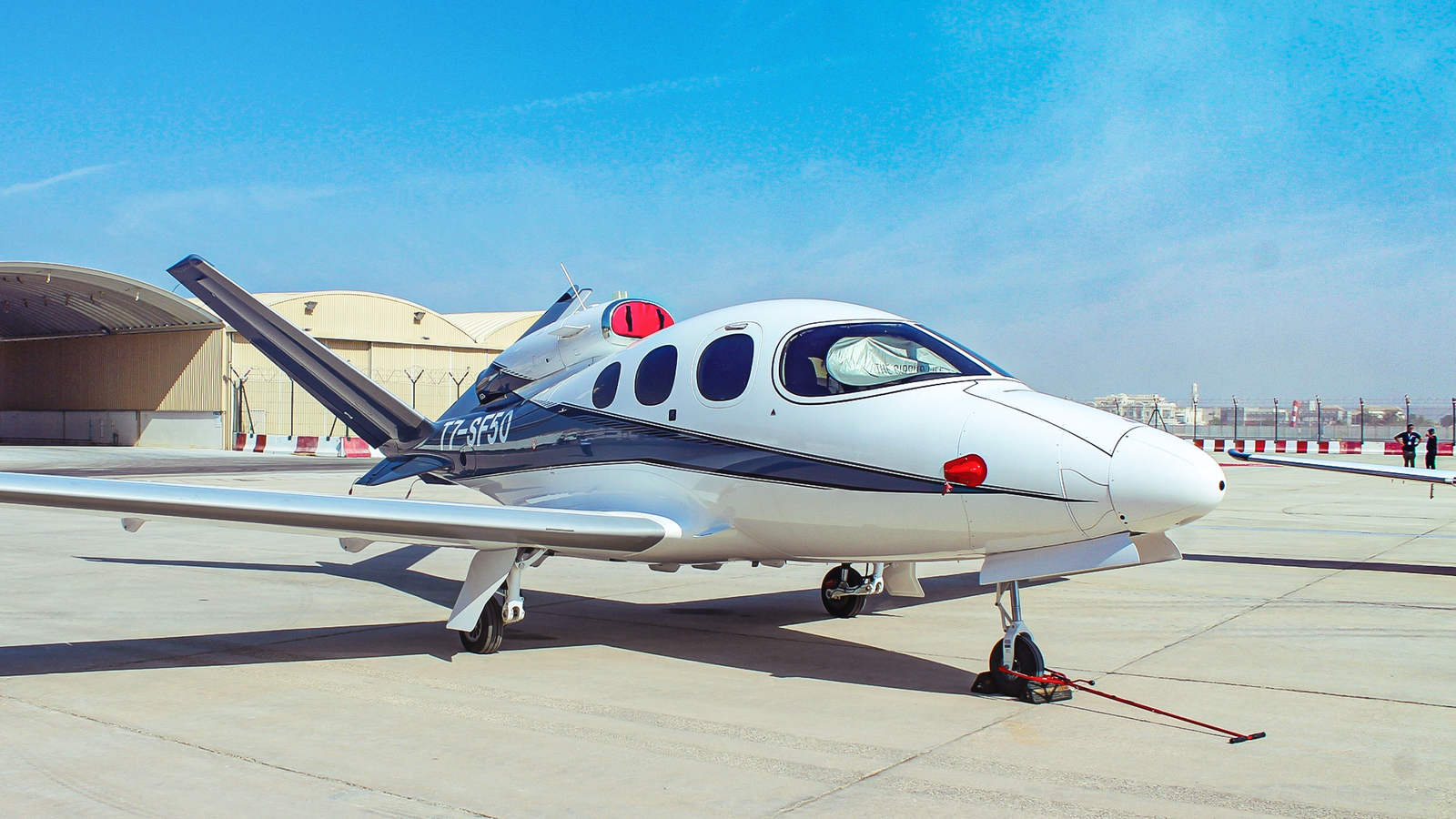
Credit: Aerospace Trek | Shutterstock | Simple Flying Published Nov 14, 2026, 1:00 PM EST Jack comes to Simple Flying with a lifelong interest in all things aviation. He holds a degree in Aerospace Engineering from Georgia Tech, and is a certified private and remote pilot. Beyond these experiences, Jack previously worked for a corporate flight department where he gained first-hand experience in the world of business aviation. Currently, Jack works in the professional services industry and continues to build his flight hours outside of work. Sign in to your Simple Flying account The Cirrus Vision Jet is often presented as an accessible entry point into private jet ownership. Its single-engine design, ability to be flown by one qualified pilot, and comparatively compact cabin make it less complex than larger business aircraft. However, a lower acquisition price does not make the annual budget inexpensive. Fuel, maintenance, insurance, hangar space, pilot training, and engine reserves can add hundreds of thousands of dollars to the cost of keeping one available. Published estimates vary considerably because they do not all measure the same operation. GlobalAir's report estimates approximately $200,000 annually at 100 flight hours, while CRAFT's ownership model puts the figure at over $600,000 for 200 hours. The difference reflects assumptions about crew, management, training, maintenance, and other fixed expenses, rather than a simple disagreement over fuel prices. A realistic budget therefore depends on how often the aircraft flies, whether the owner pilots it, and which services are included. Annual Costs Depend On The Model Used Credit: Cirrus Aircraft The most useful way to estimate the Vision Jet's annual cost is to separate fixed expenses from those that increase with flight hours. GlobalAir's operating-cost report estimates $190,462 for 100 annual hours. Its total includes $47,342 in fixed costs and $143,120 in variable expenses, equivalent to approximately $1,905 per flight hour when the annual budget is divided by 100 hours. The report provides a lower-cost reference point, but its public summary does not itemize every assumption behind the fixed-cost figure. CRAFT's estimate is substantially higher because it uses a broader ownership model. It assigns $310,291 to annual fixed costs and $1,565 to each flight hour. That produces estimated totals of $466,791 at 100 hours, $623,291 at 200 hours, and $936,291 at 400 hours. The model includes professional crew salary, recurrent training, hangar, insurance, management, fuel, maintenance, engine overhaul reserves, and trip-related expenses. Annual flight hours CRAFT annual estimate Average cost per flight hour 100 $466,791 $4,668 200 $623,291 $3,116 400 $936,291 $2,341 These figures should not be averaged with GlobalAir's estimate. The two providers use different cost scopes, and CRAFT explicitly includes a professional crew and aircraft management. The GlobalAir figure is closer to a narrower operating budget, although its public summary does not allow a direct line-by-line comparison. Buyers should use the estimate that best matches their intended operation, then obtain a tailored quote. Fixed Expenses Continue Even When The Jet Stays On The Ground Credit: Cirrus Aircraft CRAFT's $310,291 fixed-cost estimate is the largest reason its annual totals exceed GlobalAir's. Its model allocates $190,271 to crew salaries and another $19,000 to recurrent training. It also budgets $28,470 for hangar space, $12,050 for insurance, $33,000 for aircraft management, and $27,500 for miscellaneous fixed expenses. The exact amounts will vary by location, aircraft value, pilot experience, and the services an owner handles personally. Hangar rental is particularly location-sensitive. A heated hangar at a regional airport may cost substantially less than space at a major metropolitan airport, where availability is limited. Insurance premiums also depend on hull value, pilot qualifications, annual utilization, and claims history. Owners with less turbine experience may face higher premiums or requirements to complete additional training before insurers approve them to fly. Management fees cover administrative work that is easy to overlook, including maintenance tracking, flight planning, scheduling, regulatory compliance, and coordinating pilots. A self-managed owner can reduce this expense, but takes on those responsibilities directly. The aircraft still needs secure storage, insurance, and scheduled oversight whether it flies 50 hours or 400. Consequently, low annual utilization can make the cost of each completed flight disproportionately high. Fuel & Maintenance Drive The Variable Budget Credit: Cirrus Aircraft CRAFT estimates variable expenses at $1,565 per flight hour. Fuel accounts for $620 of that amount, based on an estimated burn of 81 gallons (307 liters) per hour and a Jet A price of $7.66 per gallon in its October 2026 calculation. Its November 3 update used an estimated $7.55 per gallon, bringing the hourly fuel estimate to approximately $612. Actual consumption varies with altitude, power settings, weather, payload, and the length and profile of individual trips. Fuel prices also differ among fixed-base operators, and contract arrangements may reduce the retail price. Maintenance is estimated at $400 per hour, with another $200 allocated to engine overhaul reserves. These are planning allowances rather than bills that arrive at a uniform hourly rate. Routine inspections, component replacements, and unscheduled repairs occur at different intervals, while engine reserves accumulate for future major work. An owner who does not set aside money during lower-maintenance years risks facing a large expense when an inspection or overhaul becomes due. The remaining $345 per hour in CRAFT's model covers crew, landing, and handling charges at $275, plus $70 for miscellaneous variable expenses. Airport fees can vary substantially by destination, while overnight crew costs depend on where the aircraft travels and how long it remains away from home. These figures explain why a short local flight and a longer trip do not necessarily have identical ancillary costs. The published hourly estimate is a useful planning average, not a guaranteed rate for every mission. JetStream Can Change How Owners Pay For Support Credit: Cirrus Aircraft Cirrus offers the JetStream ownership program to bundle maintenance and support services into a prepaid agreement. According to the manufacturer's 2024 prospectus, annualized JetStream pricing typically ranges from approximately $96,000 to $225,000, depending on aircraft age, agreement length, and expected utilization. Agreements generally run from one to three years and establish a maximum number of covered flight hours. The program can include normal-wear replacements, recurrent pilot training, subscription renewals, scheduled maintenance, and support from Cirrus technicians. JetStream is not simply an additional insurance policy or a substitute for every operating expense. It changes how eligible maintenance and support costs are budgeted, shifting some unpredictable expenses into a defined program payment. The owner still needs to account for fuel, hangar space, insurance, airport charges, and any work or exclusions not covered by the selected agreement. Nor should the full JetStream price automatically be added to a model that already includes maintenance and training allowances. Doing so could count some expenses twice. Cirrus says Vision Jet pilots must complete annual recurrent training to maintain their type-rating privileges, and its program provides access to factory instructors and service centers. The manufacturer's prospectus also describes CAPS parachute-system overhaul coverage as part of the package. For a buyer comparing aircraft, the remaining JetStream term, annual hour allowance, transferability, and covered work can materially affect the value of an individual jet. Owner-Flown Economics Differ From Professionally Crewed Ownership Credit: Cirrus Aircraft The Vision Jet was designed around owner-pilots, and Cirrus says its type-rating pathway is tailored to the aircraft. An owner who already holds the necessary qualifications and flies personally can avoid the professional pilot salary that dominates CRAFT's fixed-cost estimate. That changes the economics substantially. Removing the model's $190,271 crew salary does not make the remaining expenses disappear, however. Owners must still budget for recurrent training, insurance, maintenance, hangar space, and the time required to manage the aircraft. A professionally crewed operation may make sense for an owner who cannot fly regularly, wants a pilot available for every trip, or needs help managing the aircraft. CRAFT's model includes a full crew salary and management structure, so its $623,291 estimate at 200 hours is better understood as a managed ownership scenario than a universal owner-pilot price. A self-flying owner should build a separate budget using actual insurance quotes, hangar rates, training costs, and the selected maintenance arrangement. The purchase itself is another major expense outside the annual operating totals. AOPA listed a new Vision Jet at $2.85 million in its 2022 aircraft guide, while its March 2026 coverage put the G3 at approximately $3.68 million with available options. Used examples vary by generation, equipment, hours, condition, and remaining maintenance-program coverage. Financing adds interest and fees, while depreciation reduces the aircraft's resale value over time. Neither is included in the GlobalAir or CRAFT annual operating totals. Buyers should therefore model acquisition, down payment, debt service, taxes, and expected resale value separately rather than treating the annual operating estimate as the complete cost of ownership. The Cheapest Flight Hour May Not Mean The Cheapest Ownership Credit: Cirrus Aircraft The Vision Jet's appeal rests on making personal jet travel manageable for an owner-pilot, but the annual budget depends more on operating structure and utilization than on its single-engine design alone. A pilot who flies 100 hours a year and manages the aircraft personally may spend far less than a professionally crewed owner using a comprehensive management model. Conversely, higher utilization spreads fixed expenses across more trips, even as fuel, maintenance, and engine reserves rise. Prospective buyers should treat published figures as starting points, not quotations. The next step is to compare a specific aircraft's maintenance history and JetStream status with local insurance, hangar, fuel, and training prices. As more G3 aircraft enter the market and used examples change hands, program coverage and resale values may become increasingly influential in purchase decisions. A careful five-year forecast, including depreciation and financing, will reveal whether the Vision Jet is genuinely economical for a particular owner's travel pattern, rather than merely less expensive than a larger business jet.
How Much Does It Cost To Own & Operate A Cirrus Vision Jet Each Year?
Full Article
Original Source
Read the full article at Simpleflying →KhanList aggregates and links to publicly available news content. We do not host full articles from third-party sources. Always verify important information with original sources.