
Credit: Niklas Engel | Shutterstock | Simple Flying Published Nov 15, 2026, 3:00 PM EST Brandon's passion for aviation started at a young age. He became involved in the flight simulator and VATSIM communities, which sparked his interest in aviation and eventually led him to earn his private pilot license. Outside of work, he continues to build flight hours, explore new airports, and stay involved in the aviation community. Sign in to your Simple Flying account Chartering a Pilatus PC-12 costs roughly $2,000 to $3,000 per hour in 2026, according to Simple Flying's analysis of private charter pricing drawing on figures from BlackJet and Amalfi Jets. That places the aircraft in the turboprop category alongside the Beechcraft King Air 350i, carrying six to nine passengers on missions up to around 1,500 miles (2,400 km). It is the cheapest way to charter a crewed aircraft of that size. The hourly rate is also the least reliable number in private aviation. Charter brokers publish PC-12 figures anywhere between $1,000 and $3,500 per hour, and the gap exists because the rate is a starting point rather than a price. Positioning flights to bring the aircraft to the departure airport are billable, which can triple the cost of a short trip. Taxes, fuel surcharges, landing fees, crew overnight expenses and seasonal demand all sit on top. The aircraft is priced by the flight hour for the entire aircraft rather than per passenger, which means a full nine-seat cabin brings the per-person cost below $280 an hour while a solo traveler pays the whole rate. The Published Range, And Why Nobody Agrees On It Credit: Victoria Agronsky | Simple Flying Simple Flying's analysis of private jet charter pricing in 2026 places turboprops, including the Pilatus PC-12 and the Beechcraft King Air 350i at $2,000 to $3,000 per hour, drawing on figures from charter operators BlackJet and Amalfi Jets. That is the most defensible number available, and it sits roughly in the middle of what the wider market publishes. The spread around it is considerable. Charter brokers quoting the PC-12 online put the figure anywhere between $1,000 and $3,500 per hour depending on which page you read, and some publish multiple conflicting ranges across their own site. A prospective customer searching the aircraft will find figures that differ by a factor of three for what is nominally the same product, which says more about how the charter market advertises itself than about what the aircraft costs. The variation is not purely marketing. An hourly rate for a charter aircraft is a quoted starting point rather than a fixed price, and the figure an operator publishes reflects its own cost base. Aircraft age matters. Base location matters, because an aircraft positioned near the customer flies fewer empty miles to reach them. Cabin configuration, operator overhead, and seasonal demand all feed in. Simple Flying notes that taxes, fuel surcharges, positioning costs, airport fees, and seasonal demand can all dramatically alter the final invoice, which means the hourly rate describes one input into a quote rather than the quote itself. What The Hourly Rate Actually Covers Credit: Texas DPS Private charter is priced by the flight hour for the aircraft rather than per passenger. That structure defines the economics of the category. A PC-12 costs the same whether one person flies or the cabin is full, which means the per-person figure falls as passengers are added and the solo traveler pays the entire rate alone. Simple Flying makes that point directly, noting that passenger count is what actually determines value rather than the headline hourly figure. Two people on a turboprop at $2,500 an hour are each effectively paying $1,250. The same aircraft carrying eight brings that below $320. Nothing about the aircraft or the flight changes. Only the division does. That is the calculation behind most group charter bookings, where a full cabin can bring the per-person cost within range of a refundable business class fare. Fuel is a smaller component than most people assume. AOPA recorded the PC-12 NGX burning 414 to 416 pounds per hour at maximum continuous power at 27,000 feet, which works out to roughly 62 gallons an hour. Against an hourly charter rate of $2,500, fuel accounts for a few hundred dollars at most. The balance covers the operator's cost base spread across the hours it expects to fly, including aircraft ownership or financing, maintenance reserves, insurance, crew salaries and training. That is why two operators quoting the same aircraft type arrive at different numbers. The hourly rate is where a business model becomes a price, and the businesses behind identical aircraft are not identical. What It Does Not Cover Credit: Tradewind Aviation The advertised hourly rate is one line on an invoice that usually contains several. Simple Flying lists taxes, fuel surcharges, positioning costs, airport fees, and seasonal demand as factors that can dramatically alter the final figure, and any of them can move a quote by thousands of dollars on a short trip. Positioning is the one that catches people out. Charter aircraft are based somewhere, and if that somewhere is not the customer's departure airport, the aircraft has to fly empty to reach them and frequently empty to return afterward. Those ferry legs are billable. A two-hour trip on an aircraft based two hours away can be charged as six hours of flying, which triples the cost of the mission without the customer spending any longer in the air. It is also why empty-leg pricing exists, since an operator repositioning an aircraft anyway would rather sell those hours cheaply than fly them for nothing, and it is why basing matters more to a charter quote than most customers expect. The remaining items accumulate. Landing fees, ramp and handling charges, overnight parking, catering beyond basic provisions, and crew expenses if the trip requires an overnight stay all appear separately. Peak periods carry premiums, with holiday weekends, major sporting events and ski season pushing rates above published figures in the markets concerned. A PC-12 quoted at $2,500 per hour on a weekday in March is not the same aircraft quoted at the same rate on a Friday before Thanksgiving, which is why the hourly figure is best treated as the starting point of a conversation rather than the answer to one. Where The PC-12 Sits Against Everything Else Credit: Trans Aero MedEvac Simple Flying's category breakdown places turboprops, including the PC-12 and King Air 350i, at $2,000 to $3,000 per hour, carrying six to nine passengers on missions up to roughly 1,500 miles (2,400 km). That is the entry point to private charter on a crewed aircraft of meaningful size, and the only category where the hourly figure starts with a two. Light jets come next, at approximately $2,500 to $4,500 per hour according to figures from BlackJet and Amalfi Jets. The step up buys speed and a jet cabin rather than a substantial increase in passenger capacity, since most light jets seat four to eight. Midsize and super-midsize jets dominate the longer end of the charter market at $4,000 to $8,000 per hour, with many operators quoting around $6,500 for popular super-midsize models. At the top, the largest ultra-long-range business jets exceed $20,000 per hour, which is roughly 10 times what the same trip would cost on a turboprop if the turboprop could fly it. The capability difference does not scale evenly with that ratio. A turboprop at $2,500 and a super-midsize at $6,500 both carry a similar number of passengers. What the additional $4,000 per hour buys is range, cabin volume and speed, which matter on a four-hour sector and matter very little on a 45-minute one. Simple Flying makes the same point about passenger count, noting that what actually determines value is how many people are aboard rather than the headline rate. A heavy jet at $14,000 per hour split across 14 passengers costs less per person than a turboprop at $2,500 carrying two. When A Turboprop Beats A Jet Credit: InsectWorld | Shutterstock The case for a turboprop over a jet rests on where the aircraft can land rather than how fast it flies. The PC-12 is certified for single-pilot operation and can take off and land on short, unpaved airstrips as short as 760 meters, according to Oriens Aviation. Takeoff distance over a 50-foot obstacle is 2,485 feet (757 meters), with landing distance over the same obstacle at 2,170 feet (661 meters). That lets it serve airports a light jet would have to overfly, which means the relevant comparison for a passenger heading to a mountain town or a remote resort is total door-to-door time including the drive at the far end, not cruise speed. The performance is closer to a jet than the category suggests. The PC-12 NGX cruises at a maximum of 290 KTAS on a single 1,200-shaft-horsepower Pratt & Whitney PT6E-67XP, climbs at 1,920 feet per minute at sea level, and operates up to 30,000 feet. AOPA noted the NGX gained five knots over earlier PC-12 models through more precise digital torque limiting, which Pilatus says permits up to 10% more thrust in climb and cruise. Maximum range is 1,803 nautical miles with four passengers. The pricing follows the same logic. At $2,000 to $3,000 per hour against $2,500 to $4,500 for a light jet, the turboprop costs less for similar capacity. The jet earns its premium when the sector is long enough for speed to matter, when the destination has a runway that supports it, or when several hours in a jet cabin is worth paying for. Outside those conditions, the turboprop is frequently the better aircraft rather than the cheaper compromise.
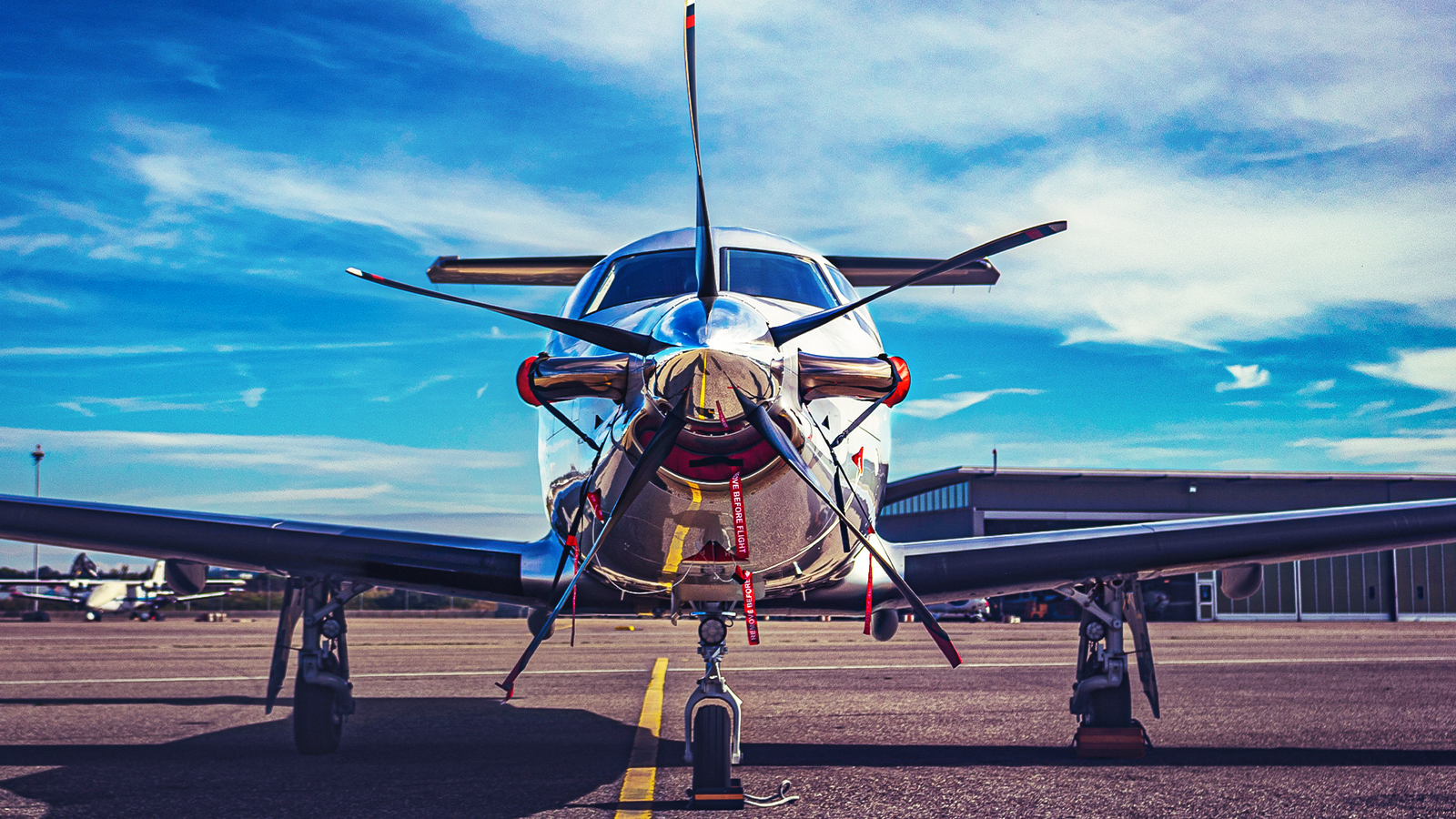
How Much Does It Cost To Charter A Pilatus PC-12 Per Hour In 2026?
Full Article
Original Source
Read the full article at Simpleflying →KhanList aggregates and links to publicly available news content. We do not host full articles from third-party sources. Always verify important information with original sources.