
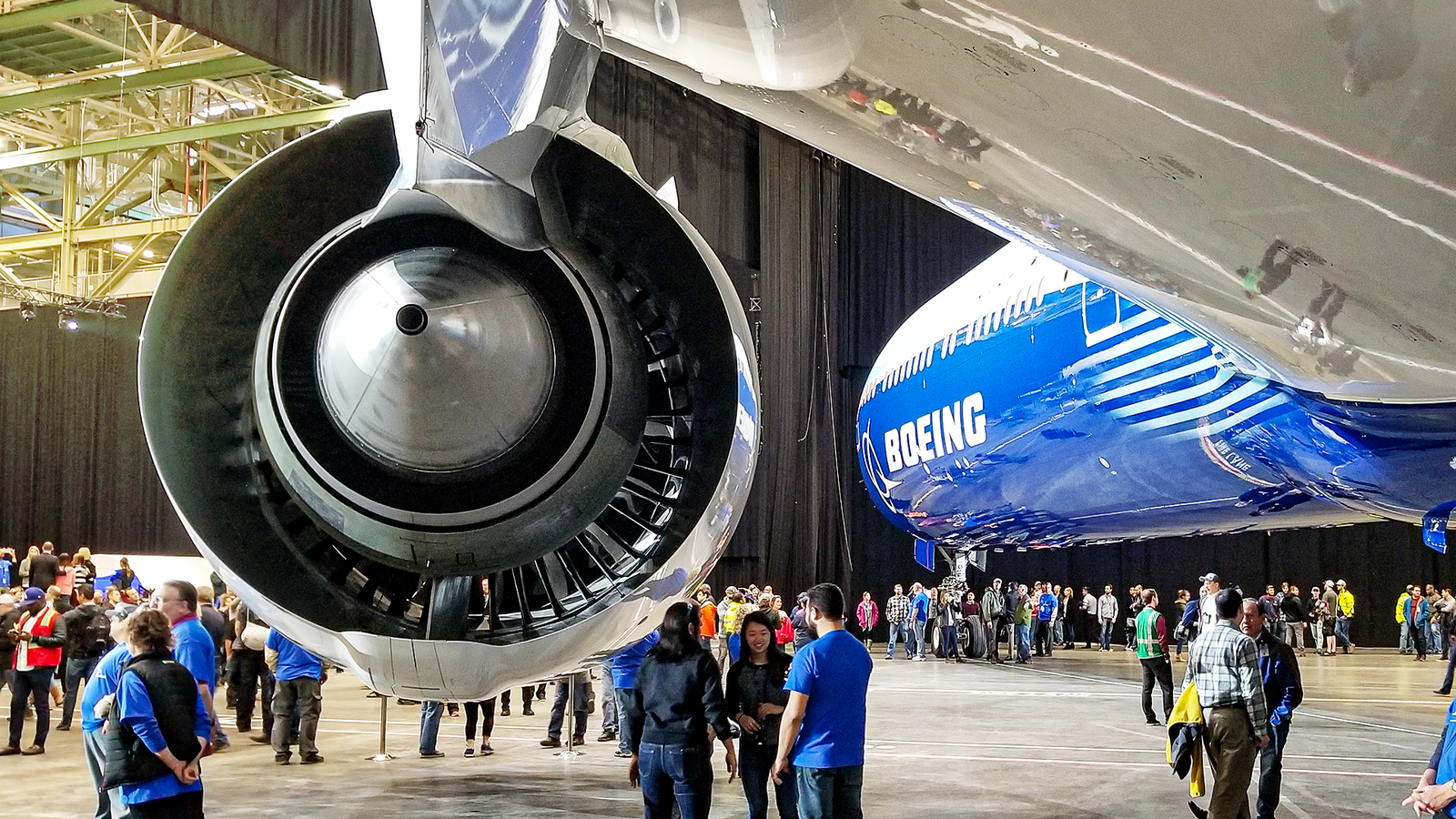
Published Nov 26, 2026, 1:00 AM EST Luke Diaz is a freelance military writer with experience with active duty experience in the US Navy as well as defense and industrial engineering. He is a former Naval Flight Officer who performed tactical air control on the carrier-based E-2 Hawkeye. While General Electric has not released an official price list for its enormous GE9X engine, it is estimated to cost between $40 million and $45 million, which adds up to $90 million per Boeing 777-9 on paper. This is significantly more than the retail prices of super-sized widebody powerplants like the GE90 and the Rolls-Royce Trent XWB. However, commanding the highest commercial engine price in aviation history has not resulted in simple assembly-line profits. Early factory batches cost significantly more to build than launch airline contracts pay back while Boeing finishes testing the airframe. In fact, GE executives warned in January that initial production losses on the GE9X would double this year as shipments increased ahead of commercial service. Behind that exorbitant price tag lies an unrivaled sole-source agreement on Boeing's flagship twinjet, backed by heat-resistant ceramics, 3D-printed alloys, and record-breaking thrust. However, after volume discounts and multi-year maintenance contracts are factored in, airlines rarely pay anywhere near catalog value. With years of mechanical issues, grounded test aircraft, and mid-turbine seal repairs, this engineering accomplishment has become a high-stakes financial race to 2027. How A Sole-Source Monopoly & Service Bundles Mask The Real Price Credit: GE General Electric secured its sole-source grip on the Boeing 777X through a calculated competitive truce years earlier. Back in 2008, GE refused to power the Airbus A350-1000 so it would not undercut its lucrative GE90 franchise on the Boeing 777-300ER. When Boeing later launched the 777X, Pratt & Whitney and Rolls-Royce stayed away after GE Aviation head David Joyce flatly rejected sharing the airframe. Without a rival engine maker bidding prices down, GE unveiled the GE9X at the 2013 Dubai Air Show alongside massive launch commitments. Emirates agreed to buy 300 engines in a paper deal valued at over $11 billion, roughly $37 million apiece before discounts, while Qatar Airways followed with a $3.8 billion order covering 50 jets. However, if carriers negotiate significant volume discounts, actual airline invoices hardly resemble flashy airshow figures. GE frequently incorporates engine hardware into multi-year service contracts in order to further obfuscate per-unit pricing. For instance, because it included a 12-year TrueChoice overhaul agreement, Singapore Airlines' 2022 order for 22 spare GE9X engines had a $2.8 billion headline value, well over $100 million per engine. With this 'razor-and-blades' strategy, GE is able to absorb early production losses while securing three decades of revenue from sole-source repairs on demanding ultra-long-haul routes. Why GE Detuned A World-Record Engine To Save Fuel Credit: GE Raw mechanical muscle anchors the GE9X's lofty sticker price, proven during a November 2017 ground run in Peebles, Ohio, when a test engine hit 134,300 pounds of thrust (597 kN) to claim a Guinness World Record. After the historic test, Joyce said: "While we didn't set out to break the thrust Guinness World Records title, we are proud of the engine's performance, which is a testament to our talented employees and partners who design and build outstanding products for our customers." Airline pilots will never use that record power on a routine departure. That's because General Electric purposefully derated the production turbofan below the 115,300 pounds of thrust (513 kN) of its earlier GE90-115B brother. With the help of a front fan bigger than a Boeing 737-800 cabin and 16 steel-tipped carbon-fiber blades that reduce fuel consumption by 10%, the operating cooler prolongs the time between shop overhauls, maintains costly core blades, and saves fuel over thousands of flights. Size and efficiency anchored GE's sales pitch to global long-haul carriers when US regulators cleared the engine in September 2020. According to Composites World, GE Aviation CEO John Slattery declared at certification: "There is no substitute that can achieve the combination of size, power and fuel efficiency." Test flights aboard GE's Boeing 747-400 flying testbed even ran so quietly that a pilot checked cockpit gauges just to confirm the engine was still running. Space-Age Ceramics And 300 3D-Printed Parts Drive Up The Bill Credit: Boeing The engine's core is made of exotic, heat-resistant materials, which contribute significantly to its price tag of over $40 million. Ceramic matrix composites, lightweight, space-age ceramics that can resist temperatures up to 2,400°F (1,315°C) without melting, are packed into the GE9X's combustor and turbine. This allows the engine to run hotter and more effectively while requiring far less cooling air. Program leader Ted Ingling stated: "The ceramics allowed us to go to 60:1 [pressure ratio] inside the GE9X. So if I'm Boeing and I'm looking for the lightest-weight engine so that I can turn that weight into passengers - it's range, it's fuel, it's passengers." Industrial 3D printing increases costs by generating over 300 complicated pieces per engine, such as one-piece fuel nozzles that reduce weight by 25% and electron-beam-melted titanium-aluminum turbine blades. Even with unusual alloys, engineers strove to make layouts tidy enough for line mechanics. In November 2025, GE Aerospace technology chief Mohamed Ali stated: "There is elegance in simplicity with the fewest number of parts. If the architecture is done correctly, you'll occasionally have to fix a sink or replace appliances, but the house functions and is practical." Billions In Losses Force Airlines To Keep Aging Quadjets Flying Credit: Boeing The GE9X has had a difficult development process, characterized by frequent technical setbacks that have repeatedly delayed Boeing's certification deadline, despite its exorbitant valuation. The 777-9's first flight was postponed until engineers completed a permanent redesign in 2019 due to early compressor vane wear, which required General Electric to airlift four engines back to its facilities by Antonov freighters. Long after the engine was certified by US regulators in September 2020, new mechanical curveballs caused turbulence during flight testing. All four 777-9 prototypes were grounded for five months after a titanium thrust link broke on a test plane returning from Hawaii in late 2022. In January 2026, shop inspectors found a damaged mid-turbine seal that was prematurely wearing due to excessive heat stress. Although US regulators made approval of the patch a severe requirement for final 777-9 certification, GE rebuilt the seal and started shipping improved engines to Boeing in the third quarter. Overwater ETOPS testing was halted by that congestion, which also prevented GE from recording shipment income. That left the company scrambling to prove the repair will not derail its 2027 service-entry target. Seven Years Of Delays Credit: Boeing Before a single paying passenger boards the aircraft, seven years of schedule setbacks had cost both manufacturers billions of dollars. After delaying the first 777-9 deliveries to 2027, Boeing incurred approximately $15 billion in cumulative pre-tax program expenditures through late 2025. In the meantime, General Electric warned investors in January that early plant losses would double this year as production capacity increases. The company spent more than $2 billion creating the GE9X. Billions were paid by irate buyers to make up for lost widebodies. Emirates President Sir Tim Clark blasted Boeing in October 2024 to Business Insider: "I fail to see how Boeing can make any meaningful forecasts of delivery dates. Emirates has had to make significant and highly expensive amendments to our fleet programs as a result of Boeing's multiple contractual shortfalls." Dubai responded by committing $5 billion to overhaul Airbus A380-800 and 777-300ER cabins, while Lufthansa Group CEO Carsten Spohr stripped the 777-9 from summer 2027 schedules and kept aging Airbus A340-300 quadjets flying longer. When the delayed twinjet finally reaches airport gates, travelers will step into a noticeably calmer cabin shaped by its composite wing and quieter engines. Boeing sculpted thinner sidewalls to widen the interior to 235 inches (597 cm) for 18-inch (45.7 cm) economy seats, paired with larger windows and higher cabin humidity. Cruise pressurization drops to 6,000 feet (1,829 meters), helping long-haul fliers land feeling far fresher. What To Watch In 2027 And Beyond Credit: GE Everything now hinges on a single component: the redesigned GE9X mid-turbine seal. Until federal regulators sign off on the modification, Boeing cannot secure final type certification to clear the 777-9 for commercial service, keeping 2027 delivery milestones razor-tight across 682 firm orders and more than 1,360 installed engines. At the same time, a serious financial stalemate looms over roughly two dozen already-built 777-9 jets parked outside Seattle awaiting approval. Emirates officially rejected its first batch of 10 parked airframes in July. Emirates president Tim Clark dismissed them as "baked bean cans," and Lufthansa has likewise balked at taking older aircraft that require extensive retrofits. As a result, Boeing and General Electric must either absorb costly rework or hunt for new buyers. Looking ahead to 2030, Airbus is evaluating a stretched 400-seat A350-2000 that may require greater thrust than Rolls-Royce's Trent XWB-97 can deliver. If Airbus launches that larger twinjet, industry watchers will track whether GE breaks its 2008 truce and ends Rolls-Royce's exclusive grip on the A350 family, potentially putting the $40 million GE9X, or a tailored derivative, beneath an Airbus wing.
How Much Does A GE9X Engine Cost?
Full Article
Original Source
Read the full article at Simpleflying →KhanList aggregates and links to publicly available news content. We do not host full articles from third-party sources. Always verify important information with original sources.