
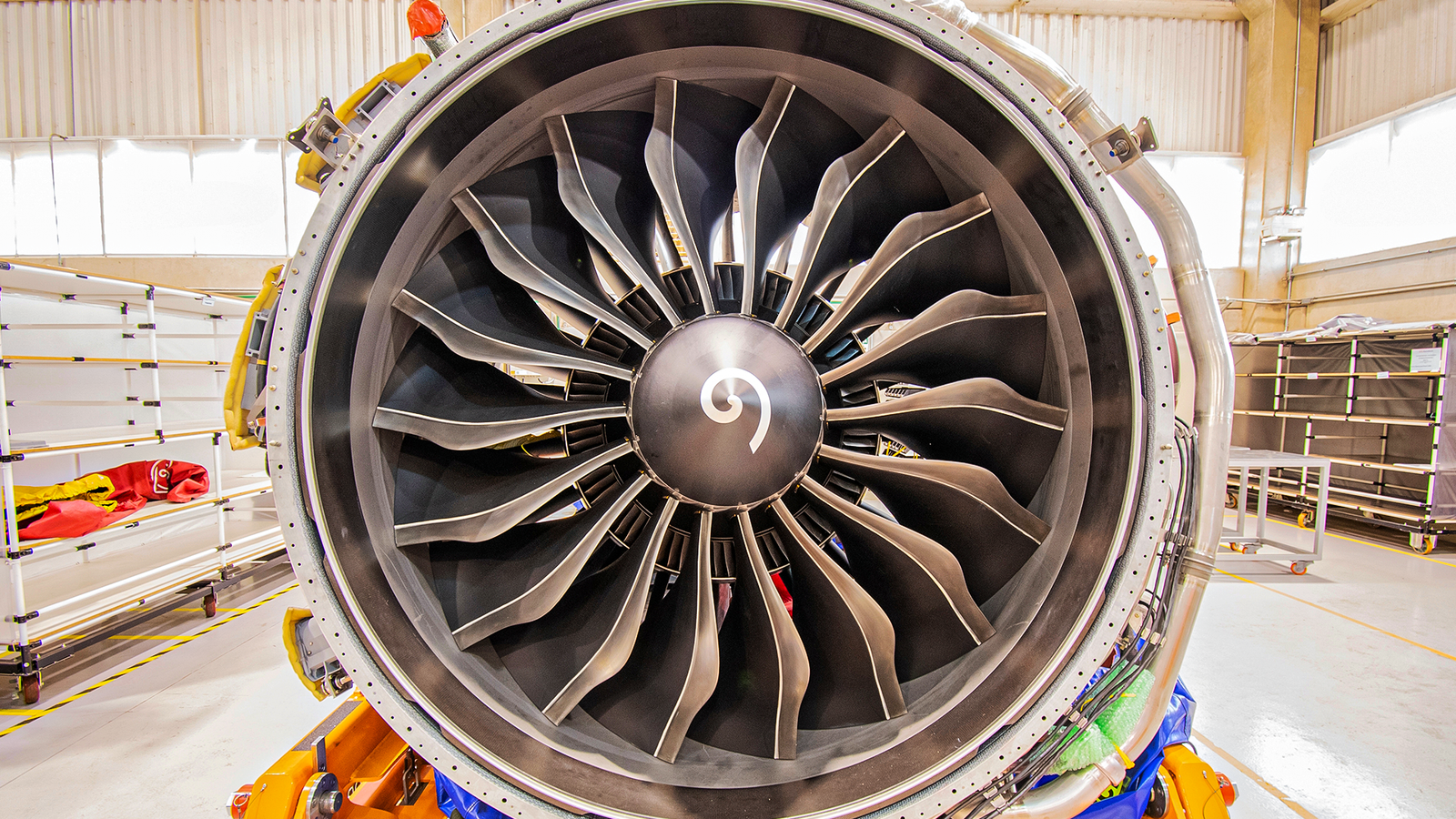
On paper, a manufacturer's catalog sheet is a clean, reassuring place. At the top of many engine valuation benchmarks, you will find the CFM LEAP, the exclusive powerplant for the Boeing 737 MAX and co-dominant engine on the Airbus A320neo family, pegged at a baseline market value of $12 million to $18 million per unit. But walk into a board meeting where a major carrier is acquiring standalone spare hardware, and that tidy catalog figure disappears entirely. In the case of EVA Air’s high-profile August 2026 acquisition, the Taiwanese carrier committed up to $131 million for a batch of just five spare LEAP-1A30S engines, translating to an effective outlay of roughly $26.2 million per engine once dedicated support packages and spare parts pools were factored into the contract. How, then, can an airline reconcile a theoretical $15 million list price with a $26.2 million standalone spare invoice, or, conversely, the steep 40% to 50% volume discounts that mega-fleets routinely extract during multi-year aircraft orders? Between GE Aerospace and Safran’s duopoly market leverage, surging supply chain inflation, and bleak maintenance realities like $4.5 million performance-restoration shop visits, the true cost of a CFM LEAP in 2026 is by no means a fixed price. Dismantling The Illusion Of A Uniform Market Price According to market intelligence data from Safe Fly Aviation, a brand-new LEAP-1A or LEAP-1B carries a baseline catalog and market appraisal value ranging from $12 million to $18 million per unit. With this considered, quoting this sticker price to an airline fleet manager is akin to citing the window sticker of a commercial airliner; it bears little resemblance to the actual transaction price. When major carriers place multi-decade fleet orders for A320neo or 737 MAX families, original equipment manufacturers (OEMs) like GE Aerospace and Safran use aggressive discounting structures. Through bundled airframe-and-engine packages and volume concessions, airlines routinely extract steep discounts of 40% to 50% or more, compressing actual net transaction prices down into the $7 million to $10 million range. Conversely, when an operator steps outside a massive fleet order to purchase a standalone spare engine to protect its network against unexpected AOG (Aircraft on Ground) events, those volume discounts can disappear overnight. A clear example of this market reality emerged in August 2026, when EVA Air secured board approval to acquire five spare LEAP-1A30S engines for up to $131 million. As reported by Aviator.aero, that single transaction valued the hardware, spare parts pools, and technical support terms at roughly $26.2 million per engine unit. The stark pricing divergence, ranging from a subsidized $8 million fleet cost to a $26.2 million standalone spare premium, begins to show how CFM International and lessors manage asset valuation. The key point is, however, that specific variant ratings and aerodynamic architectures, such as the LEAP-1A versus the LEAP-1B, alter these baseline valuations on the global market. Two Different, Yet Similar, Engines The core engineering philosophy is shared across the family, but the market valuation diverges sharply between the LEAP-1A, which powers the A320neo family in a duopoly market alongside Pratt & Whitney’s GTF, and the LEAP-1B, which has a sole-source monopoly powering every 737 MAX. According to technical appraisals from ISTAT and manufacturer structural guidelines, these mechanical and competitive divergences directly dictate how lessors and airlines price each variant. Each distinction carries heavy economic consequences for operators managing asset portfolios. The larger 78-inch fan (198.12 centimeters) and higher thrust profile of the LEAP-1A require distinct nacelle integration and pylon interfaces, while the LEAP-1B's tighter 69-inch (175.26 centimeters) geometry was custom-engineered to fit the lower-slung ground clearance of the 737 airframe design. Consequently, market liquidity and residual value curves behave differently for each variant, influencing how lessors structure spare pools and long-term financing. The reality is that acquiring the hardware is just the opening chapter of a twenty-year financial commitment. Once these powerplants are hung beneath narrowbody wings across global networks, maintenance contracts and long-term rate-per-flight-hour agreements begin to shape airline balance sheets. Keeping Engines On The Wing Getting those all-important hardware delivery slots is just the beginning of a financial commitment that spans decades. Once a narrowbody aircraft enters commercial service, the acquisition ledger gives way to relentless operational cash burn driven by maintenance reserves and Rate Per Flight Hour (RPFH) agreements. According to 2026 MRO benchmarks published by Safe Fly Aviation, airline treasurers quickly discover that the sticker price accounts for only a fraction of an engine's total cost of ownership. Operating a CFM LEAP powerplant incurs ongoing maintenance reserve contributions ranging from $350 to $600 per flight hour, a substantial escalation compared to the mature CFM56-7B benchmark of $200 to $350 per flight hour. When these powerplants finally cycle into MRO facilities for heavy maintenance, full performance-restoration visits demand anywhere from $3,000,000 to $4,500,000+ per event, as noted in Simple Flying analysis. That heavy capital outlay is heavily influenced by the incorporation of advanced high-pressure turbine (HPT) durability kits and module replacements, dwarfing the $1,500,000 to $3,500,000 overhaul baseline typical of older CFM generation powerplants. To mitigate these cash-flow shocks, CFM International offers structured dollar-per-engine-flight-hour pricing programs designed to lock in cost predictability. But even with structured support agreements in place, operators still have to deal with escalating shop visit turnaround times and rigorous technical upgrades. Fixing The Durability Issues The economic reality of operating a narrowbody fleet in 2026 cannot be separated from the intensive engineering interventions needed to keep modern high-bypass powerplants on wing. While the CFM LEAP delivers a 15% reduction in fuel burn compared to the legacy CFM56, early-generation engines operating in harsh, high-cycle environments faced accelerated thermal stress. As detailed in Simple Flying coverage and Aviation International News, issues such as fuel nozzle carbon coking, driven by post-shutdown thermal soak, and high-pressure turbine (HPT) stage shroud wear sent engines to maintenance visits way earlier than expected. To combat these wear patterns, CFM International rolled out comprehensive maturity packages, including advanced HPT durability kits and the Reverse Bleed System (RBS) designed to circulate cooling air through the core after shutdown. By mid-2026, over 1,200 LEAP-1A durability kits had been deployed across global overhaul networks, while similar certification milestones progressed for the LEAP-1B. However, these mandatory retrofits and shop-visit inductions collided with wider aerospace supply chain problems. MRO turnaround times (TAT) stretched from historical windows of 60 to 90 days out to 120 to 180+ days, leaving over 100 aircraft temporarily engine-less worldwide and driving global spare engine leasing costs past historic ceilings. The acute shortage of quick-turn spare engines and congested MRO slots made airline financial planners factor significant contingency buffers into their operating budgets. Ideally, no carrier wants to be dealing with these aftermarket friction points, so a vital alternative strategy has taken center stage across fleet management circles. Who Bears The Financial Burden? When MRO shop queues stretch for months, and spare parts are locked in global backlogs, purchasing an extra engine outright becomes an unviable capital expenditure for many commercial carriers. Instead, airline financial planners increasingly turn to engine lessors like Willis Lease Finance and AerCap to secure short-term and long-term protection against unexpected Aircraft on Ground (AOG) events, as noted by Acumen Aviation. According to market intelligence reports from Safe Fly Aviation, monthly lease rates for next-generation narrowbody powerplants routinely exceed $130,000, reflecting the intense competition for serviceable assets in a supply-constrained environment. Leasing rather than purchasing shifts the financial burden from a heavy upfront balance-sheet liability to a predictable operating expense, protecting carriers from the cash-flow shocks of sudden maintenance visit inductions. Lessors absorb the long-term asset depreciation risks while managing complex maintenance reserves, allowing operators to scale their available engine pools up or down depending on seasonal network demands. The growing reliance on engine leasing highlights how modern airline fleet management has evolved from simple hardware acquisition into dynamic portfolio optimization. Lessors and financial institutions now take on a larger share of narrowbody asset risk, and so the true economic value of a CFM LEAP is increasingly defined by its liquidity and lease-rate retention across its operating lifecycle. More Than Just A Fixed Price Ultimately, viewing a CFM LEAP engine through the narrow lens of a catalog sticker price or an isolated acquisition invoice misses the entire financial reality of modern narrowbody operations. Airlines balance upfront fleet discounts against twenty years of escalating maintenance reserves, rigorous durability retrofits, and soaring shop visit costs, so the true price of powering the world's most popular single-aisle jets is defined by lifecycle endurance. The emergence of mature Used Serviceable Material (USM) streams and advanced hot-section upgrades is something that will look to establish a new economic baseline for narrowbody powerplants. Whether operating under a twenty-year rate-per-flight-hour agreement or navigating spot-market spare leases exceeding $130,000 monthly, airline financial planners must treat engine management as an active portfolio exercise rather than a passive capital expense. In an aviation market where margins are razor-thin, mastering the hidden costs of the LEAP engine separates profitable fleet expansion from grounding liabilities.
How Much Does A CFM LEAP Engine Cost In 2026?
Full Article
Original Source
Read the full article at Simpleflying →KhanList aggregates and links to publicly available news content. We do not host full articles from third-party sources. Always verify important information with original sources.