
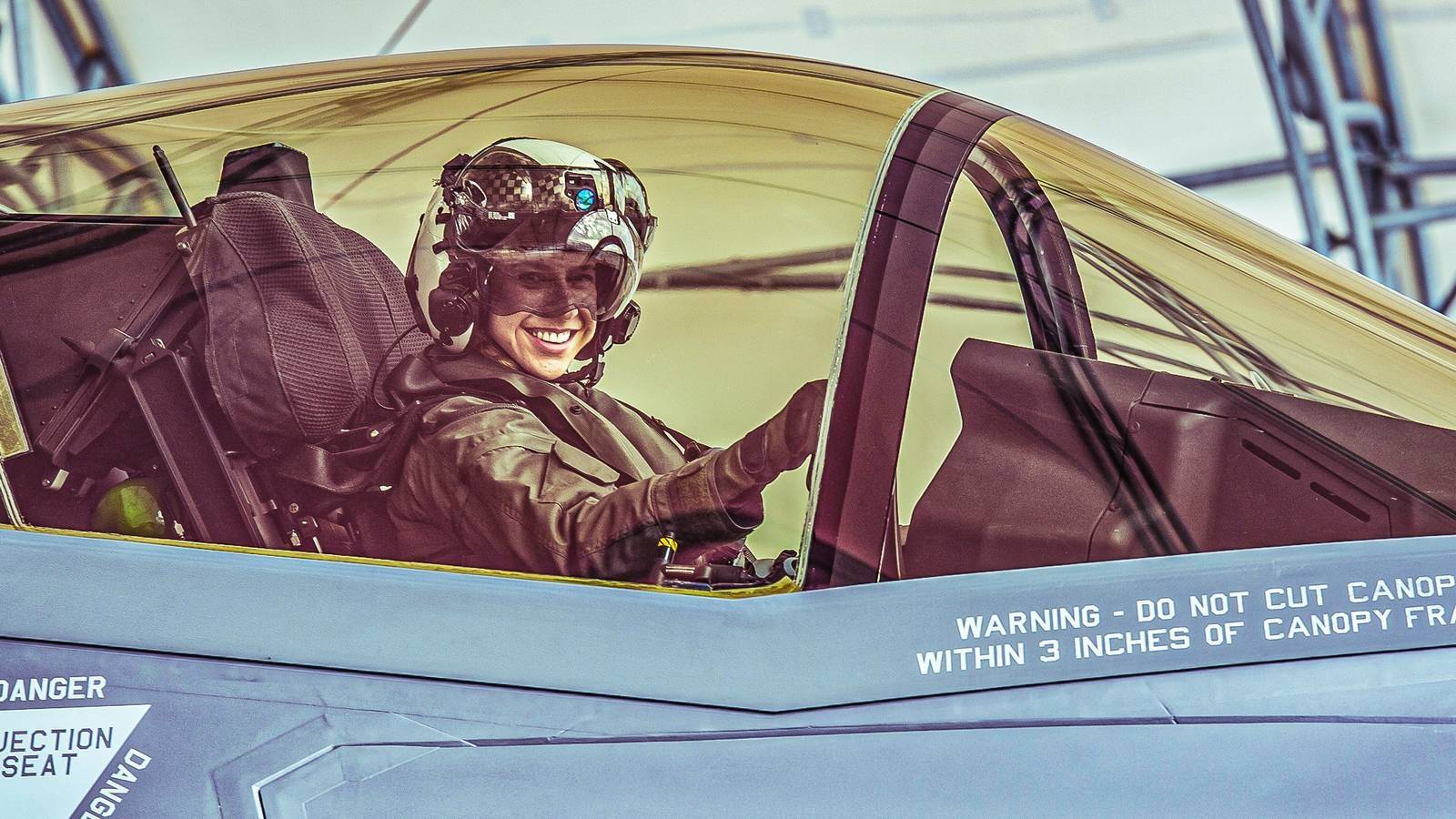
Credit: Marine Corps Air Station Beaufort | Simple Flying Published Aug 20, 2026, 4:00 AM EDT Daniel comes to Simple Flying with a business focused approach to the aviation world. Daniel enjoys analyzing strategy and how companies move against each other to gain a step ahead in the skies. Besides strategy, Daniel also has a passion for aircraft design and the history of aviation. Based in New York Sign in to your Simple Flying account If you want to be a pilot, the airlines are the typical route to build a career, and if you are dedicated to serving your country, there's also the US military. The United States Air Force is the branch that comes to mind for most people when considering military aviation, while the US Navy also has a significant number of pilots. However, you also have another option to serve the country as a pilot, and that is to go through the US Marines. You may think that there's little difference between flying for any of these three branches, but this isn't really true at all. Aviators in the three branches are trained for different missions, fly different aircraft in some cases, and Marine pilots notably have to complete 'The Basic School' (TBS) for ground combat leadership first before flight training. The Marines are trained to be infantrymen first, and some also happen to be pilots. It's a separate mindset from other branches, and the pay can look different as well. Basic Salaries For Aviators In The US Marines Credit: Shutterstock Becoming a USMC pilot first requires a four-year college degree (an aviation degree is not required) and then entering the service as an officer (enlisting will not get you selected as a pilot). Applicants may commission as officers through the Officer Candidates School (OCS), Platoon Leaders Class (PLC), Naval Academy, or Naval ROTC. You'll need to score well on the Aviation Selection Test Battery (ASTB) and pass a strict medical exam before completing TBS. After six months at TBS, officers can then begin aviation indoctrination and flight training. All USMC pilots are officers, and officer pay is constant across all branches of the US Armed Forces, instead varying based on years of service. The lowest rank in the USMC, Second Lieutenant, is classified as O-1, and the average salary is roughly $56,000 per year. This rises to roughly $68,000 for an O-2 First Lieutenant and $87,000 for an O-3 Captain. An O-4 Major will earn about $101,000 per year in base pay, an O-5 Lieutenant Colonel will earn roughly $121,000 per year, and an O-6 Colonel will earn $144,000 per year in base pay. The lower categories typically come automatically, with the O-2 promotion coming after 24 months of active commissioned service and the O-3 promotion coming at the five-to-six-year mark. Meanwhile, the higher ranks are more competitive, only being awarded after a review of your record and accomplishments, along with a fitness review. The O-5 and O-6 ranks can usually only be held after a decade or so of service, but the positions are also the highest-paying ranks. The Added Bonuses For USMC Pilots Credit: Shutterstock While the various branches of the US military have identical base salaries for officers, they differ in their incentives. Depending on the staffing situation for a specific branch, the incentives can be almost as high as the base salary. In the US Marine Corps, the biggest added incentive is the retention bonus, which can total up to $320,000 and requires either a 48-month, 72-month, or 96-month added service obligation. This can total up to an additional $40,000 a year just from the retention bonus, and this isn't the only added benefit. The USMC provides its airmen with a basic allowance for housing (BAH) and basic allowance for subsistence (BAS), which grants the aviator thousands of additional tax-free dollars per year. Then, there's also the aviation career incentive pay (ACIP), which ranges from $150 per month to $1,000 per month, with the rate depending on years of service. In total, the salaries for USMC aviators can vary anywhere from over $50,000 for new pilots to nearly $200,000 per year for the most experienced airmen. Flying for the US Marines won't give you the same massive paychecks that you'll see at the world's largest airlines, but it's still a remarkably lucrative career. What's more, a career with the USMC means that you don't need to pay over $100,000 for flight training, and the Corps also offers tuition assistance for college. However, those who have served regularly steer people away from the Marines unless they have a genuine desire to serve the nation, and for those who do, it's more rewarding than any other job. Pilot Pay In The US Navy Credit: Shutterstock Just like in the US Marines, all US Navy pilots are commissioned officers, and it also uses the same O-1 to O-10 ranking system for officers (although it labels the categories differently than the Marines). The base salaries in the Navy are identical to the Marines, as well as in other branches. For early O-1 Ensigns, pay rates typically start at under $50,000, while O-4 Lieutenant Commanders may find themselves earning over $113,000, and an O-6 Captain will receive between $96,000 and $172,000. The actual salaries depend on years of service. Similarly, the US Navy offers aviation career incentive pay (ACIP), which ranges from $125 per month to $840 per month, as well as a BAH and BAS. Meanwhile, the Navy also offers a retention bonus, but it looks very different from what the USMC offers. The Navy's Aviation Command Retention Bonus (ACRB) pays out $18,500 per year for a two-year commitment or $43,000 per year for a three-year commitment. Officer Rank Marine Corps Designation Navy Designation O-1 Second Lieutenant Ensign O-2 First Lieutenant Lieutenant Junior Grade O-3 Captain Lieutenant O-4 Major Lieutenant Commander O-5 Lieutenant Colonel Commander O-6 Colonel Captain In general, aviators in the Navy and the Marines earn similar salaries even when taking into account the additional incentives, with differences depending largely on the retention bonus selected by the Navy pilot. In addition, both have the same eight-year minimum service commitment for pilots operating fixed-wing aircraft, although the amount of time actually serving is longer with the Marines due to the longer training period compared to the US Navy. The Role Of The US Marines From The Air Credit: Shutterstock Although the US Marine Corps is generally seen as the infantry counterpart to the US Navy, it still operates over 1,000 aircraft, making it one of the largest military aircraft fleets in the entire world. While the fleet is much smaller than the Air Force, Navy, and Army fleets, this mainly speaks to the sheer size of those three branches. Similar to the Army, and unlike the Navy as well as the Air Force, the Marine Corps operates significantly more helicopters than airplanes, with the V-22 Osprey being its largest fleet. The US Air Force and US Navy both have significant aerial operations, but the US Marine Corps' aircraft missions are focused on supporting ground units. US Marine pilots are trained to be ground officers first, and aviators second, which not only influences the missions that they operate, but also their other responsibilities. Compared to officers in other branches, aviators in the Marines have more responsibilities on the ground and are focused on infantry operations. The US Marine Corps does operate some notable fixed-wing aircraft, such as the KC-130 tanker, C-40A Clipper, F/A-18 multirole fighter, and the F-35B STOL (short takeoff & landing) fighter. But while the United States Air Force, for example, may primarily use combat aircraft for air superiority missions, the Marine Corps' aerial operations are geared towards close air support, which means that it's less common to see USMC planes engage against enemy aircraft. However, they are more than capable of doing so, and pilots are rigorously trained in air-to-air combat. Comparing To Other US Military Branches Credit: Shutterstock There are six branches in the US Armed Forces, five of which conduct aerial operations. The US Space Force, the newest branch, is the only one that does not operate any aircraft, while the US Air Force has the largest fleet of military aircraft in the world. Salaries for pilots in the USAF are similar to those for the USMC and US Navy, but Air Force pilots do tend to take home more money due to larger retention packages. The highest-paying retention bonus pays out $600,000 for a 12-year term. The US Coast Guard primarily operates helicopters, with fixed-wing aircraft making up only about a quarter of its active manned fleet, and unlike the other branches, the Coast Guard is focused on non-wartime missions. This includes roles like search-and-rescue or humanitarian operations. While the base salary for aviators in the US Coast Guard is the same as other branches, pilots will usually take home a little bit less because the US Coast Guard's retention bonus is lower, maxing out at $35,000 per year. The US Army operates a massive fleet of helicopters, as well as fixed-wing airplanes (but no fixed-wing combat aircraft). Unlike in the other branches, the US Army relies on Warrant Officers to fly its helicopters and airplanes, who focus more heavily on flying than the commissioned officers working in other branches. Warrant Officers have their own pay scale, and their pay is slightly lower than commissioned officers, while the Army's retention bonus also maxes out at $35,000 per year.
How Much Do US Marine Corps Pilots Make Compared To US Navy Pilots In 2026?
Full Article
Original Source
Read the full article at Simpleflying →KhanList aggregates and links to publicly available news content. We do not host full articles from third-party sources. Always verify important information with original sources.