
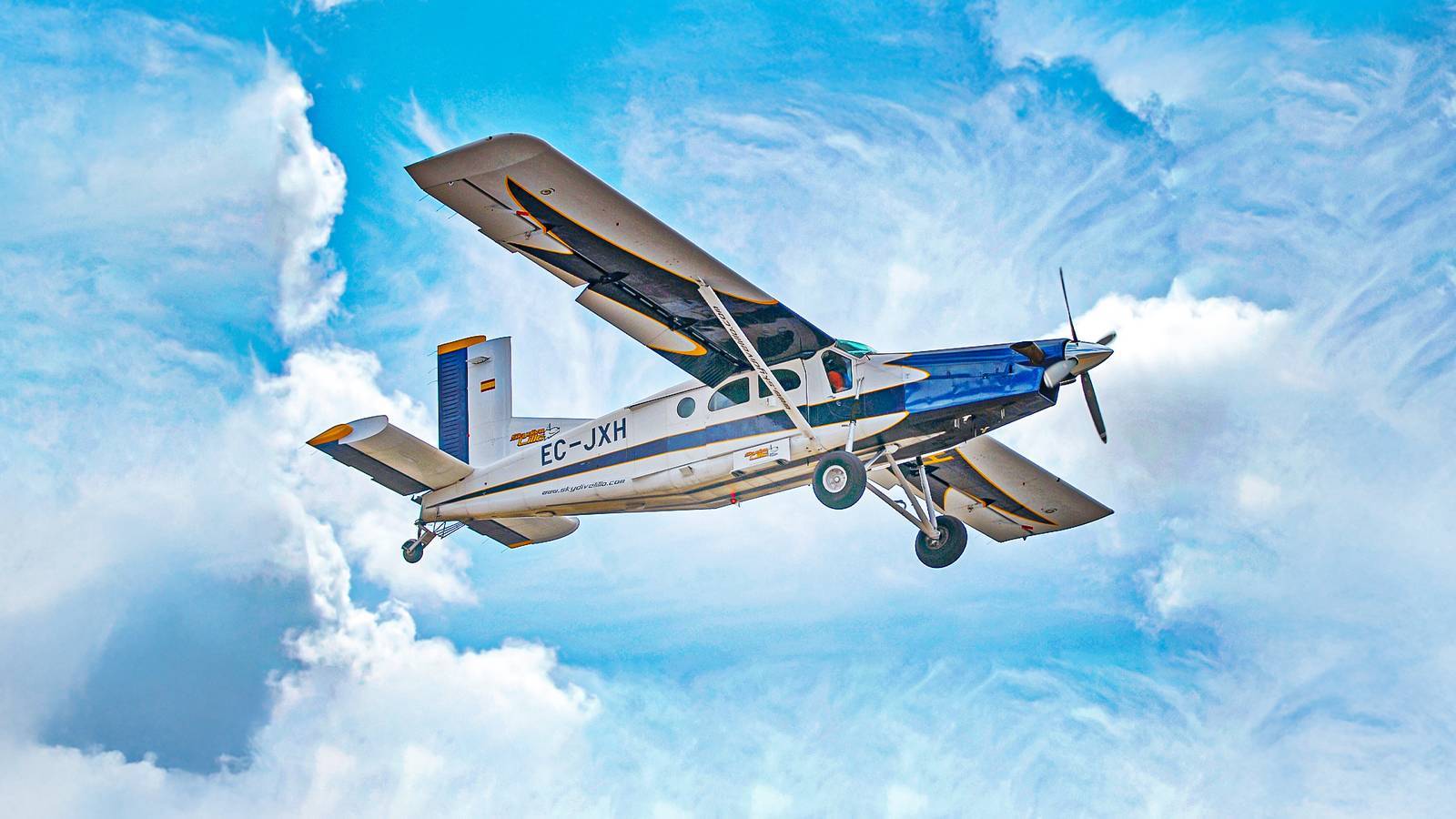
How much cheaper is it to buy and run a turboprop compared to a light jet? The answer is, unfortunately, not very clear-cut, but when evaluating private aircraft ownership, prospective buyers quickly find that even though both categories offer access to regional airfields, their financial profiles diverge sharply once operational factors are taken into account. Choosing between a high-performance single or twin turboprop and a light jet is easily one of private aviation's most contentious decisions. The cost difference matters for corporate flight departments and high-net-worth individuals who want to optimize travel budgets without overpaying for capability they rarely use. After all, cost ultimately drives the decision. All Depends On What You Need It For On average, a modern executive turboprop costs 30% to 45% less to own and operate, on an hourly direct-cost basis, than a comparable light jet. Benchmark operational data from SkyCost puts popular single-engine turboprops like the Pilatus PC-12 around $1,100 per flight hour in direct operating expenses, while twin-engine turboprops like the Beechcraft King Air 350i average roughly $1,500 per hour. By contrast, popular light jets incur noticeably higher variable costs. A Cessna Citation CJ3+ typically comes in at approximately $2,200 per flight hour, whereas an Embraer Phenom 300E runs closer to $2,600 per hour when factoring in fuel, engine reserves, and routine airframe maintenance. It may not seem like a massive increase compared to airline lease costs, but in private aviation, these differences add up significantly over many years of ownership. The trade-off for this price gap comes down to speed and altitude. Light jets trade their higher hourly run-rate for cruise speeds exceeding 450 knots and upper-tier service ceilings above 40,000 feet (12,192 m), while turboprops trade top-end velocity for dramatic fuel efficiency and field versatility. Each aircraft has a specific use case, so if getting to the destination quickly is paramount, operators will look for the more expensive option. How Much Does Each Aircraft Cost To Operate? To get a clearer picture of operating costs across these aircraft types, start by dividing financial commitments into two operational buckets. Looking at variable hourly costs and fixed annual overhead separately can help you compare options more clearly. While the purchase price and cabin amenities capture initial attention, recurring cash burn from fuel consumption, engine overhaul reserves, pilot salaries, and hangar fees ultimately determine total cost of ownership over a multi-year horizon. The main variable driving the cost split between turboprops and light jets is thermodynamic efficiency. Turbine engines turning propellers burn significantly less Jet-A per hour at lower altitudes than high-bypass turbofans operating during takeoff, climb, and regional cruise. Maintenance power-by-the-hour programs and hull insurance premiums further widen the gap, as high-speed jet airframes need more complex inspections and command higher insurance underwriters' baselines. Operating Metric and Cost Component Pilatus PC-12 (Single Turboprop) Beechcraft King Air 350i (Twin Turboprop) Cessna Citation CJ3+ (Light Jet) Embraer Phenom 300E (Light Jet) Typical Fuel Burn ~66 gal/hr (250 L/hr) ~120 gal/hr (454 L/hr) ~150 gal/hr (568 L/hr) ~180 gal/hr (681 L/hr) Direct Operating Cost (Hourly) ~$1,100 / hr ~$1,500 / hr ~$2,200 / hr ~$2,600 / hr Average Cruise Speed 290 knots (333 mph) 312 knots (359 mph) 416 knots (478 mph) 464 knots (534 mph) Fixed Annual Overhead (Est.) ~$155,000 / year ~$220,000 / year ~$280,000 / year ~$310,000 / year For instance, an owner flying a PC-12 for 300 hours annually can expect total direct variable expenses to hover near $330,000. Operating a Phenom 300E across that same 300-hour flight profile pushes direct variable expenses past $780,000, or an annual operational variance of nearly half a million dollars before accounting for fixed crew and hangar fees. All About The Use Case Corporate flight department managers and aircraft brokers will consistently emphasize matching an airframe to mission profile rather than brand prestige, even though many customers naturally gravitate to a well-known manufacturer. It is important to note that on mission legs under 400 nautical miles (740 km), light jets spend a disproportionate amount of their total flight time climbing to and descending from high cruising altitudes, preventing them from exploiting their speed advantage. Coverage from Aeroclassifieds highlights that the block time difference on a 350-nautical-mile (648 km) trip between an aircraft like the King Air 350i and a Citation CJ3+ is often less than 15 minutes once ground taxi and air traffic control vectors are factored in. As charter broker pricing summaries from FlightStratix indicate, paying a 40% to 60% hourly premium for a light jet on short regional hops yields negligible door-to-door time savings while generating substantially higher fuel burn. Consequently, regional charter operators and fleet managers view turboprops as unmatched tools for short-field cargo, medevac, and regional passenger transfers. Industry consensus confirms that while light jets dominate the longer stage lengths, turboprops offer superior financial retention and asset utilization for short-haul operational profiles that are far more enticing to prospective buyers. When Is A Light Jet More Suitable? When weighing ownership costs against aircraft performance, stage length dramatically changes the economic breakdown. For missions extending beyond 800 nautical miles (1,481 km), the speed differential of a light jet begins to outweigh the raw hourly savings of a turboprop. For that reason, the increased operational cost of light jets is far less of an issue, because it fills the operational needs far more suitably. A Phenom 300E cruising at 464 knots completes an 800-nautical-mile journey in roughly under two hours, whereas a turboprop cruising at 290 knots requires nearly two hours and 45 minutes. Because the turboprop remains in the air for an additional 45 minutes, its total fuel burn and maintenance accumulation for that specific trip increase, narrowing the absolute cost delta per mission while consuming significantly more productive travel time. This will stand out clearly to potential buyers deciding between the two types. Furthermore, light jets offer superior cabin pressurization differentials and fly well above regional weather layers at FL410 to FL450, offering a smoother flight experience, as noted in Simple Flying analysis. For buyers regularly flying mountain passes or transcontinental sectors with tight schedules, the extra expenditure of light jet ownership holds tangible operational value that a turboprop is not built to match. What Do Turboprops Lack Compared To Jets? Despite their clear financial advantages, turboprops carry specific operational caveats prospective buyers need to calculate; otherwise, they may risk buying an aircraft that doesn't fit their needs. High-altitude weather avoidance is a notable limitation because turboprops typically cruise between 25,000 feet (7,620 m) and 30,000 feet (9,144 m), placing them directly in regional turbulence and icing layers that light jets comfortably overfly, as noted by Monroe Aerospace. Additionally, some single-engine turboprops face specific insurance and operational restrictions when conducting commercial night or overwater operations in certain international jurisdictions. Twin-engine turboprops like the King Air 350i mitigate single-engine redundancy concerns but consume significantly more fuel, narrowing their hourly cost advantage over small entry-level light jets like the Citation M2. Operational Risk and Caveat Impact On Turboprop Ownership Mitigation Strategy Weather and Icing Exposure Lower cruise ceilings place aircraft in weather and turbulence Advanced de-icing boots and tactical radar routing Single Engine Constraints Passenger hesitation over single-engine oceanic routes Opt for twin-engine platforms or dual-generator redundancy Propeller Maintenance Propeller overhaul cycles add recurring airframe expenses Enroll in comprehensive prop and engine coverage programs Buyers will also need to account for propeller overhaul schedules. While turboprop engines, such as the ubiquitous Pratt & Whitney PT6, are renowned for extreme reliability, propeller blade inspections and governor overhauls are recurring maintenance line items absent from jet turbofans. The Rise Of Turboprops In The Private Aviation Market Ultimately, choosing between a turboprop and a light jet comes down to an honest assessment of annual flight distance and mission length. For operators whose typical routes fall under 500 nautical miles (926 km), a turboprop delivers most of a light jet's practical utility at a noticeably lower share of total operating cost. For corporate flight departments seeking maximum runway availability, including access to grass strips, unpaved runways, and short mountain airfields, platforms like the Pilatus PC-12 or King Air 350i are truly unbeatable economic tools. However, if routine missions need rapid point-to-point transit over 800 nautical miles (1,481 km) or require flying above severe weather, the higher acquisition and hourly costs of a light jet are a justified investment. As private aviation operating costs evolve throughout 2026, turboprops continue to solidify their position as the industry's most cost-effective business tools. Evaluating true annual flight hours against stage-length metrics helps ensure buyers select an airframe that balances operational comfort with disciplined financial performance, rather than ending up wishing they had chosen differently.
How Much Cheaper Is A Turboprop To Own Than A Light Jet In 2026?
Full Article
Original Source
Read the full article at Simpleflying →KhanList aggregates and links to publicly available news content. We do not host full articles from third-party sources. Always verify important information with original sources.