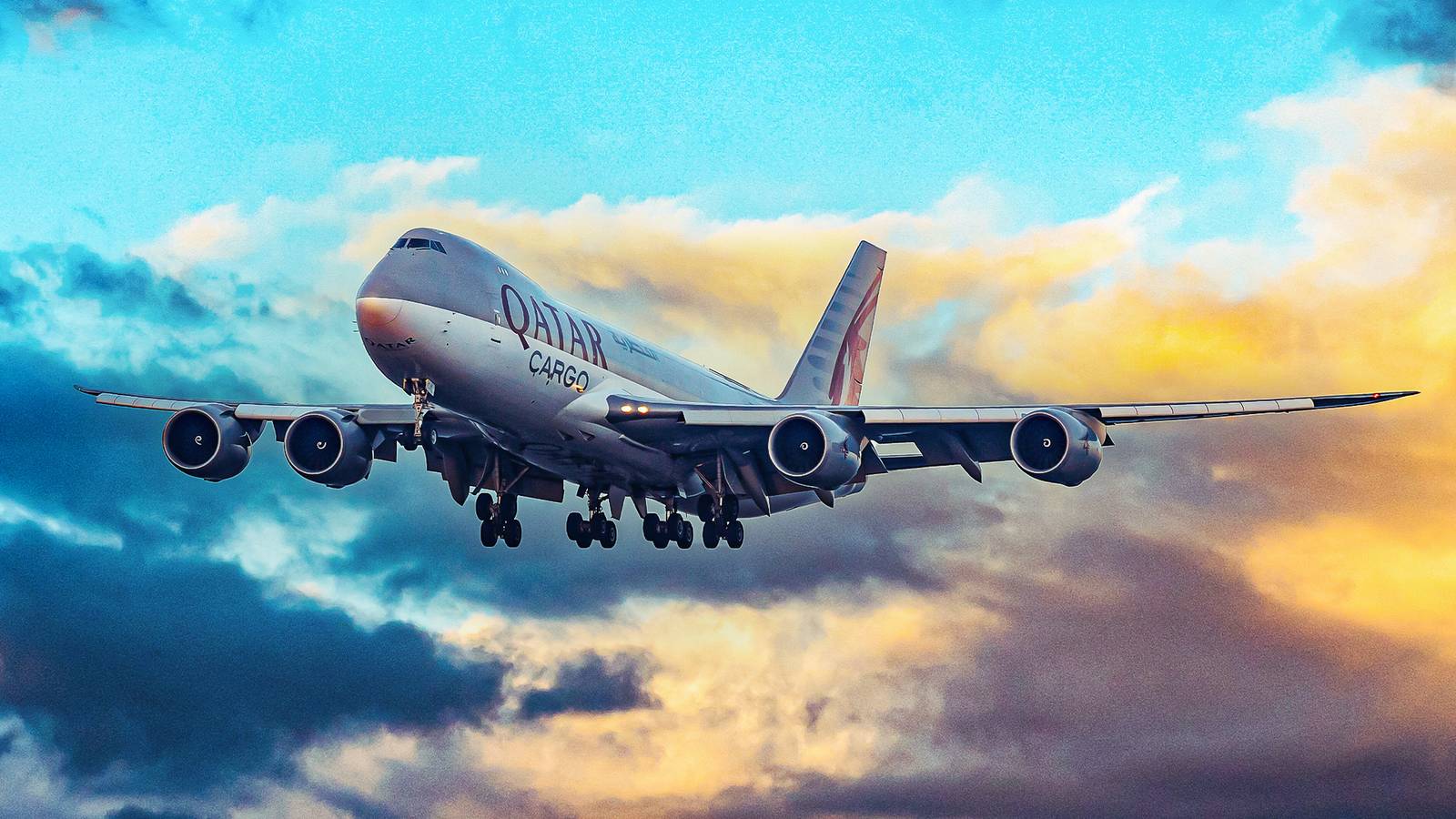
Credit: Shutterstock | Simple Flying Published Jul 29, 2026, 5:00 PM EDT Passionate about promoting aviation and the beauty of flight, Antonio loves to take photos, read, and write about airplanes and helicopters as well. Based in Palermo, Italy , he is a frequent airshow visitor. Sign in to your Simple Flying account Hourly operating costs remain one of the most important metrics in commercial aviation because they influence everything from airline profitability to cargo rates and aircraft retirement decisions. Although passenger Boeing 747 fleets have largely disappeared, hundreds of freighter missions continue every day, making accurate operating-cost estimates as relevant as ever. The real answer isn't that a Boeing 747 costs $20,000, $30,000, or $40,000 per hour—it costs all three, depending on whether you're measuring direct operating costs or charter pricing, and confusing those two figures is why almost every published number disagrees. In 2026, a scheduled operator running a Boeing 747-400 or Boeing 747-8 on a fixed route pays somewhere between $20,000 and $30,000 in direct operating costs per block hour. Charter a jumbo for a one-off VIP trip, though, and the meter can run as high as $40,000 an hour. This article breaks down exactly where that money goes, why the range is so wide, and which number actually applies. Calculating the hourly cost of flying a Boeing 747 is far more complex than multiplying fuel burn by today's jet fuel price. Every flight combines fixed expenses such as crew salaries, insurance, financing, and maintenance reserves with variable costs that change according to route length, payload, airport fees, and aircraft utilization. Those factors explain why two equally reputable sources can publish very different hourly figures without either being incorrect. The 2026 Number: $20,000 To $40,000 Per Block Hour Credit: Shutterstock Direct operating cost, or DOC, bundles together the expenses directly associated with each flight into a single hourly figure. Fuel is typically the largest component, but the calculation also includes cockpit and cabin crew, scheduled maintenance reserves, airport charges, air traffic control fees, ground handling, and other operational expenses that rise in proportion to aircraft utilization. It deliberately excludes many broader business costs, such as corporate overhead, marketing, headquarters staff, and in some cases financing or lease payments, allowing airlines to compare the efficiency of different aircraft on a like-for-like basis. For a fully depreciated Boeing 747-400 that no longer carries lease payments or significant financing costs, direct operating expenses generally sit around the lower end of the range, approximately $20,000 per block hour. A newer Boeing 747-8, while benefiting from more modern technology and improved efficiency, often carries higher ownership and financing costs that can push total operating expenses closer to $30,000 per hour. The precise figure varies considerably between operators because no two airlines have identical maintenance agreements, labor contracts, fuel purchasing arrangements, or route structures. It is also important to understand what a "block hour" actually measures. Airlines typically calculate block time from the moment an aircraft pushes back from the departure gate until it arrives at the destination gate. That means the clock includes taxiing before takeoff and after landing, not simply the time spent cruising through the air. Since large international airports can involve lengthy taxi times and occasional congestion, block-hour costs provide a more realistic picture of what airlines actually pay than airborne flight time alone. Charter pricing is an entirely different calculation. Unlike scheduled airlines, charter operators often fly relatively few revenue hours each year, meaning the aircraft's fixed costs must be recovered over a much smaller number of flights. Financing, insurance, hangar rental, administrative expenses, marketing, crew availability, and profit margins all become part of the hourly rate presented to customers. That explains why a chartered Boeing 747 can command hourly prices approaching $40,000 even when the aircraft's direct operating expenses are considerably lower. The two surviving passenger variants also differ less dramatically than many people expect. The Boeing 747-8's General Electric GEnx engines are substantially more efficient than the powerplants available on the 747-400, but the aircraft's fuel savings result from a combination of new engines, aerodynamic refinements, and wing redesign rather than engine technology alone. The newer aircraft is also physically larger, heavier, and capable of carrying additional passengers or cargo. As a result, the improvement is often seen more clearly in cost per seat or cost per tonne of freight than in total dollars spent every hour the aircraft is flying. Fuel: Still The Line Item That Decides Everything Credit: Shutterstock As previously seen on Simple Flying, a Boeing 747-400 burns roughly 3,240 gallons (12,265 liters) of fuel every hour during cruise, or approximately 0.9 gallons (3.4 liters) every second. Few numbers better illustrate the sheer scale of operating a four-engine widebody. Even small changes in the price of jet fuel can translate into thousands of dollars of additional expense on a single long-haul flight, making fuel procurement one of the most important responsibilities for any airline's finance department. And 2026 has been an unfriendly year to be pricing that fuel. According to the IATA fuel fact sheet, average jet fuel prices are forecast near $152 per barrel this year, roughly 70% higher than in 2025, after the closure of the Strait of Hormuz disrupted a huge share of the world's refined product supply. At that pricing, a 747-400's hourly fuel bill alone can push past $10,000, before a single mechanic, pilot, or ground handler is paid. Fuel consumption also varies considerably depending on the phase of flight. Takeoff and climb require substantially more thrust than cruise, while descent uses comparatively little fuel. Weather conditions, routing restrictions, aircraft weight, and even air traffic delays can all influence total consumption during a flight. A heavily loaded freighter departing on an intercontinental mission will inevitably burn more fuel than a lightly loaded passenger aircraft flying a shorter sector, even if both are operated by the same airline. This sensitivity to fuel prices helps explain why the Boeing 747 gradually disappeared from many passenger fleets. Modern twin-engine aircraft such as the Boeing 787 and Airbus A350 can perform many of the same long-haul missions while consuming significantly less fuel overall, particularly on routes that do not consistently fill more than 400 seats. Nevertheless, when payload requirements justify the extra capacity, particularly in the freight market, the jumbo's economics can still make compelling business sense despite its higher hourly fuel bill. Crew And Maintenance: The Bill Behind The Bill Credit: Shutterstock A 747 needs two pilots at minimum, a third on flights over eight hours, and a fourth beyond 12, plus at least 12 flight attendants under one-per-door rules. That crew complement alone makes the jumbo pricier to staff than almost any twinjet flying today. As Simple Flying's breakdown of what Boeing 747 pilots earn in 2026 notes, senior captains at cargo operators like Atlas Air can clear hourly rates well into the hundreds of dollars, a cost that shows up directly in the hourly DOC. Maintenance is the other major variable, and it can swing dramatically depending on the aircraft's age and operator. Four engines don't simply mean twice the maintenance of a twinjet—they require four separate overhaul programs, four sets of inspections, and four opportunities for expensive unscheduled repairs. On some aging 747-400 freighters, the price of a single major engine overhaul can exceed the aircraft's market value, making maintenance planning one of the most important factors in determining profitability. Operators with extensive in-house expertise, including Lufthansa Technik and several major cargo airlines, are better equipped to manage these expenses through dedicated engineering teams, spare-parts inventories, and long-term maintenance contracts. By contrast, smaller operators or short-term lessees often face significantly higher costs, helping explain why two airlines flying identical 747s can report very different hourly operating expenses. Freighters Keep The Jumbo's Economics Working Credit: Shutterstock Passenger 747s struggled to fill 400-plus seats profitably against efficient twinjets, but as a freighter, the math flips. Nose-loading cargo capability and sheer volume let Atlas Air, UPS Airlines, and Cargolux spread that same $20,000-plus hourly DOC across revenue a passenger cabin could never match per hour. Demand has been strong enough that, as Simple Flying recently reported on 747s coming back from the boneyard, cargo operators have begun pulling retired aircraft from long-term storage in Marana, Victorville, and Mojave instead of dismantling them. Many of these aircraft are receiving extensive maintenance work before returning to commercial service, reflecting continued confidence that the jumbo still has profitable years ahead as a freighter. Ironically, that same demand also limits any meaningful reduction in hourly operating costs. As the global 747 fleet continues to shrink, spare parts become increasingly scarce, overhaul capacity tightens, and experienced engineers qualified to maintain the aircraft become harder to find. Those supply constraints help keep maintenance expenses elevated, even as many airframes themselves become relatively inexpensive to acquire. Private Charter: Where The Hourly Rate Doubles Credit: Shutterstock Operating a Boeing 747 as a private charter aircraft pushes hourly costs into an entirely different category. Charter and VIP operators, such as Jetly, commonly quote between $25,000 and $40,000 per flight hour, depending on the variant, mission profile, and operator. In any case, that's substantially above the direct operating costs seen on scheduled airline service. The difference reflects the economics of operating an aircraft that spends far more time on the ground than in the air. Unlike scheduled airlines, which may fly an aircraft 10 to 16 hours per day, VIP and charter operators typically record much lower annual utilization. Because ownership costs such as financing, insurance, hangar, maintenance reserves, crew salaries, and regulatory compliance continue regardless of how often the aircraft flies, those largely fixed expenses must be recovered over far fewer billable flight hours, driving up the hourly charter price. Simple Flying, in its look at the true cost of a Boeing 747 private jet, notes that acquisition costs alone can range from approximately $200 million to well over $500 million for a fully customized VIP aircraft before it completes a single flight. Recovering that enormous investment requires operators to charge premium hourly rates, even before accounting for fuel and maintenance. Positioning flights compound the problem: unlike a scheduled 747 that flies revenue routes back-to-back, a charter jumbo often flies empty to reach the passenger, then empty again afterward, doubling the billable hours needed to cover one round trip. Why The Boeing 747 Still Commands Premium Operating Costs Credit: Shutterstock There is little indication that flying a Boeing 747 will become significantly cheaper in the near future. Fuel prices remain elevated following the supply disruptions of 2026, the worldwide fleet continues to contract, and every retirement reduces the availability of spare parts, overhaul facilities, and technicians with specialized 747 experience. Those structural factors keep operating costs high regardless of whether the aircraft carries passengers, freight, or VIP travelers. For airline planners and finance teams, the practical benchmark remains largely unchanged. Operators should expect scheduled Boeing 747-400 and 747-8 flights to cost roughly $20,000 to $30,000 per block hour, while private charter and one-off missions can approach—or exceed—$40,000 per hour, depending on utilization and mission profile. Although the era of the Boeing 747 as a mainstream passenger airliner has largely come to an end, its economics continue to make sense in specialized roles. For global cargo carriers moving oversized freight and for some governments and ultra-high-net-worth clients operating VIP aircraft, the four-engine jumbo remains an expensive machine—but one whose unique capabilities continue to justify every dollar spent.
How Much A Boeing 747 Actually Costs Airlines To Operate Per Hour In 2026
Full Article
Original Source
Read the full article at Simpleflying →KhanList aggregates and links to publicly available news content. We do not host full articles from third-party sources. Always verify important information with original sources.