
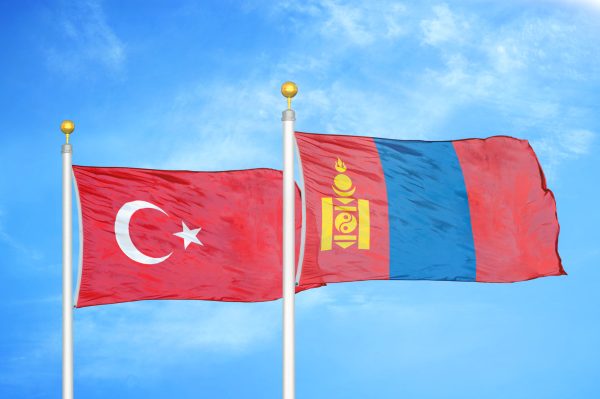
This year, Turkiye and Mongolia launched the country’s first ammunition factory, marking an elevation in bilateral relations but also jumpstarting Mongolia’s defense manufacturing capabilities. It’s part of a larger trend: in the last decade, Mongolia’s defense sector has diversified immensely. Mongolia and Turkiye established a strategic partnership in January 2025 during Mongolian President Khurelsukh Ukhnaa’s state visit to Ankara. That was followed by several high-level visits by Turkish officials. In October 2025, Turkish Minister of National Defense Yasar Guler paid an official visit to Ulaanbaatar at the invitation of his Mongolian counterpart, Batlut Damba. The two sides discussed opportunities to deepen cooperation in military education, training, and officer exchange programs. During the same visit, Guler also participated in the inauguration of the new ammunition factory’s production line. The Mechanical and Chemical Industry Corporation, or MKE, a state-owned Turkish defense company, had signed a formal contract with Mongolia’s Defense Industrial Corporation in 2024 to establish a local ammunition production line in Mongolia. It’s MKE’s second overseas facility, following a production line in Jordan – and perhaps, more importantly, Mongolia’s first domestic ammunition factory. In August 2026, Mongolia announced that the MKE factory had officially begun production. In an interview, Batlut stated that Mongolia has now produced three types of ammunition. The government isn’t done yet; it is now looking to establish a drone factory as well. Turkiye has long been a reliable defense partner for Mongolia. Under a 1999 agreement, Ankara provides annual grants of $1 million to Mongolia’s defense sector. The two countries regularly exchange visits and hold training of military personnel. Turkiye is also an active participant in the Khaan Quest international military exercise, which is held annually in Mongolia. As seen by the new ammunition factory, they are expanding cooperation in the defense industry, including technical assistance. Turkiye is not the only country improving defense relations with Mongolia, either. In the last several years, Mongolia has also expanded defense and military cooperation with “third neighbors” such as Japan, India, and the United States. The United States has not only participated in but sponsored the Khaan Quest exercises since 2003. Cooperation is expanding into new domains as well. In July 2026, Mongolia participated in the U.S.-led Cyber Shield training in Little Rock, Arkansas. NATO’s Science for Peace and Security (SPS) Program also assists Mongolia’s cybersecurity center; notably, both the U.S. and Turkiye are NATO members. India also supports Mongolia’s cyber defense systems and participates in Khaan Quest each year. In addition, India and Mongolia conduct Nomadic Elephant, an annual joint military training exercise. In 2025, New Delhi established a defense attaché in Ulaanbaatar for the first time. In 2025, Japan and Mongolia’s Transfer of Defense Equipment and Technology Agreement came into force. Now Tokyo can supply Mongolia with non-lethal equipment such as defense hardware, surveillance, and radar systems for border security. While Mongolia’s third neighbors help diversify and modernize the country’s military, Ulaanbaatar maintains the highest level of defense ties with its only neighbors, Russia and China. Mongolia and Russia conduct the annual Selenge military drills, focusing on tactical operations as well as counterterrorism training. With its southern neighbor China, Mongolia conducts the “Steppe Partners” military drills, training for counterterrorism, border security, and disaster relief operations. Strategically, Mongolia refrains from joining any formal military alliances or bloc, but with Ulaanbaatar looking to modernize its military and defense sector, new initiatives and cooperation will come handy. Global military spending reached an all-time high of $2.9 trillion in 2025, and Mongolia is well aware of the new shift. Turkiye, with its well-established defense industry, is a prime partner in Mongolia’s efforts. After Turkiye said yes to building an ammunition factory, it could also be pivotal to Mongolia’s interest in building drone technology – a step up for its defense industry, and one that’s in keeping with the trends of modern warfare. A stronger defense relationship with Turkiye allows Mongolia to gain access to training systems and equipment to address modern day security issues. It will also create opportunities for Mongolia’s defense industry, not only shoring up self-reliance but contributing to ongoing efforts to diversify its economy away from the mining sector.
How Mongolia Is Diversifying Its Defense Sector
Full Article
Original Source
Read the full article at Thediplomat →KhanList aggregates and links to publicly available news content. We do not host full articles from third-party sources. Always verify important information with original sources.