
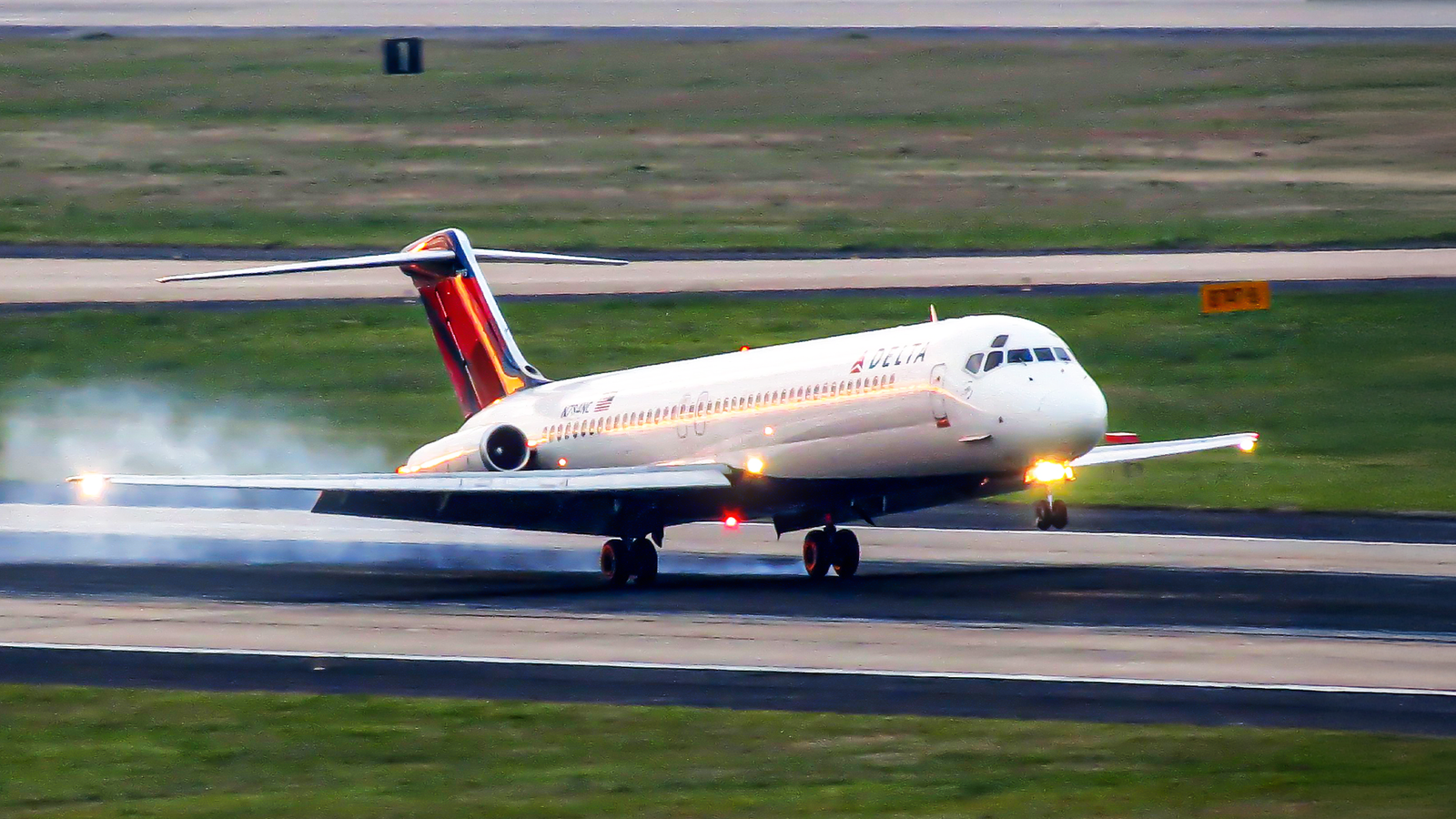
Published Sep 13, 2026, 6:00 AM EDT Journalist - Steven has a varied background in communications, and it was this passion for writing combined with his in-depth knowledge of the aviation industry that led him to Simple Flying. A keen linguist, he also has experience in translation and interpreting. Based in Palma, Spain When Delta Air Lines operated its final scheduled McDonnell Douglas DC-9 passenger flight from Minneapolis-St. Paul International Airport (MSP) to Hartsfield-Jackson Atlanta International Airport (ATL) on January 6, 2014, it looked like the end of a remarkably long chapter for one of the country's most recognizable narrowbodies. In reality, it was more specific than that - it was the moment when the last US hub and airline combination that could still make the DC-9 work economically finally ran out of reasons to keep it flying. The aircraft had survived almost 50 years in US scheduled service, but nowhere was its history more deeply connected to an airline, a hub, and a particular type of short-haul network than at Minneapolis-St. Paul. That relationship was largely inherited rather than deliberately created by Delta Air Lines. Northwest Airlines had made the McDonnell Douglas DC-9 central to its operation at Minneapolis-St. Paul International Airport, eventually building the world's largest DC-9 fleet, while the 2008 merger brought 97 of those aircraft into Delta Air Lines' fleet. The final flight therefore represented much more than an old aircraft being retired. It marked the closing of a business model built around durable, relatively small jets serving a dense network of short and medium-length routes, although the DC-9's T-tail lineage would continue at Minneapolis-St. Paul on the Boeing 717 until 2026. Let's take a closer look... Why Minneapolis-St. Paul Suited The DC-9 The McDonnell Douglas DC-9 had been designed for exactly the kind of flying that once defined Minneapolis-St. Paul International Airport. When Delta Air Lines introduced the aircraft in 1965, a large share of US passenger traffic still moved over relatively short distances, and the DC-9 offered airlines a way to replace turboprops with jets without requiring the capacity or economics of larger aircraft. Its compact size, rear-mounted engines, and low-slung design made it particularly useful on frequent domestic routes where passengers wanted jet service, but demand did not justify a larger Narrowbody aircraft. For Northwest Airlines, the concept fitted Minneapolis-St. Paul exceptionally well. The Twin Cities hub sat in a market where weather, geography, and a broad collection of smaller Midwestern cities created sustained demand for reliable short-haul connections, and the McDonnell Douglas DC-9 could move passengers between those communities and the hub without the costs associated with a larger aircraft. The airline gradually accumulated an enormous fleet, eventually reaching 178 DC-9s, turning the type from merely another aircraft in the fleet into one of the defining elements of Northwest Airlines' domestic operation. That scale mattered because aircraft economics are not determined by age alone. A well-maintained McDonnell Douglas DC-9 could still generate useful revenue when an airline had the right routes, trained crews, maintenance infrastructure, and spare parts already in place. Northwest Airlines had all of those advantages at Minneapolis-St. Paul, allowing aircraft that were already decades old to remain productive long after most competitors had moved on. The DC-9 was therefore not simply being kept alive for sentimental reasons; its usefulness was reinforced by an entire operating system built around it. Northwest Airlines' relationship with the McDonnell Douglas DC-9 became especially important as its network evolved around Minneapolis-St. Paul. Instead of treating the aircraft as an outdated replacement for newer aircraft, the carrier continued to use it where its relatively modest capacity was an advantage. A DC-9 could operate multiple frequencies without flooding a route with seats, and its performance made it practical for the short sectors essential to a hub-and-spoke network. The strategy also benefited from the McDonnell Douglas DC-9's basic engineering. The aircraft was introduced in an era when airline cockpits were dominated by analog instruments and ground-based navigation, long before modern satellite navigation and highly integrated flight decks became standard. Its systems were relatively straightforward by later standards, and Northwest Airlines had decades of institutional knowledge surrounding the type. That familiarity reduced some of the disadvantages that would otherwise have come with operating an aircraft designed in the 1960s. The result was an unusual situation in which an aircraft nearing the end of its normal commercial life remained closely matched to a particular hub's requirements. By the time the 2008 merger with Delta Air Lines occurred, Northwest Airlines still had enough McDonnell Douglas DC-9s to make the type an important part of the combined fleet. Delta Air Lines inherited 97 aircraft, effectively transferring the final large US DC-9 operation into a carrier that had already been the type's launch customer almost half a century earlier. The 2008 Merger Gave The DC-9 One Last Lease On Life The Delta Air Lines-Northwest Airlines merger changed the McDonnell Douglas DC-9's circumstances without immediately making it uneconomic. Rather than disappearing when the two airlines combined, the aircraft became part of a much larger fleet and continued flying while Delta Air Lines worked through the enormous task of integrating two airlines. The decision made operational sense in the short term because removing dozens of aircraft immediately would have created a capacity problem and required that replacement aircraft be available. There was another reason the aircraft survived - the McDonnell Douglas DC-9 was already paid for, and sunk capital is an important consideration in airline economics. A carrier does not automatically save money by replacing an old aircraft if the replacement is expensive, especially when the older aircraft can still operate reliably and generate revenue. The calculation changes as fuel prices, maintenance costs, and environmental requirements rise, but for several years the DC-9 could still occupy a useful position while newer aircraft arrived. Delta Air Lines nevertheless began steadily reducing its fleet. By 2011, 2012, and 2013, increasing numbers were leaving service, and the remaining aircraft were concentrated on the kinds of operations where their capacity and existing infrastructure could still be used. Delta Air Lines itself described the retirement as part of a broader fleet modernization effort, noting that it had removed or retired more than 350 aircraft since 2008 while adding more efficient aircraft. The McDonnell Douglas DC-9 was surviving, but the economic argument was becoming progressively harder to make. Why The Economics Finally Stopped Working The central problem was fuel, as the McDonnell Douglas DC-9's Pratt & Whitney JT8D engines were products of an earlier generation, designed when fuel represented a different proportion of airline operating costs. An aircraft could remain mechanically reliable while becoming economically obsolete, because every additional flight consumed more fuel than a newer aircraft carrying a similar number of passengers. Delta Air Lines therefore had to compare the cost of continuing to operate an aging DC-9 against the higher ownership or leasing costs of newer aircraft. Maintenance was another part of the equation. Keeping an older fleet airborne becomes increasingly complicated as components become scarce, inspections grow more demanding, and the number of aircraft available to spread fixed maintenance expertise declines. Northwest Airlines had the scale to make this work, but Delta Air Lines was gradually dismantling that scale. Once only a small number of DC-9s remained, the economic benefits of fleet commonality and dedicated support became much less compelling. The arrival of the Boeing 717 made the comparison even more difficult for the McDonnell Douglas DC-9. The current largest operators of the 717, according to the latest data from ch-aviation, are outlined in the table below: Ranking Airline Boeing 717 1 Delta Air Lines 80 2 Hawaiian Airlines 19 The Boeing 717 was itself a direct descendant of the DC-9 design, but it incorporated newer engines, systems, and a more modern passenger cabin while retaining the basic characteristics that made the original aircraft useful on shorter routes. Delta Air Lines began receiving former AirTran Airways 717-200s in 2013, giving it a natural replacement for many of the services that had once belonged to the DC-9. January 6, 2014, Was Designed As An MSP Farewell Delta Air Lines deliberately made Minneapolis-St. Paul central to the McDonnell Douglas DC-9's farewell because there was little doubt that the hub represented the aircraft's American home. The final scheduled sequence began with Detroit to Minneapolis-St. Paul as Flight DL1965, followed by Minneapolis-St. Paul to Atlanta as Flight DL2014. The numbers were deliberate - 1965 represented the year the DC-9 entered service, while 2014 represented the year its scheduled US career ended. The aircraft chosen for the occasion was equally appropriate. McDonnell Douglas DC-9-51 N773NC was delivered to North Central Airlines on October 26, 1978, before moving to Republic Airlines and then Northwest Airlines. Following the 2008 merger, it became part of Delta Air Lines. Its history, therefore, followed the same corporate path as the DC-9s at Minneapolis-St. Paul, linking North Central Airlines, Republic Airlines, Northwest Airlines, and Delta Air Lines in a single aircraft. When DL2014 departed Minneapolis-St. Paul for Atlanta, it was effectively the end of scheduled McDonnell Douglas DC-9 service in the US. Delta Air Lines had operated the world's first scheduled DC-9 service in 1965 and was now operating the final scheduled service nearly five decades later. There was a small technical footnote, however - two DC-9s remained available for several weeks to cover operational needs, with the final actual Delta Air Lines DC-9 flight taking place on January 22, 2014, rather than January 6. The Minneapolis-St. Paul departure remained the ceremonial and scheduled farewell that defined the retirement. The T-Tail Survived After The DC-9 Disappeared Credit: Shutterstock The end of the McDonnell Douglas DC-9 did not immediately remove the basic aircraft philosophy from Minneapolis-St. Paul. Delta Air Lines had begun taking delivery of Boeing 717-200 aircraft in 2013, and the type was effectively another branch of the same family tree. The 717 originated from the MD-95 program, itself descended from the DC-9, preserving the rear-mounted engines, T-tail configuration, and relatively compact capacity that had made the earlier aircraft so valuable. That distinction matters because the economic story at Minneapolis-St. Paul was not simply about keeping an old aircraft alive. The hub continued to need aircraft capable of serving thinner markets economically, but the definition of an efficient aircraft changed. The Boeing 717 could provide similar capacity with newer technology, while the Airbus A220 later offered another step forward in efficiency and capability. The basic requirement remained even as the machinery that fulfilled it changed. In May 2026, Delta Air Lines finally removed the Boeing 717 from Minneapolis-St. Paul, replacing it with the Airbus A220 and bringing the hub's long-running relationship with the DC-9 family to its true end. The 2014 retirement had closed the DC-9's US passenger chapter, but the 2026 withdrawal of the 717 closed something broader: more than six decades of T-tail, rear-engine narrowbody lineage at the Twin Cities hub. What began with Northwest Airlines' enormous DC-9 fleet ultimately ended not when the original aircraft became unusable, but when a newer generation could perform the same job more economically.
How Minneapolis-St. Paul Became The Last US Hub Where The DC-9 Still Made Economic Sense
Full Article
Original Source
Read the full article at Simpleflying →KhanList aggregates and links to publicly available news content. We do not host full articles from third-party sources. Always verify important information with original sources.