
Several years of declining vaccination rates among children and cuts to public health monitoring led to the United States losing its measles elimination status, public health experts say.Measles, the most easily transmissible infectious disease known to scientists, has regained a foothold in the U.S., in the form of an epidemic of more than 7,770 confirmed cases since January 2025.The Pan American Health Organization on Tuesday declared measles endemic in the U.S. on Tuesday, meaning that the same strain of measles has been circulating in the country for more than 12 months. Measles was declared eliminated in the U.S. for the first time in 2000 after a 40-year vaccination campaign. When the U.S. earned measles elimination status and through most of the early 2000s, uptake of the measles, mumps, and rubella, or MMR, vaccine among school-age children in most states was over 95%, the threshold for interrupting measles transmission and achieving herd immunity.But now, vaccination rates among children have declined to a new low national average of 92.4%, which has allowed the virus to spread. In states with the highest rates of measles cases, vaccination rates are even lower.In Pennsylvania, which has recorded over 1,500 cases as of mid-November, according to the state health department, only 89% of kindergartners entering school have received the MMR vaccine. In Wisconsin, which has confirmed nearly 700 measles cases and two deaths, only 88% of children have been vaccinated.The MMR vaccine is 91% effective with one dose, which is typically recommended at 12 to 15 months of age, and 97% after the second dose, which is given between the ages of 4 and 6.Dr. Joshua Sharfstein, a professor of public health at Johns Hopkins University and former health commissioner for the city of Baltimore, told the Washington Examiner the resurgence of measles will become an even greater challenge for immunocompromised people as well as parents of children who are too young to receive the MMR vaccine.“It is a big deal for the health of Americans,” Sharfstein said. “It changes how essentially every parent of a small baby has to think about that first year of life because small babies are not able to be vaccinated and protected.”Roughly 1 in 5 unvaccinated people who contract measles will be hospitalized, and as many as 1 in 20 children with measles will get pneumonia, according to the National Foundation for Infectious Diseases. One in every 1,000 people with measles will develop brain swelling, which could lead to permanent brain damage or death.“Most people who get measles don’t get a serious illness, but it’s an unnecessary risk,” Sharfstein said. “It’s like playing Russian roulette. You don’t want to put your child in the middle of the road, even though 99 out of 100 drivers will veer away.”Vaccination rates have declined in part because more parents now are requesting exemptions for routine vaccines before children start school following the politicization of vaccine mandates during the COVID-19 pandemic.Republican politicians and members of the Trump administration have blamed COVID-19 vaccine mandates for the rise in vaccine hesitancy, but Sharfstein said rhetoric from President Donald Trump has only stoked fears about vaccination rather than inspired confidence to contain outbreaks.In August, Trump called the MMR vaccine “quite lethal” during an Oval Office press conference, at which time he signed an executive order calling for vaccine makers to break up the MMR vaccine into three single-virus vaccines. Trump at multiple points during his second term has contended that the MMR vaccine causes autism and has alleged that communities with historically lower vaccination rates, such as Amish and Mennonite communities, have lower rates of autism.Sharfstein said skepticism from the White House, coupled with cuts to funding and personnel in charge of infectious disease monitoring, has made it more challenging to control outbreaks than in years past.“I think it is true that the COVID pandemic created challenges for vaccination, but in the past we had a unified, clear message and response across multiple levels of government, and that was even in the first Trump administration,” Sharfstein said.Health and Human Services Secretary Robert F. Kennedy Jr. and Centers for Disease Control and Prevention Director Erica Schwartz each highlighted in statements about the loss of measles elimination status on Tuesday that the federal government has dedicated $100 million to stopping outbreaks in several states this year.Josh Michaud, global public health specialist at the health policy group KFF, said in a statement that overall federal funding cuts for infectious disease prevention have strained state and local health departments. He also blamed Kennedy, Trump, and others in federal health offices for downplaying the risks of measles infection while exaggerating the risks of vaccination.“More adults are now exposed to false claims and myths about vaccines, including that MMR vaccines are linked to autism, and there remains a stark partisan divide in views about vaccine safety, especially since the COVID-19 pandemic,” Michaud said.CDC ENCOURAGES VACCINATION AFTER LOSING MEASLES ELIMINATION STATUSMichaud said losing measles elimination status “carries primarily symbolic weight” but the effects of reemerging measles are readily apparent in the rising cases and death counts.“It is a marker of how a combination of factors — COVID-19, increasing vaccine skepticism, and a growing partisan divide about vaccines — has been a step back for public health, and it is not clear when or if this trend will be reversed,” Michaud said.
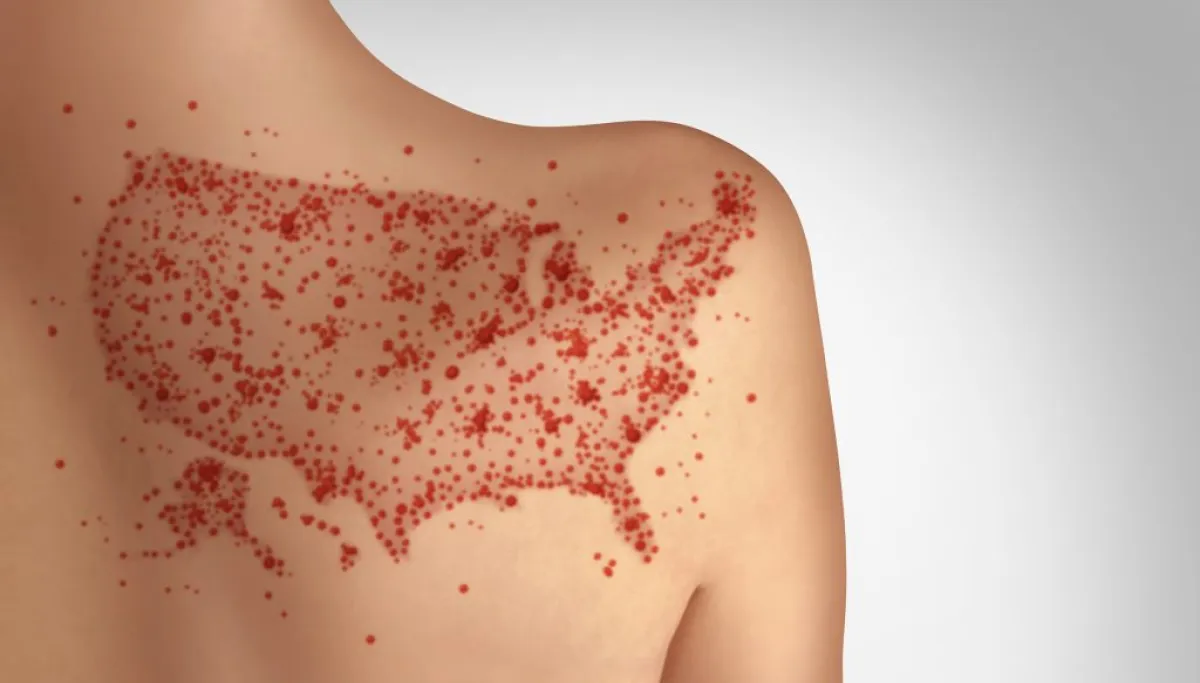
How measles regained a foothold in the United States
Full Article
Original Source
Read the full article at Washingtonexaminer →KhanList aggregates and links to publicly available news content. We do not host full articles from third-party sources. Always verify important information with original sources.