
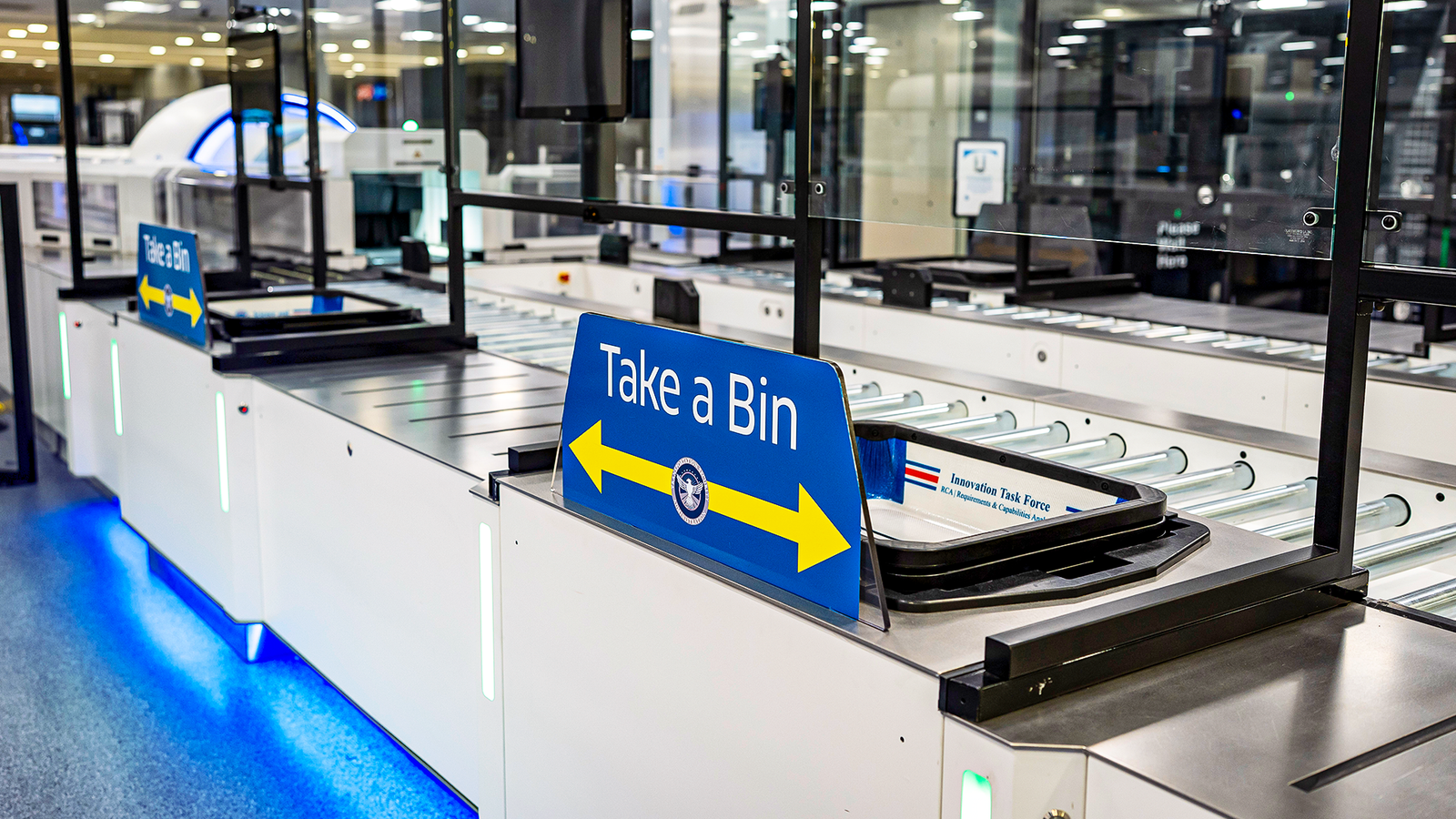
Despite screening more than 900 million fliers annually, the Transportation Security Administration (TSA) neither counts nor publishes the total number of items left behind or intercepted at US checkpoints. Every day across American airports, rushed passengers leave thousands of pocket knives, tools, and liquids in grey security bins rather than miss a flight or pay checked-bag fees. Today, the only nationwide tally tracks firearms, which increased 152% over the past decade, rising from 2,653 to 6,678 a year. While TSA officers do not seize everyday toiletries or small tools by legal force, travelers voluntarily abandon them instead, but firearms and illegal weapons can trigger law enforcement intervention and confiscation. Before the TSA stopped logging routine surrenders in 2008, archived Bureau of Transportation Statistics records show checkpoint interceptions once topped 15 million items a year. Since the TSA does not track everyday items, there is no federal record of how much property piles up in airport storage rooms and state warehouses each year. Meanwhile, tons of surrendered blades, tools, and liquids are weighed in bulk and hauled off with little public accounting. Tracing what happens after the checkpoint shows how local police handle intercepted guns, how new CT scanners flag prohibited items, and where surrendered knives and tools end up at state surplus auctions. Record Passenger Traffic Meets A Decade-Long Surge In Checkpoint Handguns Credit: TSA Just as commercial air travel set a new national record, federal public reporting abruptly stopped. Acting TSA chief Ha Nguyen McNeill testified in January that officers screened 906.7 million passengers and 2.1 billion carry-on bags during 2025. Yet through late 2026, the agency's newsroom still had not published a complete full-year 2025 firearm total, leaving congressional claims pointing only to a partial early tally of 2,654 incidents. TSA estimates show rushed travelers leave 90,000 to 100,000 personal belongings behind inside screening trays each month, topping 1 million forgotten phones, laptops, keys, and belts every year. Checkpoint teams hand those items over to local airport lost-and-found offices to track down owners, while unclaimed driver's licenses and passports are shredded after 30 days. Southern US and Sunbelt hubs are responsible for an outsized share of daily gun discoveries. To the contrary, Northeastern US airports record only a tiny fraction of that rate despite serving millions more. When an X-ray operator detects a pistol silhouette in a carry-on bag, checkpoint lanes instantaneously freeze, causing screeners to stop the belt and call armed airport police. The travelers in question allegedly claim they just forgot to properly pack the weapon in most cases. Due to these supposed oversights, the number of firearms caught annually increased from 4,432 in 2019 to a record 6,737 in 2023. In 2024, there were 6,678 detections, of which 94% arrived loaded. Why Sunbelt Airports Catch Hundreds Of Guns While Liquid Rules Strip Everyday Items Credit: TSA Determining the probability of a gun surfacing in the checkpoint of a US Airport can be predicted largely based on the geographical location of the airfield. Regional airport police data has been used to confirm that loaded handguns continue to pour into terminals around the country despite Washington's missing annual summary. Even with that national data gap, firearm interceptions indicate a trend based more on individual locations rather than passenger volume. With 440 intercepted firearms in 2024, Hartsfield-Jackson Atlanta International Airport (ATL) led the US, surpassing Dallas/Fort Worth (DFW) at 390. Meanwhile, Houston Intercontinental (IAH) reported 272 and Phoenix Sky Harbor (PHX) claimed 247 firearm interceptions. In January 2025, Atlanta TSA Federal Security Director Robert Spinden clarified that eight New England airports combined stopped fewer than 50 firearms out of 33 million passengers. Yet, liquid rules still strip far more everyday items from carry-on bags than firearm catches ever will. This has become a point of confusion for international travelers as European hubs in London, Edinburgh, Birmingham, and Dublin rolled out new scanners allowing fliers to carry bottles up to 67.6 ounces (2 liters). American checkpoints still force travelers to dump water and toiletries because domestic scanners lack the cleared software and funding needed to inspect large containers. From Millions Of Logged Items To Bulk Weigh-Ins Credit: TSA In the early years following September 11, airports recorded nearly every prohibited item removed from carry-on bags. In 2003, they intercepted 6.1 million items. In 2005, when the TSA banned cigarette lighters, they reached an all-time high of 15,887,596. Millions of individual shampoo bottles, pocket knives, and wrenches were logged, quickly overcrowding checkpoint lanes. Even in the wake of a 2006 bombing attempt, which inspired the 3-1-1 rule capping liquid bottles at 3.4 ounces (100 milliliters), lifting the lighter ban in 2007 reduced total seizures to 6.5 million a year. Then, on August 8, 2008, the TSA quietly stopped collecting national counts for almost every category, tracking only firearms and incendiaries before cutting public reports to just guns after 2010. Overnight, federal bookkeeping vanished across hundreds of terminals, leaving lawmakers and travelers blind to the true scale of property being seized. Instead of counting individual tools or blades, checkpoints began weighing surrendered gear in bulk before hauling it off to state surplus. That reporting blackout obscures a massive waste and resale pipeline running behind across the country. Meanwhile, TSA officers simultaneously confronted a decade-long surge in firearms discovered in carry-on luggage across the US. Federal Fines For Firearms And State Surplus Auctions For Everything Left Behind Credit: TSA Although the criminal penalties differ greatly per airport, when officers find a firearm, the checkpoint stops, and local police take over. For instance, only two of the 87 handgun detections at Hartsfield-Jackson Atlanta International Airport in the first four months of 2025 were prosecuted by Atlanta police. Most of the time, travelers were permitted to leave the airport and secure their firearms inside parked cars. Regardless of local charges, the TSA imposes a more stringent penalty, suspending TSA PreCheck access for a minimum of five years and collecting civil fines totaling more than $52 million over a three-year period. Everyday prohibited items, like pocket knives, heavy wrenches, and multitools—follow a much quieter path after being dropped into checkpoint bins. Rather than going into evidence lockers, surrendered gear sits in airport storage before being transferred to state surplus agencies for public auction. New England TSA spokesperson Dan Velez described the handoff to Reader's Digest: "We collect that stuff for anywhere from one to three months, and then a state surplus store will come by. We give all the stuff that was surrendered to the state surplus store, and they auction it off." State surplus offices bundle those blades and tools by the pound on government auction sites like GovDeals and keep the proceeds, with Washington Dulles International Airport (IAD) alone turning over roughly 4,000 pounds (1.8 metric tons) of surrendered items each year. Meanwhile, the checkpoint bottlenecks driving many of those surrenders persist largely because federal screening upgrades remain underfunded. Every airline passenger pays a $5.60 September 11 security fee per one-way trip, yet Congress routinely diverts roughly a third of that revenue, about $1.6 billion annually, toward federal deficit reduction rather than spending it on new 3D scanners and checkpoint staffing. New 3D Scanners Still Trigger Bag Searches And Checkpoint Bottlenecks Credit: TSA Newer 3D computed tomography (CT) scanners were supposed to end the misery of unpacking laptops and toiletries at airport checkpoints, yet travelers often find their bags pulled aside for secondary searches more frequently than before. Unlike older 2D X-ray tunnels that only show flat shadows from two fixed angles, CT machines spin an X-ray gantry around the bag to build a full 3D model, allowing officers to rotate images on screen and spot pocket knives, tools, or liquids hidden behind dense batteries. Although fewer forbidden objects pass through undetected thanks to this clearer perspective, it also sets off a lot more automated alerts on commonplace, innocuous objects. Commonplace objects like thick hardcover books, blocks of cheese, dense protein bars, or tangled charging cords are frequently marked for manual examination because CT software assesses object density in addition to shape. Officers manually unpack bags that are diverted to the secondary search table, frequently finding loose ammunition, oversized toiletries, or forgotten multitools hidden at the bottom of a rucksack that a flat 2D X-ray could have overlooked. Confusion over screening standards contributes to the pileup. Even at the 296 airports where the TSA has deployed 1,162 CT units, the agency maintains a 3.4-ounce (100-milliliter) limit on carry-on liquids because most US checkpoints still employ antiquated X-ray lanes. Travelers who believe the new scanners allow full-sized water bottles or pricey fragrances through security frequently realize, at the end of the belt, that the liquids must still be dumped or scrutinized. Meanwhile, the entire checkpoint is slowed down by the hardware's physical footprint. In order to obtain high-resolution scans, CT scanners from manufacturers such as Smiths Detection, Analogic, and L3Harris employ slower conveyor belts and weigh between 4,299 and 5,401 pounds (1,950 and 2,450 kg) each. As a result of fewer bags being moved per minute and more bags being diverted for hand searches, lines quickly reform, forcing hurried travelers to immediately abandon flagged items rather than risk missing their flight by getting out of line to check a bag.
How Many Items Does The TSA Confiscate At US Airports Every Year?
Full Article
Original Source
Read the full article at Simpleflying →KhanList aggregates and links to publicly available news content. We do not host full articles from third-party sources. Always verify important information with original sources.