
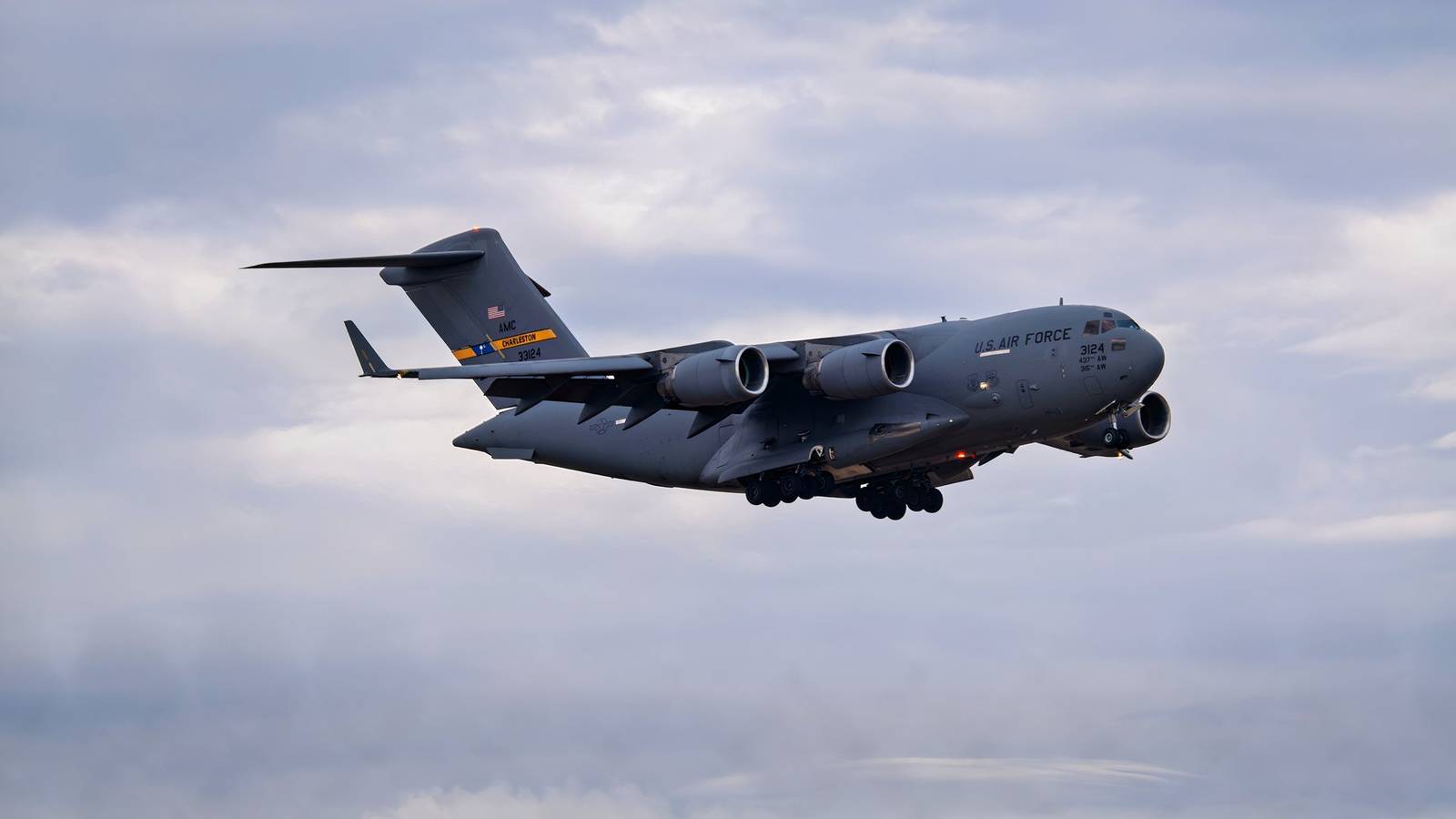
Published Nov 8, 2026, 3:00 PM EST Journalist - Steven has a varied background in communications, and it was this passion for writing combined with his in-depth knowledge of the aviation industry that led him to Simple Flying. A keen linguist, he also has experience in translation and interpreting. Based in Palma, Spain The C-17 Globemaster III is one of the most capable military transport aircraft in service, designed to move troops, heavy equipment, and humanitarian supplies across considerable distances. Despite its enormous size and ability to carry some of the military's heaviest vehicles, the aircraft requires surprisingly few people to operate, with a standard flight crew of just three members. The United States Air Force (USAF) identifies the C-17 crew as a pilot, a copilot, and a loadmaster. However, the number of personnel aboard can increase depending on the nature of the mission, particularly when the aircraft is being used for medical evacuations or other specialist operations. Understanding these crew members' responsibilities helps explain how such a large aircraft can operate with a relatively small team. The C-17 Globemaster III Requires Just Three Crew Members Credit: Wikimedia Commons, Simple Flying According to the USAF, the standard crew of a C-17 consists of three people: a pilot, a copilot, and a loadmaster. This is a relatively small crew considering the aircraft's dimensions, four powerful engines, and ability to transport substantial military cargo. This arrangement lets the aircraft complete demanding transport missions without requiring many personnel onboard. The two pilots operate the aircraft, manage its flight systems, and ensure it reaches its destination safely. Meanwhile, the loadmaster oversees the cargo compartment and ensures everything being transported is loaded, positioned, and secured correctly. Each position has a distinct purpose, although the three crew members must work closely together throughout the mission. The relatively small crew is also an important part of the C-17's operational design, as reducing manpower requirements helps limit personnel exposure to risk while also lowering long-term operating costs. This is particularly valuable for military transportation operations, which can involve frequent deployments, demanding schedules, and missions into challenging environments. Unlike commercial passenger aircraft, where cabin crew members are responsible for passenger services and safety procedures, the C-17 is primarily designed around military transportation requirements. Its standard crew therefore focuses on flying the aircraft and managing its cargo rather than providing conventional airline services. Additional personnel can still be carried when a particular operation requires specialist support. What Do The Two C-17 Globemaster III Pilots Do? Credit: US Air Force The pilot and copilot share responsibility for flying the C-17, which measures 174 feet in length and has a wingspan of over 169 ft. Operating an aircraft of this size requires considerable training, especially because the C-17 is expected to perform missions that involve carrying exceptionally heavy loads and operating from airfields unsuitable for many larger transport aircraft. The pilots manage the aircraft's four turbofan engines, navigation equipment, flight controls, and other systems necessary for safe operation. They also coordinate flight planning, monitor weather conditions, communicate with air traffic control, and manage the aircraft during takeoff, cruise, and landing. Their responsibilities require careful coordination, especially when operating in unfamiliar locations or under demanding military conditions. One of the C-17's most impressive characteristics is its ability to operate from a relatively short and narrow runway. The aircraft can use runways measuring just 3,500 feet long and 90 feet wide. This capability gives military planners greater flexibility when delivering supplies and personnel to airfields that may not be accessible to conventional heavy transport aircraft. The C-17, manufactured by McDonnell Douglas and Boeing, also has a distinctive ability to reverse under its own power, allowing it to back up and perform a three-point turn on narrow runways. This feature can be especially useful at remote airfields with limited maneuvering space. The pilots must understand these capabilities and their limitations to ensure that the aircraft can operate safely in demanding locations. The Loadmaster Is Responsible For The Aircraft's Cargo Credit: US Air Force Although the two pilots handle the aircraft's flight operations, the third crew member, the loadmaster, has an equally important responsibility. This specialist manages the cargo compartment, ensuring that equipment, supplies, and personnel are loaded correctly and secured for the flight. The position is particularly important because the C-17 can transport a remarkably diverse range of military equipment. The C-17 features a large rear cargo ramp and door that allow vehicles and other heavy equipment to be driven or loaded directly into the aircraft. The loadmaster determines how cargo should be arranged, taking into account its weight, dimensions, and position within the aircraft. Correct weight distribution is essential because an improperly balanced load can affect the aircraft's handling and overall flight safety. The C-17 can transport up to 170,900 lbs of cargo across 18 pallet positions. Its payload capacity also allows it to carry large military vehicles, including the M1 Abrams main battle tank, which weighs approximately 69 tons in certain configurations. Other potential cargo includes armored vehicles, military trucks, trailers, and equipment needed to support operations in the field. Before departure, the loadmaster checks that the cargo has been properly secured and that its distribution meets the aircraft's loading requirements. The responsibility does not end once the aircraft leaves the runway, as the loadmaster must also oversee cargo-related procedures during the flight and prepare for unloading at the destination. This makes the position essential to the C-17's transportation mission. How The C-17 Carries Troops & Performs Airdrops The C-17 is not limited to transporting vehicles and equipment, as it can also carry large numbers of military personnel. Depending on the configuration, the aircraft can carry up to 102 troops or paratroopers, making it an important part of military operations that require moving personnel quickly between bases or deploying them directly into operational areas. In airborne operations, the aircraft can release paratroopers through its rear cargo area. These missions require careful coordination between the pilots and loadmaster, as the aircraft must maintain the appropriate flight conditions while personnel prepare to exit. The loadmaster manages the airdrop process and helps ensure that the operation follows the required procedures. Cargo airdrops are another important capability. The C-17 can deliver equipment and supplies to locations where conventional land-based transportation is unavailable or impractical. These operations are often coordinated between the Air Force and the Army, with the aircraft providing transportation and delivery capabilities that help support personnel operating in remote or difficult-to-access areas. The loadmaster plays a particularly significant role during these missions because cargo must be prepared and arranged according to the specific airdrop requirements. Pilots focus on maintaining the aircraft's flight path, while the loadmaster manages cargo operations. This division of responsibilities lets the three-person crew handle complex transportation tasks without needing a substantially larger standard flight team. Why Some C-17 Missions Require Additional Crew Members Credit: JJW Photography | Shutterstock, Simple Flying Although three people are sufficient for the aircraft's standard flight operations, certain missions require additional personnel. Aeromedical evacuation is an important example, as the C-17 can be configured to transport wounded or sick individuals who need medical attention while being moved between locations. These missions require specialist medical staff who can monitor patients and provide appropriate care throughout the journey. For a typical aeromedical evacuation mission, the USAF adds a basic medical crew consisting of five personnel: two flight nurses and three medical technicians. Their responsibilities include monitoring patients, providing medical assistance, and managing the equipment needed to support individuals during transportation. The precise medical staffing arrangement can be adjusted based on the condition and needs of the patients being transported. In an aeromedical evacuation configuration, the C-17 Globemaster III can accommodate up to 36 stretcher patients alongside 54 ambulatory patients and attendants. This demonstrates how the aircraft can be adapted to perform a very different role without losing its fundamental transportation capabilities. The additional medical personnel are not part of the standard flight crew, but they are essential to completing these specialist missions safely. Some of the world's major operators of the C-17 include Canada, Australia, and India, according to ch-aviation. Country Operator Canada Royal Canadian Air Force Australia Royal Australian Air Force India Indian Air Force United Kingdom Royal Air Force United States United States Air Force Other operations may also involve mission-specific personnel, depending on the equipment being transported and the support required. For example, military transportation aircraft frequently carry troops, specialists, and other authorized passengers in addition to their core crew. Credit: US Air Force One of the clearest demonstrations of the C-17's flexibility came during the evacuation from Kabul, Afghanistan, in August 2021. During the operation, a C-17 identified by its callsign Reach 871 carried 823 people out of the country, setting a remarkable example of the aircraft's ability to transport large numbers of passengers during an emergency. The evacuation highlighted the aircraft's importance in humanitarian and military operations. The evacuation was an extraordinary situation rather than a reflection of the aircraft's normal passenger capacity. The C-17 is generally configured to carry up to 102 troops or paratroopers, but emergency circumstances can require different arrangements. Reach 871 demonstrated how the aircraft could provide a vital transportation option when large numbers of people needed to be moved quickly from a dangerous environment. Such operations also highlight the importance of coordination between the flight crew and the personnel involved in the wider mission. The pilots remain responsible for operating the aircraft, while the loadmaster oversees cargo and loading-related requirements. Additional military personnel and other specialists may contribute, depending on the mission's circumstances and objectives. Ultimately, the C-17 requires just three crew members for standard flight operations: two pilots and one loadmaster. Its ability to transport heavy military vehicles, carry troops, perform airdrops, and support medical evacuations makes it exceptionally versatile. Although specialist missions can increase the number of people onboard, its standard three-person crew remains central to the aircraft's remarkable operational flexibility.
How Many Crew Members Does It Take To Fly A C-17 Globemaster?
Full Article
Original Source
Read the full article at Simpleflying →KhanList aggregates and links to publicly available news content. We do not host full articles from third-party sources. Always verify important information with original sources.