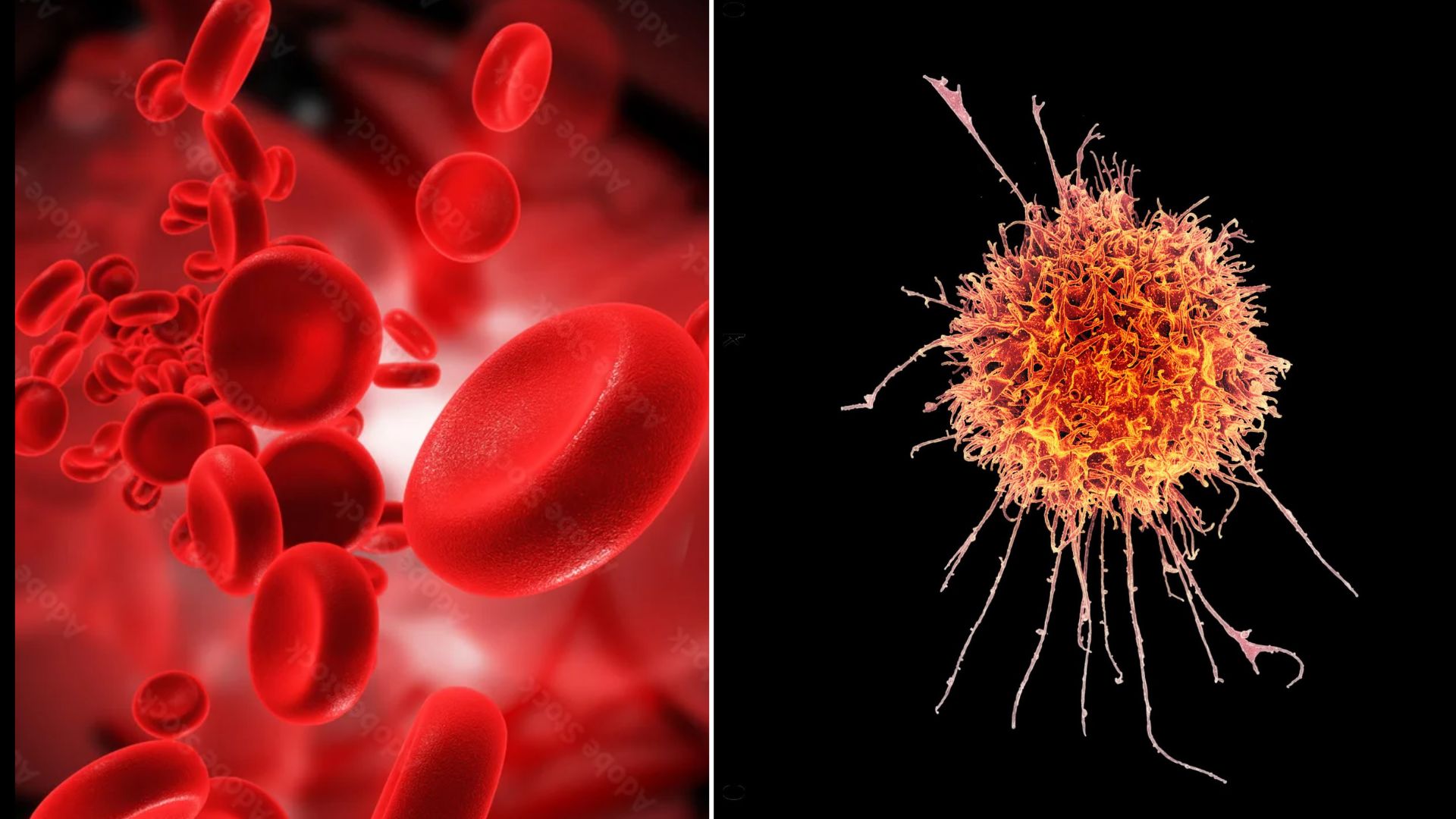
The human body is an extraordinary feat of biological engineering. Every heartbeat, every breath, every thought, and every movement depends on an immense network of microscopic cells working together in remarkable harmony. But just how many cells make up the average human being? The answer is about 30 trillion. That’s 30,000,000,000,000 cells. A number so vast that it’s difficult to comprehend. Yet scientists didn’t simply guess this figure. It took decades of research and detailed analyses of nearly every major tissue and organ in the body to arrive at this estimate. Counting the uncountable For many years, textbooks often quoted figures ranging from 10 trillion to 100 trillion cells, but these estimates were based on rough approximations. A landmark study by researchers Eva Bianconi, Annalisa Piovesan, and colleagues, followed by a widely cited reassessment by Ron Sender, Shai Fuchs, and Ron Milo, refined those estimates by examining dozens of different cell types individually. Instead of treating the body as a single mass, the researchers estimated the number of cells in organs, tissues, and blood before combining them into a total. Their analysis suggests that an average adult weighing around 70 kilograms (154 pounds) contains roughly 30 trillion human cells. The exact number isn’t fixed, however. Taller people generally have more cells than shorter individuals, while body composition, age, sex, and blood volume can all influence the final count. Most of your cells are blood cells Here’s one of the biggest surprises. When people imagine the body’s cells, they often think of muscles, skin, or brain tissue. In reality, around 70% of all the cells in your body are red blood cells. These tiny oxygen-carrying cells are only about 7 to 8 micrometers across. Far smaller than most other human cells. Because they’re so small, billions can fit into a tiny volume of blood. Despite making up the overwhelming majority of your cells by number, they contribute only a small fraction of your total body mass. Red blood cells are also unusual because mature human red blood cells lack a nucleus, leaving more room to transport oxygen. They survive for only about 120 days, after which they’re recycled and replaced. Your bone marrow continuously produces millions of new red blood cells every second to keep pace with this constant turnover. Not all cells are created equal If red blood cells dominate in number, the body’s largest cells tell a very different story. The human egg cell is the largest cell in the body and is one of the few that can be seen without a microscope. At the opposite end of the spectrum, sperm cells are among the smallest, optimized for speed rather than size. Some cells are also surprisingly long. Certain neurons can extend for more than a meter, carrying electrical signals from the spinal cord to the feet. Meanwhile, individual muscle fibers may stretch several centimeters in length, making them some of the largest cells by volume. This enormous variation explains why counting cells is so challenging. A single fat cell can occupy thousands of times more space than a red blood cell, meaning that cell count and body weight don’t necessarily go hand in hand. You’re constantly replacing yourself Although the human body contains around 30 trillion cells, it is far from static. Your skin continually sheds old cells and replaces them with new ones. Cells lining your intestines survive only a few days before being renewed, while red blood cells are replaced every few months. Some bone cells also undergo continuous remodeling throughout life. On the other hand, many neurons in the brain can last for decades, and some may persist for an entire lifetime. This is why the popular claim that “your body completely replaces itself every seven years” is considered a myth. Different tissues renew at dramatically different rates, with some turning over rapidly while others remain largely unchanged. You’re not alone inside your body Another long-standing misconception is that bacteria outnumber human cells by 10 to 1. Modern research suggests the ratio is actually much closer to 1:1. In other words, the average person carries roughly as many bacterial cells as human cells, although the exact balance changes throughout the day depending on factors such as digestion and bowel movements. These microbes, collectively known as the human microbiome play essential roles in digestion, immune function, and even overall health, making them an important part of the ecosystem that exists within each of us. Putting 30 trillion into perspective Thirty trillion is such a large number that it almost loses meaning, so it helps to compare it with something more familiar. If you counted one cell every second, without ever stopping to eat or sleep, it would take about 950,000 years to count every cell in your body. Your brain contains about 86 billion neurons, an astonishing number in its own right. Yet those neurons represent less than one-third of one percent of all the cells in your body. And despite red blood cells accounting for roughly 70% of your cells, they make up only a tiny proportion of your body weight because each one is incredibly small. A microscopic world working in perfect harmony The human body is far more than a collection of organs. It is a living ecosystem made up of around 30 trillion human cells, each specialized for a particular task. Some transport oxygen, others generate electrical signals, fight infections, build bone, or repair damaged tissue. Individually they are microscopic and often short-lived, but together they form one of the most complex biological systems known to science.Perhaps that’s the most remarkable fact of all is that every thought you have, every step you take, and every heartbeat you feel depends on trillions of tiny cells working together with extraordinary precision.Recommended ArticlesKaif Shaikh is a journalist and writer passionate about turning complex information into clear, impactful stories. His writing covers technology, sustainability, geopolitics, and occasionally fiction. A graduate in Journalism and Mass Communication, his work has appeared in the Times of India and beyond. After a near-fatal experience, Kaif began seeing both stories and silences differently. Outside work, he juggles far too many projects and passions, but always makes time to read, reflect, and hold onto the thread of wonder.
How many cells are in the human body? Here’s what the science says
Full Article
Original Source
Read the full article at Interestingengineering →KhanList aggregates and links to publicly available news content. We do not host full articles from third-party sources. Always verify important information with original sources.