
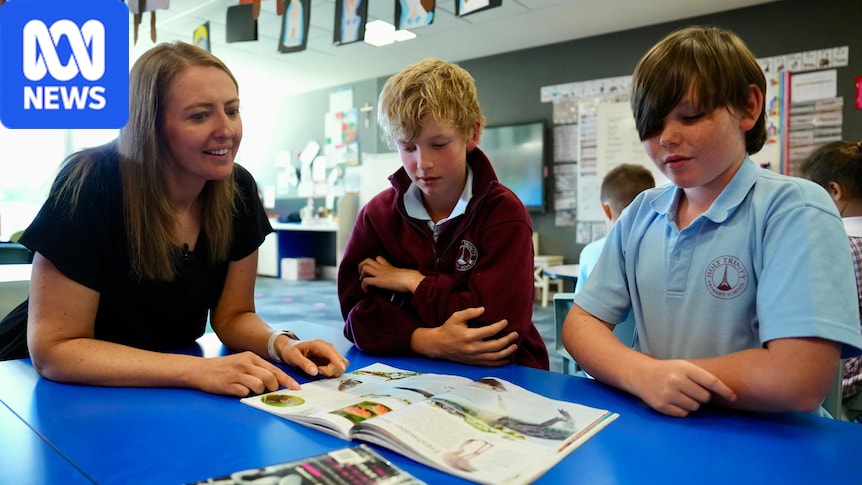
Diagnosed with an aggressive and incurable brain cancer at just 31, Emily Capper was given as little as nine months to live.That was almost five years ago.After her grade 4 glioblastoma stopped responding to chemotherapy and radiotherapy, the DNA of Ms Capper's tumour was tested in a process known as genomic profiling, providing her team with clues to match her to a more targeted treatment."It's meant everything. Without this, I don't know where I would be … this was my last option," she said.Following a new federal government funding commitment, 25,000 additional Australians will now be able to access comprehensive genomic profiling, which opens the door to more personalised treatments for people with advanced or incurable cancers."It's like giving us a topographic map and a compass," said Rob Zielenski, who is a senior medical oncologist at Orange Hospital and leading the clinical trial Ms Capper is enrolled in.Dr Rob Zielenski is a senior medical oncologist at Orange Hospital and leading the clinical trial Emily Capper is enrolled in. (ABC News: Xanthe Gregory)"[It] helps me direct the patient to the right treatment and really importantly, avoid the wrong treatment because that comes with toxicity … and wasted time on futile therapy."Cancer treatment has traditionally focused on where in the body it started and it was difficult for doctors to explain why two patients with the same cancer responded differently to the same treatment.But "looking under the bonnet", as Dr Zielenski describes it, takes guesswork out of the equation and homes in on about 500 to 600 genes that can be altered in any cancer."The evidence is clear that putting patients on matched treatments doubles their survival. And that is profound," he said.In Ms Capper's case, her cancer had what is known as the BRAF mutation, a change in the gene that helps drive the growth of some cancers.In the 10 months she has been taking a targeted drug through Dr Zielenski's clinical trial, her cancer has stopped growing and is expected to slowly shrink over time."I'm still able to work and live my best life and really enjoy those around me while I can," she said.One in four with incurable cancers missing out on precision careMs Capper was matched to Dr Zielenski's trial by not-for-profit organisation Omico, which is leading the charge on precision oncology in Australia.Genomic profiling can cost thousands of dollars but Omico provides it for free and, when possible, links patients to the best available clinical trial or treatment for their cancer's "fingerprint".Ms Capper was matched to Dr Zielenski's trial by not-for-profit organisation Omico. (ABC News: Xanthe Gregory)The organisation has so far supported more than 30,000 Australians but an injection of $71 million in the latest federal budget has allowed the company to continue working with four laboratories across the country to deliver the program for another three years.As a result, it's expected more than 1,130 Australians accessing this type of targeted treatment will reach their five-year cancer survivorship.Omico receives one patient referral every 15 minutes, but chief of science and strategy for Omico, David Thomas, said limited resourcing meant only one in four people with an incurable solid tumour could be helped in this way.Genomic profiling takes guess work out of the equation and homes in on around 500 to 600 genes that can be altered in any cancer. (ABC News: Billy Cooper)"That's about 34,000 Australians [per year] that we unfortunately can't reach at the moment who might potentially benefit," Professor Thomas said."There's definitely a need for more clinical trials of these promising treatments but there's also a need to think about how we make those drugs available at the end of the process."If a patient cannot be linked to a clinical trial by Omico they may have to pay thousands of dollars a month to access the drug on a private prescription, as many emerging cancer therapies aren't subsidised by the government through the Pharmaceutical Benefits Scheme (PBS).Professor David Thomas said limited resourcing meant only one in four people with an incurable tumour could be helped. (ABC News: Chris Taylor)Only 25 per cent of medicines launched globally over the past decades are on the PBS, according to a recent report by Medicines Australia."Those drugs are coming on thick and fast, they're proving highly effective, but how we can ultimately afford them with an aging population and a diminishing taxpayer base is a problem for the government to think about," Professor Thomas.Making genomics part of routine cancer careQueensland University cancer genomics specialist Amy McCart Reed said precision oncology also made the health system more efficient."At the moment, a lot of our therapies could be seen to be more like a broad spectrum antibiotic where we just give them and hope that it's killing the cancer cells," she said."So any movement we can make in this space where we're being quite targeted about who gets which therapy has an advantage to the patients, but also there are huge flow-on effects for the economy because a lot of these drugs are expensive."Ms Capper said she wants others with cancer to know about alternative treatment options. (ABC News: Stuart Carnegie)However, she said the public system was a long way from being equipped to test everyone, and there was no point burdening someone with information about their cancer unless it could inform their treatment.Health Minister Mark Butler said the federal government was mobilising to scale up health infrastructure, so genomic profiling could be offered more widely across Australia."Ultimately of course we want to see this become a standard of care and to become a sort of feature of the health system more broadly, rather than something situated into research programs," he said.He also pointed to the government's efforts to expedite the listing of medications on the PBS at a time of "turbocharged discovery", which meant a huge number of new cancer therapies were hitting the market and needed to be carefully assessed.Emily Capper was given just nine months to live. (ABC News: Stuart Carnegie)As Ms Capper prepares the next generation for the years ahead in her role as a teacher, her own future remains uncertain.The drug she is taking is not a cure but it will continue to buy her time, hopefully until the next scientific advancement comes along.When she first received her diagnosis, she hoped she would stay alive long enough to see one of her favourite performers, Taylor Swift, in Australia. Against the odds she made it and has since ticked many other things off her bucket list."It's hard to imagine what my life would have been like, and I think that's really hard. But knowing that I've got a chance to live longer is really incredible."
How looking inside a cancer's DNA can add years to someone's life
Full Article
Original Source
Read the full article at Abc →KhanList aggregates and links to publicly available news content. We do not host full articles from third-party sources. Always verify important information with original sources.