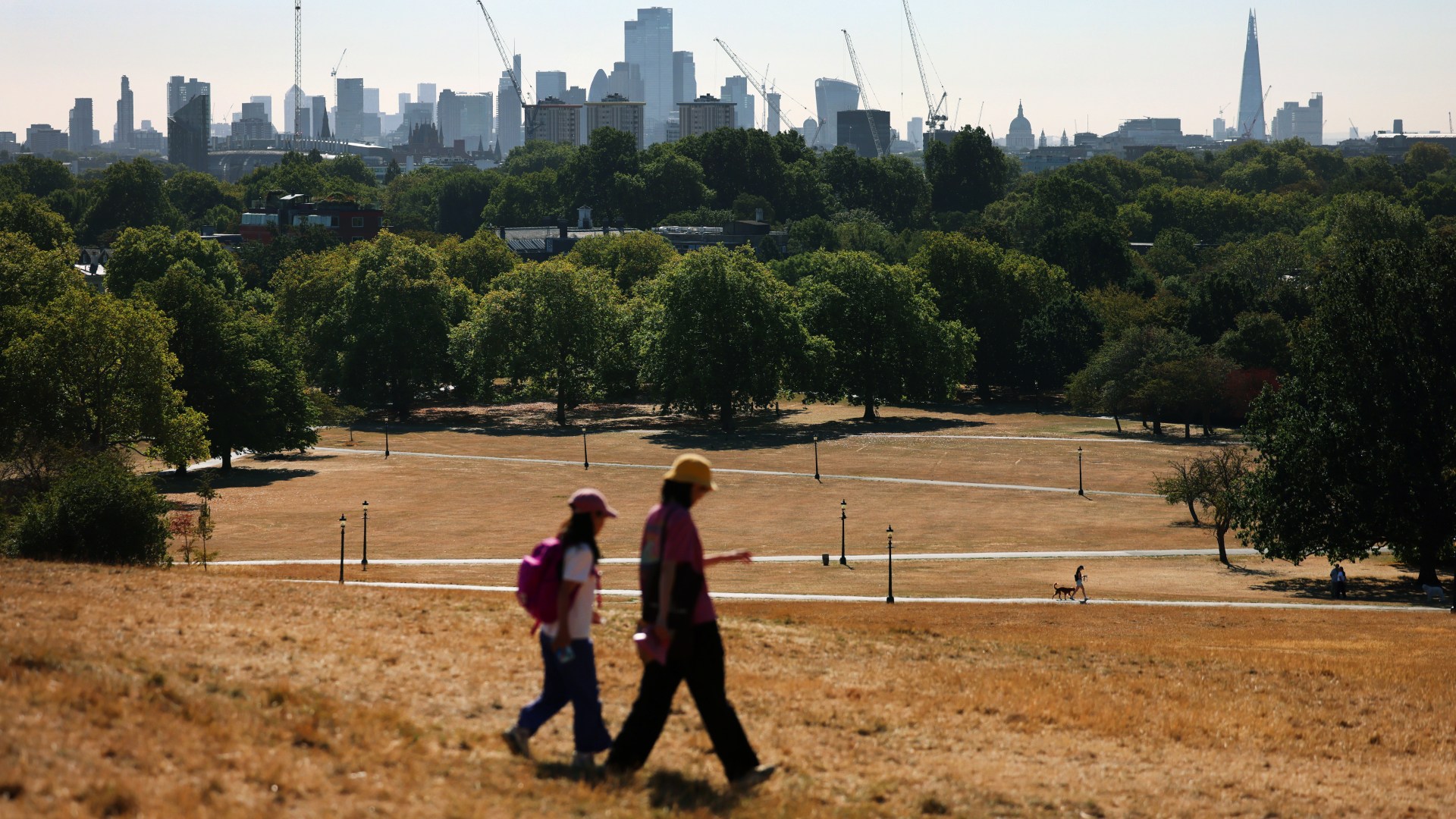
BRITONS have been enjoying the fifth official heatwave of the summer, with temperatures reaching 38C on Thursday. The Met Office has issued an amber extreme heat warning for parts of southern and eastern England, as well as the Midlands – here’s how long the latest spell of hot weather is forecast to last. Last month has been provisionally called the second hottest July in the UK’s records Credit: Alamy The Met Office confirmed it was the hottest day of the year on Thursday How long will the heatwave last? On Thursday afternoon temperatures reached 38.1C in Kew Gardens, West London, this afternoon, the Met Office confirmed. It is the second time the UK has reached the figure this year, marginally pipping the previous high recorded in Lingwood, Norfolk, in June. Sign up for The Sun newsletter Thank you! The Met Office added: “The only other time this has happened twice in one year was in 2022. It also makes it the 5th hottest day on record.” Amber warnings for “extreme heat” are in place for a swathe of England from London to Sheffield, parts of Cheshire and Greater Manchester, into Gloucestershire and Wiltshire in the South West and Shropshire and Herefordshire in the west. However, while many people have flocked to the beach, some regions have had cooler weather, with Scotland and Northern Ireland seeing wetter conditions. A yellow warning has been issued for thunderstorms in Northern Ireland, which is in place until 6am on Friday. While Thursday is expected to be the peak of the hot weather this week, some warmth will remain in the South and Southeast for another day. Friday will remain hot across much of England and Wales – with London forecast to hit 33C – before a weak cold front brings cooler, cloudier climate in from the west. Most read in The Sun The Met Office says there is also a chance of isolated afternoon thunderstorms in the southeast on Friday. Temperatures will start to tail off from Saturday, which should see cooler air spread south from the northwest, the forecaster says. However, it will still remain in the mid-to-high-20s for much of the south of England and Midlands, with highs of around 28C in London and on the southern coast. The arrival of the weekend will continue the sunny spells in many areas, but there will also be scattered showers, which will be heaviest in the southeast. Sunday is expected to be mostly dry with a plenty of sunshine, though rain may be reaching the northwest later. Temperatures will dip a little further, remaining in the mid-20s in the Midlands and south of England – this should mark the end of the official heatwave. The start of next week will bring increased rain, as well as some breezier conditions. Wet and breezy conditions can be expected next week, as Monday is set to bring some more rain. What is a heatwave? A single hot afternoon does not automatically mean the UK is in a heatwave. The Met Office defines a heatwave as an extended period of unusually hot weather. In the UK, it is officially triggered when a location hits a specific temperature threshold for three days in a row. These high temps often go hand-in-hand with high humidity, making the heat feel more intense. Due to the diverse climate across the UK, heatwave thresholds vary by county. For example, this could mean up to 28C in London and southern England, but only 25C in the North and Scotland. Heatwaves usually strike in the summer when high-pressure systems settle over the country. This happens when the jet stream moves north, bringing long spells of dry and settled weather. The highest temperature ever recorded for the UK was on July 19, 2022, when the mercury hit 40.3C in Coningsby, Lincolnshire. Comment now
How long will the UK heatwave last? Latest Met Office weather forecast as temperatures hit 38C
Full Article
Original Source
Read the full article at Thesun →KhanList aggregates and links to publicly available news content. We do not host full articles from third-party sources. Always verify important information with original sources.