
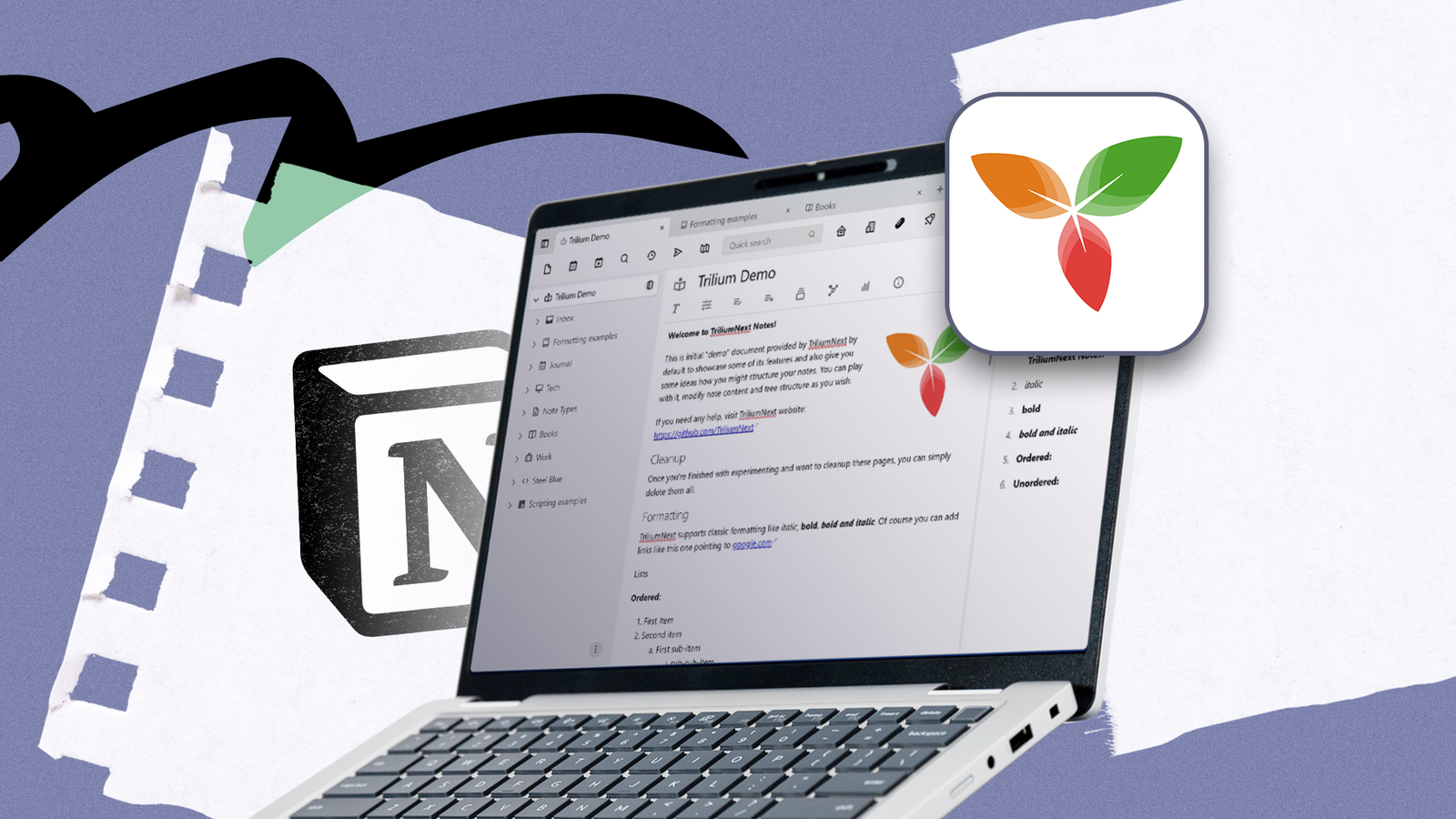
Published Sep 12, 2026, 1:00 PM EDT I made note-taking a habit a couple of years ago, and I'm still learning how to take notes like a pro. I look for features that are meaningful and fit my workflow instead of trying to mimic someone else's slick note-taking setup. It hasn't always been the case. When I started using note-taking apps, my YouTube feed was full of productivity videos about note-taking tools and their "genius" features. That's how I learned about Notion, and I installed it immediately on my PC. The first few days were interesting, as I learned a lot about how Notion databases work. I regret spending too much time on this because it caused a mental shift where I started to overcomplicate my thinking. This is when I regretted switching to Notion and decided to leave. But instead of choosing proprietary software, I picked a self-hosted, open source app called Trilium. It changed my digital note-organization habits. Trilium challenges Notion's style of organizing notes And it actually succeeds The hype around Notion databases is real, and they deserve attention for how powerful they are. You can build a system without a database, but it won't be as powerful as one with a database, which is where Notion's powerful features live. Databases are powerful. They make your notes compact, which is possible because of how they work in Notion. Every item inside a database is a full Notion page, so you can add as much information as you want while still keeping it clean. Trilium can also keep it clean and compact, but it uses a different strategy. It keeps your notes organized by allowing you to create a hierarchical tree of notes, which you can access from the left sidebar. In Trilium, each note can have sub-notes nested under it. You can go as deep as you want, and you can scan them from the left sidebar. For anyone new to taking notes on a device, a hierarchical tree of notes feels more natural because we've used this mental model since childhood. When I first tried Trilium, it instantly felt familiar, and I never felt the need to learn something new to keep my notes organized. You don't need to do anything fancy: just decide which one is a parent and which one is a child. I take notes only for myself, so why would I need to learn a complicated setup like Notion when I don't get any tangible benefits from it? Trilium changed my note organization habits for good I stopped obsessing over note structure Notion supports nesting, but it's one of many features. In Trilium, the hierarchical tree is the primary structure, and you are only a click away from creating a child note. After coming back to Notion, everything felt more complicated than it should be. Switching to Trilium made me realize I spent more time building the structure than writing notes. I prefer building a knowledge tree with real notes over designing a complicated system. Why did I choose to self-host Trilium? And how did I do it? Self-hosting means running software on your hardware or rented servers, giving you complete control over your data. However, I haven't self-hosted Trilium for this reason alone. Trilium is limited to desktops, and in a mobile-first world, that's a huge dealbreaker for many. The only way to fix this is self-hosting the tool on your hardware. After you complete the setup process, you can access Trilium notes from your phone's web browser. It's not limited to phones; you can access it from any device that can run a web browser. While self-hosting isn't for everyone, given all its complexities, installing Trilium on my hardware didn't feel difficult at all. It was the easiest self-hosting experience I've ever had. I have Docker installed on my PC, and I copy-pasted everything mentioned on Trilium's server installation docs page in Windows PowerShell, and it worked. If you have a NAS, that's even better than setting it up on your PC because the former gives you an always-on setup. However, self-hosting can't replace a full-fledged mobile experience. The developers know this, and I'm glad an official Trilium app is in the works for Android and iOS. I can't wait to try it on my Android phone and iPhone. I have no plans to quit using Notion unless something goes terribly wrong and it shuts shop. However, I'm not its daily user, either. I'll keep using it as a lover of productivity apps. However, for taking real notes, I'm betting on Trilium.
How leaving Notion for a self-hosted open source app changed my digital note organization habits
Full Article
Original Source
Read the full article at Androidpolice →KhanList aggregates and links to publicly available news content. We do not host full articles from third-party sources. Always verify important information with original sources.