
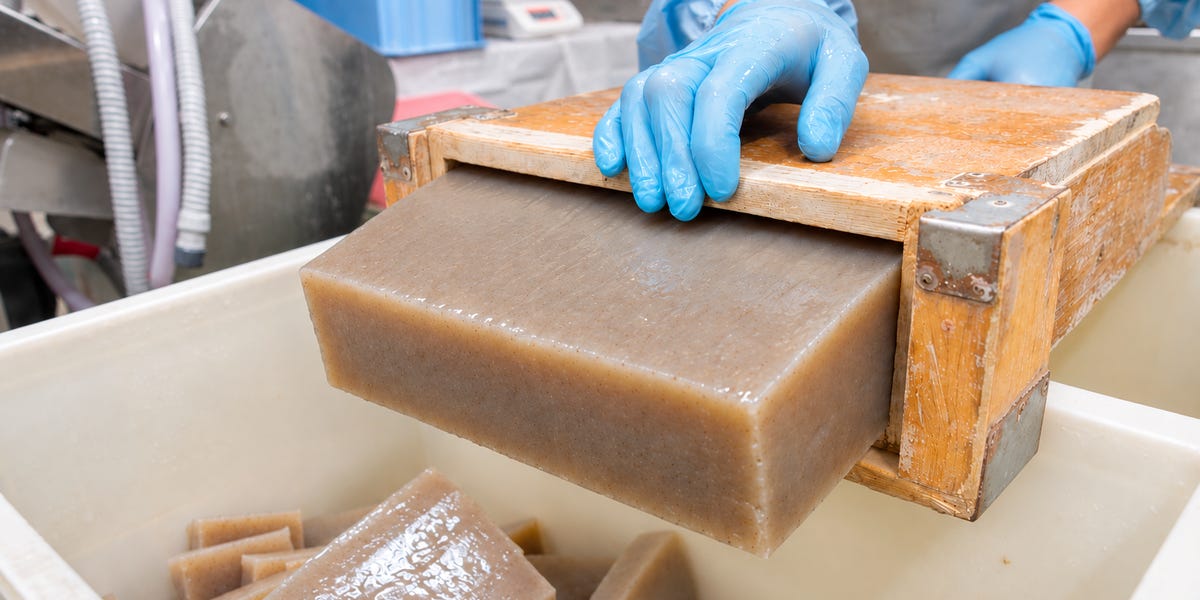
Description Angle down icon An icon in the shape of an angle pointing down. Shirataki noodles are made from konjac, a low-calorie, gluten-free food eaten in Japan for more than 1,000 years. In recent years, shirataki has taken off abroad and is often marketed as "miracle noodles." But in Japan, the industry that grows and processes it is rapidly shrinking.We traveled from Tokyo to Gunma Prefecture, which produces more than 90% of Japan's konjac crop, to see how it's grown and transformed into noodles, blocks, and jerky. We meet family-run factories and farmers facing falling demand, rising costs, an aging workforce, and harsher weather while betting that new products and growing interest in America can keep this centuries-old food tradition alive. Shirataki noodles are made from konjac, a low-calorie, gluten-free food eaten in Japan for more than 1,000 years. In recent years, shirataki has taken off abroad and is often marketed as "miracle noodles." But in Japan, the industry that grows and processes it is rapidly shrinking.We traveled from Tokyo to Gunma Prefecture, which produces more than 90% of Japan's konjac crop, to see how it's grown and transformed into noodles, blocks, and jerky. We meet family-run factories and farmers facing falling demand, rising costs, an aging workforce, and harsher weather while betting that new products and growing interest in America can keep this centuries-old food tradition alive. Show more
How Japan Turns Toxic Roots Into 'Miracle Noodles'
Full Article
Original Source
Read the full article at Businessinsider →KhanList aggregates and links to publicly available news content. We do not host full articles from third-party sources. Always verify important information with original sources.