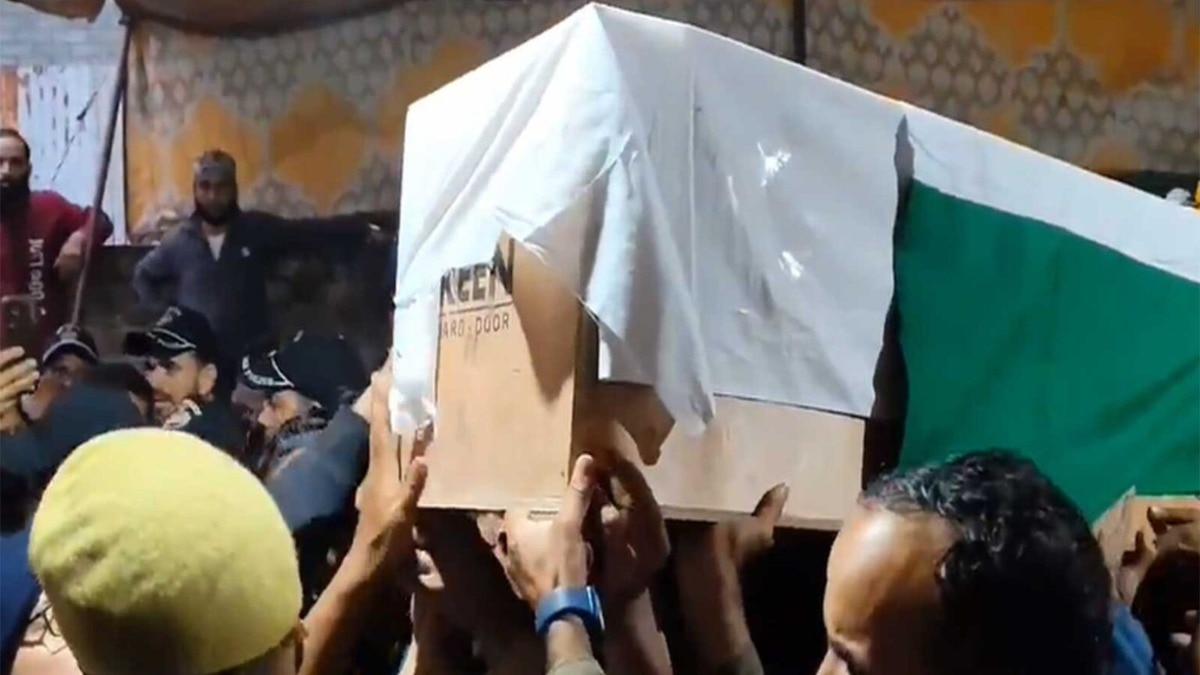
Residual militancy or intelligence gap? Experts weigh in on the killing of head constable Ashiq Hussain Qureshi in Anantnag and the security counteroffensiveThe daylight killing of Jammu and Kashmir police head constable Ashiq Hussain Qureshi by terrorists in South Kashmir’s Anantnag on July 22 has posed a significant challenge for security forces in the backdrop of the ongoing Amarnath Yatra pilgrimage.The point-blank shooting was apparently carried out by a lone gunman in a busy marketplace, suggests CCTV footage circulating on social media. It marks the first death in a terror attack in Kashmir since the Pahalgam killings of April 2025, which sparked an Indian military offensive against terror infrastructure in Pakistan.The Anantnag attack is a breach during the sensitive Amarnath Yatra, when the Kashmir Valley becomes a security gridlock. Experts opine it could signal some revival of targeted killings, a phenomenon known to impact police morale as well as local police recruitment. Besides, the massive security counter-offensive strains both resources and boots on the ground.Security forces responded swiftly with an elaborate crackdown across Kashmir, detaining some 2,500 suspects and alleged overground workers of militants in what was described as a “preventive and proactive security measure” to identify networks aiding terrorist organisations. The challenge for them is that the perpetrators of the attack are still at large. “It has been a challenge and will continue to be one in the days to come,” S.P. Vaid, former director general of police, J&K, told INDIA TODAY when asked about the implications of Qureshi’s killing in a high-security environment.However, a retired high-ranking Indian Army officer, who had served in the area during the peak of militancy in Kashmir, termed the Anantnag killing as “residual spillover of the long period of insurgency”. “The killing of the police constable is the collateral damage of the long insurgency, which has waned but not vanished completely. At the same time, the mass support militancy once enjoyed in Kashmir is over. The general masses want to move on,” the former army officer said.The attack, though, may have highlighted gaps in real-time intelligence on the security scenarios at crowded places such as markets, especially since the Amarnath Yatra requires a layered security blanket.“In the backdrop of Operation Sindoor and how we achieved absolute air superiority during the brief conflict, Pakistan would now think twice before taking any major action like the 2025 Pahalgam attack,” the former army officer said, adding that insurgents would, however, continue with “low type of action” to keep the “situation simmering”.On the counter-operations by security forces, the Srinagar police, in an official release, said: “The coordinated operations carried out on the basis of credible intelligence and as part of ongoing investigation resulted in the detention of nearly 700 suspected overground workers (OGWs) for questioning and verification in accordance with established legal procedures. The operations have been undertaken with the objective of identifying networks that provide logistical, financial and communication, transportation, shelter and other forms of support to terrorist originations.”Similar statements were issued by the police in other districts of Kashmir. The authorities demolished the family homes of Haroon Ganai and Adil Ahmad Thoker in South Kashmir; police said the suspects were associated with the Lashkar-e-Taiba.“The solution lies in generating hard intelligence and conducting anti-terror operations on pinpointed intelligence generated by the J&K police and intelligence agencies to neutralise the terror threat to pilgrims and security forces,” said Vaid.The former army officer emphasised on “good and fair governance” as long-term solutions, suggesting: “Bulldozing or demolishing homes is not a solution.”J&K chief minister Omar Abdullah, in his statement, cited a Supreme Court order against demolishing the homes of people accused of crime and criticised the central government, which controls the police in J&K, for the mass security crackdown.“I understand the anguish of the police but the Supreme Court has issued an order stating that summary action of this kind should not be taken,” Abdullah said. “We had witnessed a similar situation after the Pahalgam attack and at that time, I had to speak to the central government to stop this (demolitions).”Subscribe to India Today Magazine- EndsPublished By: Akshita JollyPublished On: Jul 31, 2026 20:48 IST
How J&K cop's killing flags terror threat amidst Amarnath Yatra security gridlock
Full Article
Original Source
Read the full article at Indiatoday →KhanList aggregates and links to publicly available news content. We do not host full articles from third-party sources. Always verify important information with original sources.