
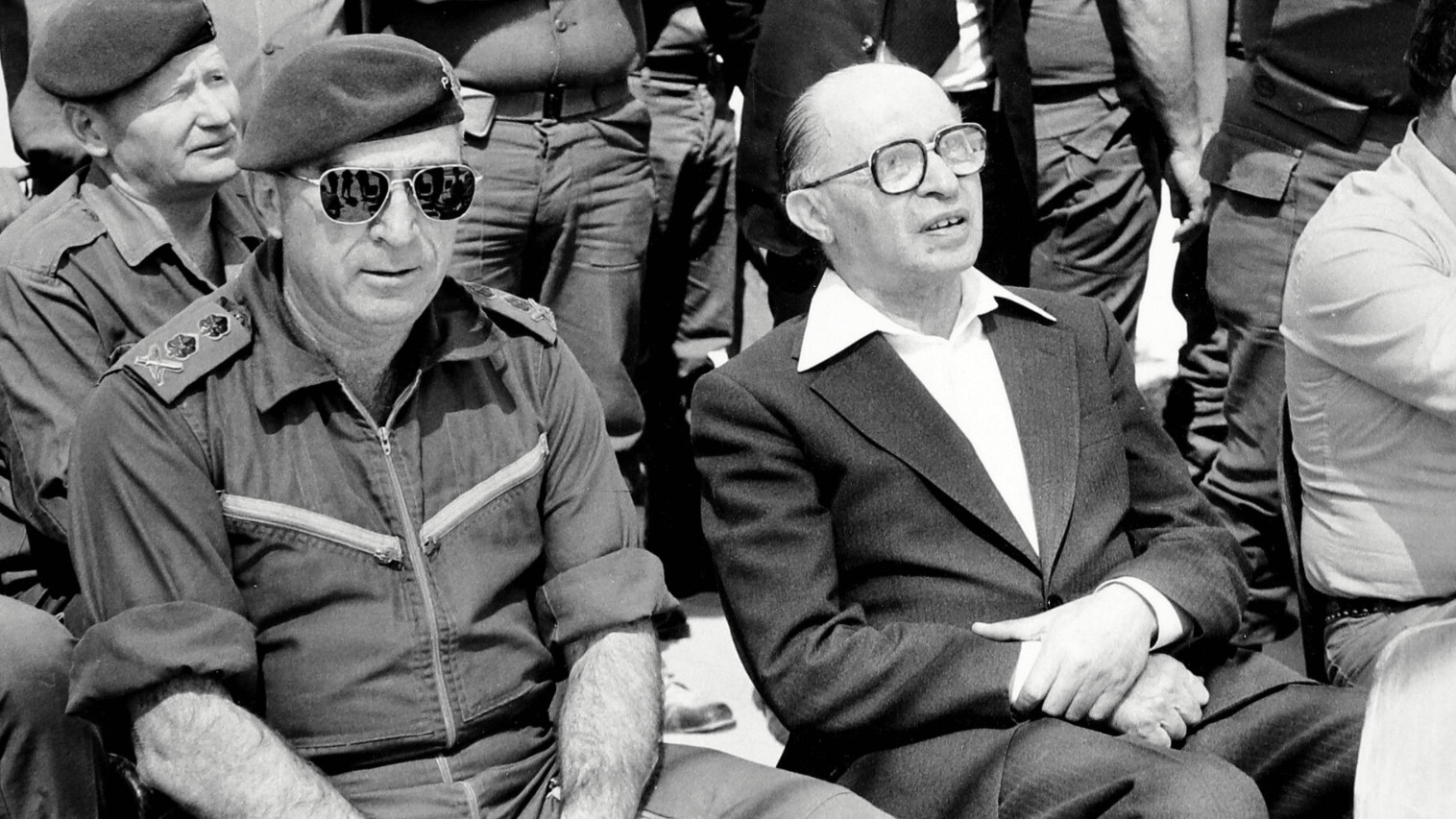
Tensions between Britain and Israel are rapidly escalating with Andy Burnham's government gearing up to announce a raft of strong measures on the occupied West Bank, including a ban on goods from illegal Israeli settlements. In response, Israel has threatened Britain. "If Britain acts against Israel, Israel will act against Britain," Foreign Minister Gideon Saar warned this week. Israeli Prime Minister Benjamin Netanyahu has branded the UK the "Islamic Republic of Britain". His son, Yair Netanyahu, suggested that the Falkland Islands belonged to Argentina and not Britain. Yair is no minister, but after his comments this week US President Donald Trump indicated that Washington could reconsider its position on British sovereignty over the islands. New MEE newsletter: Jerusalem Dispatch Sign up to get the latest insights and analysis on Israel-Palestine, alongside Turkey Unpacked and other MEE newsletters On Thursday, Trump even suggested he would not back Britain if Argentina was to invade the Falkland Islands, telling GB News: "You country was not there to help me" when the US and Israel began its attack on Iran in February. Argentinian President Javier Milei is set to issue a statement on the issue on Thursday night, although it is not known what he will say. Exclusive: UK to announce raft of new policies on Israel including settlement goods ban Read More » Milei declared earlier this week that Argentina's national sovereignty had been "violated" and that his country would defend its interests "tooth and nail, no matter who it bothers". Behind Israel's taunting Britain over the Falkland Islands lies a story of covert conflict between the two countries, which have generally historically been close allies. Largely forgotten today, Israel armed Argentina against Britain during the Falklands War in the 1980s and caused the death of dozens of British soldiers. Argentina and the UK both assert sovereignty over the South Atlantic archipelago, but the vast majority of the territory's 3,600 residents back British rule. On 2 April 1982 Argentine forces invaded the Falkland Islands, triggering a 74-day war which Britain ultimately won. Around a decade ago, declassified UK government files revealed that during the war, Israel secretly sold weapons, including Skyhawk jets, to Argentina. These jets were used to bomb British forces and killed 48 soldiers and sailors, as well as sinking four British warships. Secret arms flights A 2011 book by Argentine journalist Hernan Dobry recorded how Israel used secret cargo flights through Peru to send Argentina the weapons. Israel also sold the Argentinians air-to-air missiles, anti-tank mines, mortars, machine guns and fuel tanks for the Skyhawk jets. Israel further supplied 20 reconditioned Nesher fighter jets to the Argentinian dictatorship. Its arms exports to Argentina during the war were worth an estimated $1bn. The Israeli government repeatedly denied arming Argentina, which led to the British Foreign Office leaking details it had discovered of Israeli actions But the Israeli government repeatedly denied arming Argentina, which led to the British Foreign Office leaking details it had discovered of Israeli actions to the British press. These details included Argentinian efforts "through a Panamanian intermediary to lodge a letter of credit with Credit Suisse in Zurich in favour of Israeli Aircraft Industries Ltd in Tel Aviv". One Foreign Office official wrote: "Withdrawal from occupied territory is not exactly [a] convincing line of argument with Israelis who will be quick to see its implications for their own situation." Patrick Moverly, then the UK ambassador in Tel Aviv, remarked: "The Israelis have always had a special way of looking at the rest of the world." He said the Israeli government was making "a gigantic effort… to pull the wool over our eyes". Another British official added that "we are having the worst of both worlds, with the Israelis apparently shipping aircraft to Argentina and at the same time fobbing us off with repeated denials". 'Attractive opportunity' for arms sales But why was Israel arming Argentina against its close historical ally? As one Israeli diplomat put it at the time, the war gave Israel "an extremely attractive opportunity to develop the arms market in Argentina and Latin America, with great potential long-term benefit to Israel". But there was another reason as well - the UK and Israel were already at loggerheads over a British arms embargo. Menachem Begin, the Israeli prime minister at the time, had a particularly strained relationship with the UK. The six British prime ministers who have restricted arms sales to Israel Read More » Begin had previously commanded the Irgun Zvai Leumi (National Military Organisation) which bombed the British Officers Club in Haifa under the British Mandate, killing and injuring dozens. The Irgun also infamously blew up the British administrative headquarters in Jerusalem’s King David Hotel in July 1946, killing 91 people - including 28 Britons. When Israel invaded Lebanon in 1982, British Prime Minister Margaret Thatcher told US President Ronald Reagan that a “balanced policy” was best and that “unlimited support for Israel can only lead to growing polarisation and despair in the Arab world”. Britain imposed an arms embargo on Israel that would last until 1994. Thatcher denounced the 1982 massacres committed by Christian Phalangists with the Israeli army’s complicity in Lebanon as “pure barbarism”. The Begin government therefore saw arming Argentina as a way to pressurise Britain to end its arms embargo on Israel and stop selling weapons to Israel's enemies in the Arab world. This did not work. Under Thatcher, the UK signed the Venice Declaration - in which nine European countries formalised their concern about Israeli settlements in occupied Palestinian territories. Thatcher also oversaw the founding of the Conservative Middle East Council (CMEC) in 1980, with Dennis Walters as its chairman. 'Israel will not be a passive victim' Today, decades later, Britain and Israel stand at odds once more. In 2024 Britain imposed a partial arms embargo on its ally and it is now expected to introduce serious sanctions related to Israeli settlements. On Tuesday, UK Foreign Secretary Ed Miliband told British MPs that his government plan to impose a "comprehensive" package of sanctions in the coming weeks. Miliband said Israel's new plan in area E1 "risks making a Palestinian state unviable". Israeli Foreign Minister Sa’ar retorted that "Israel will not be a passive victim of this policy" and will defend "its rights, its interests and its people". According to Israeli media, Israel is now considering how to retaliate - and the US is privately pressuring Britain not to impose sanctions. A leaked Pentagon memo from April suggested that Washington could use the Falklands as leverage in negotiations with the UK. What happens in the next few weeks could end up defining UK-Israel relations, but also the UK-US relations, for years to come.
How Israel armed Argentina to kill British soldiers during Falklands War
Full Article
Original Source
Read the full article at Middleeasteye →KhanList aggregates and links to publicly available news content. We do not host full articles from third-party sources. Always verify important information with original sources.