
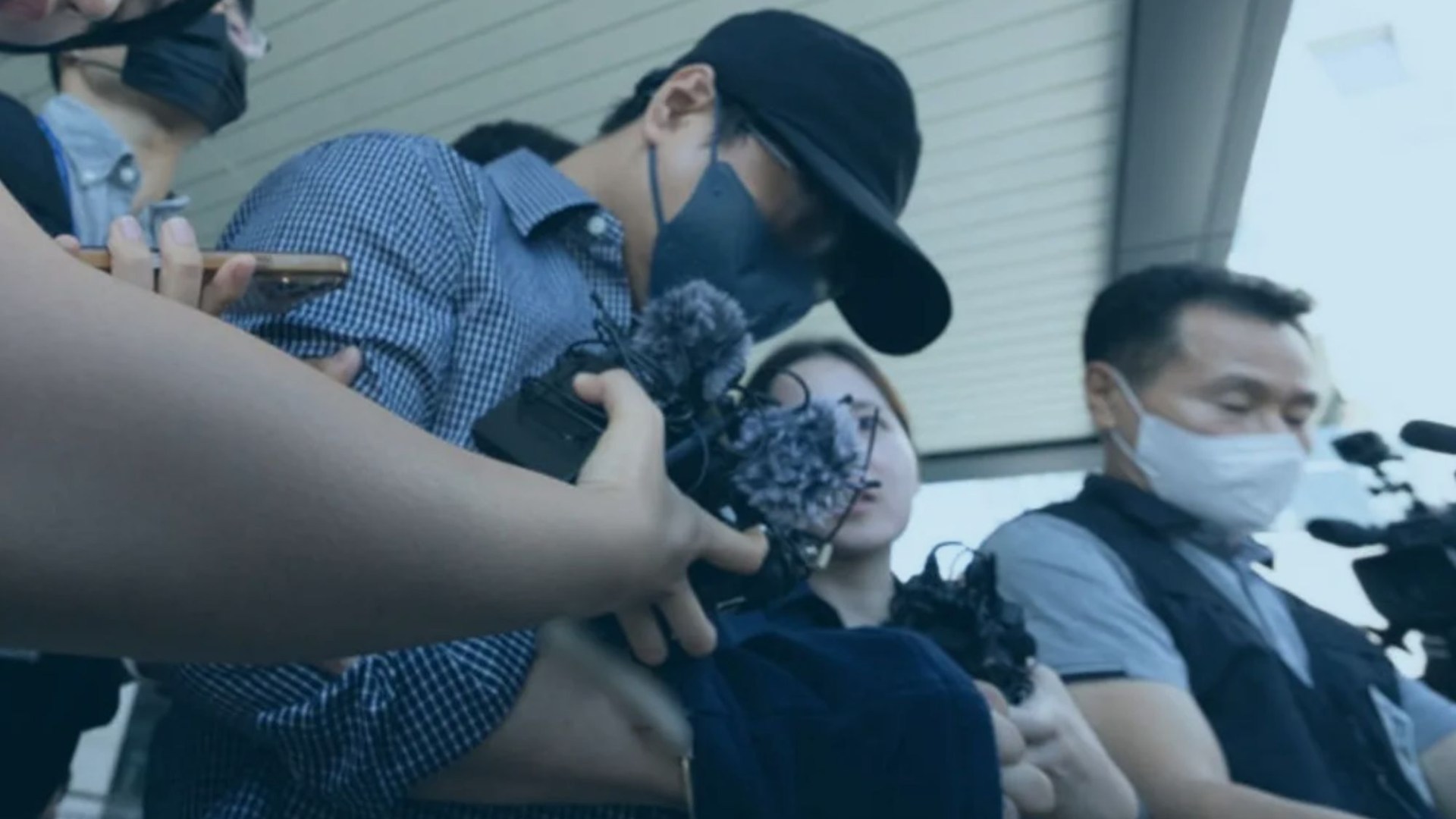
FAMOUS for its dramatic volcanic landscapes and luxury seaside resorts, Jeju Island is a honeymoon paradise. But a string of mystery deaths and botched missing persons investigations on South Korea‘s largest island has sent shockwaves across the country. Officer Mr Bu arrested by South Korean police over prematurely closing missing persons cases Credit: Alamy South Korean investigators found Ms Jang’s body under a palm tree on Jeju Island following her disappearance Credit: Alamy A work-shy 34-year-old officer who allegedly closed two missing persons cases with no evidence has cast doubt over the South Korean police force on what is now dubbed “death island”. Officials eventually discovered that Bu, identified only by his surname, had falsified reports on the victims and concealed the files in the hopes of not being foiled by colleagues. Sign up for The Sun newsletter Thank you! Later, a review revealed more mismanagement of cases. He marked a missing person as dead and closed the case without any evidence – just to avoid the “extra work”, investigators allege. For two of these cases, the cop claimed to have contacted the missing persons and confirmed they were alive but the devastated families claim he never reached out at all. Both people were found dead last month, sparking fury for their loved ones. In more emotional heartache for victims’ families, officials said cases where “death” was recorded in the file would be permanently deleted from the database. Morgan Wright, founder and CEO of the National Centre for Opened and Unsolved Cases, said: “There is no way any single individual or any agency should be able to delete reports in a system of record. Most read in The Sun A disappearance poster of 37-Year-Old Jang Mi-ran who went missing in Jeju in May Credit: Courtesy of Jang Mi-ran's family Shabnam Chaudhri is a former MET detective superintendent and Head of the Missing Persons Unit covering Hackney Credit: News UK Ltd “This is a failure on one of the largest levels I have ever seen.” Embers from the case fanned out onto social media with users claiming a serial killer was on the loose on the island. Others purported theories suggesting a human trafficking ring on Jeju. But police were quick to stamp out these ideas, saying that there are no confirmed connections. Wi Seong-gon, Jeju’s Governor, has now been sucked into a crisis management crusade, pushing to calm fears among holiday-goers that the destination has become “Jeju Horror Island”. “The spread of fake news and rumours suggesting Jeju is more dangerous than other regions in the wake of this false case closure must urgently be corrected,” he said. “Accurate facts and necessary information must be communicated quickly, and we must respond actively so that unverified information does not deepen anxiety about safety in Jeju.” Now, South Korean police are painstakingly poring over 310,000 missing persons cases that were closed in the last three years, siphoning away valuable resources that could be tackling new crimes. Cheonjiyeon waterfall in Seogwipo, Jeju Island, South Korea Credit: Alamy Aerial view of beaches at Pyoseon village at Jeju island, Republic of Korea Credit: Alamy Shabnam Chaudhri, a former Metropolitan Police detective who headed the Missing Persons Unit across Hackney, told The Sun: “It’s incompetence and laziness by the officer.” When she worked as a detective inspector for Community Safety for four years in the 2000s, one of the officers she oversaw in her unit was faced with looking into several big domestic violence cases. Shabnam said: “He had around 29 investigations and he closed 26 of them filing reports saying the victims had been contacted but claimed that they didn’t want to go through the criminal justice process. “A high load were not interested where most officers were working really hard to convince the victims to go to court. These were victims of serious violence.” She couldn’t join the dots as to why they would refuse to go to court, so she decided to take matters into her own hands. It turned out the victims said they were never contacted by the officer. “After I found out, he offered no explanation as to why he did it but just implied that the victims had misunderstood,” Shabnam said. In the case of Jeju Island, Shabnam said making the officer a “scapegoat” is “not appropriate”. Instead, she says, it showed “a serious lack of leadership and supervision from the South Korean police force”. She said: “Why were they unable to approach somebody and say they were overworked?” In August, after scouring the island for clues, South Korean police finally located four bodies in a matter of three days between August 22 and 24 – which included two that Bu personally handled. One victim was a 60-year-old man whose name has not been revealed to the public. In this particular case, Bu reassured his family that he was safe but passed on the message that the victim wanted his location to remain a secret. However, 51 days later, his body was found. Another was 37-year old Jang Mi-Ran whose body was discovered at a palm tree farm in Hallim-Eup, Jeju City, on August 24. Bu, who was part of the Jeju West Police Station’s missing persons investigation team, falsely claimed that he had made contact with Ms Jang, authorities allege. After she was reported missing on May 15, he confirmed she was alive and well to her boyfriend but said “she was asking not to disclose her location”. Around two hours after the missing report had been made, the case was closed. Her body was found 104 days after her disappearance. Hong Seok-gi, the National Police Agency National Office of Investigations director, said they are still in the dark with the circumstances around her death. Mr Bu denies allegations of forging electronic public records, dereliction of duty, and obstruction of official duties Credit: News1 Presumed body of missing woman found as investigators examine the scene at a palm tree farm on Jeju Island, South Korea Credit: Alamy Public scrutiny turned onto the police for jumping the gun in announcing her death as suicide before eventually rowing back to say all possibilities remained open. A full review of the 298 cases handled by Mr Bu between March 2025 and July 2026 found that, during his time in the missing persons unit, he closed 25 of them. Bu admitted to the cops that he had entered wrong information, deleted the records, and closed the case. He is also suspected of claiming a “traffic accident” caused Ms Jang’s death but then deleting it from the system. Bu has been charged with forging public electronic records, obstruction of official duties and dereliction of duty, according to the Jeju Police Agency. He has denied the allegations. The Jeju Provincial Police Agency attempted to explain on Tuesday what caused Bu to take procedural shortcuts at the expense of the victims’ families. It said: “He was driven primarily by work-related negligence arising from accumulated workload pressures and fatigue associated with increased responsibilities.” Officers receive more than 70,000 reports of missing adults each year where cases are resolved fairly quickly, according to the Korean National Policing Agency. Simon Kwon, founder of Kwon and Partners in Seoul, told The Sun: “Korea files criminal complaints at a rate no comparable country does. “Japan, with twice our population, sees roughly 10,000 accusation cases a year; Korea puts 700,000 people into the criminal process through complaints in the same period. “Police in Korea have been already burdened with a hefty workload where caseload per investigator in 2021 was 101 files. Now in 2025, it is 134.” Over the past two years, approximately 1,200 Korean officers handed back their investigative certificates in defeat, according to Simon. The soaring missing persons and scandal over closed cases has forced the South Korean President Lee Jae Myung to order a complete overhaul of how they investigate people who’ve disappeared. He said: “There are already plans to improve the system, the way cases are closed, the supporting documents required and the allocation of personnel. “The workload may be a factor, but this is ultimately a matter of people’s lives.” In South Korea, an officer can close a missing persons case without prior approval from a superior. Missing persons expert Morgan said: “It’s unconscionable that this detective did what he did, and also unconscionable that the department was ignorant of it for so long. “Where was the leadership and accountability? “There should be a systematic process for the review of cases: where are we at, what is permanently unknowable, if the case had been worked would the victim have survived? “This should have been caught earlier, sooner, and dealt with.” Here in the UK, closing a missing persons case is more rigorous, passing through more authority before it’s considered final. Shabnam said there must be “evidence to suggest that the person has been seen and not necessarily located, and that they are alive and well”. Jack Roberts, lead investigator and owner of Global Investigations Ltd, which specialises in missing persons both in the UK and internationally, said Bu’s judgement was “horribly heinous and incompetent”. He told The Sun: “I understand maybe one person who thought it was okay if they had a heavy workload, but you should never ever give false hope and information to families that are so desperate.” This latest injustice to rock South Korea will not let the police force off the hook. The grief-stricken family of Ms Jang are preparing to file a lawsuit, a state compensation claim, and, depending on the investigation results, a criminal complaint. Comment now
How idyllic honeymoon hotspot became eerie ‘death island’ as hundreds vanish without trace – with ‘help of police’
Full Article
Original Source
Read the full article at Thesun →KhanList aggregates and links to publicly available news content. We do not host full articles from third-party sources. Always verify important information with original sources.