
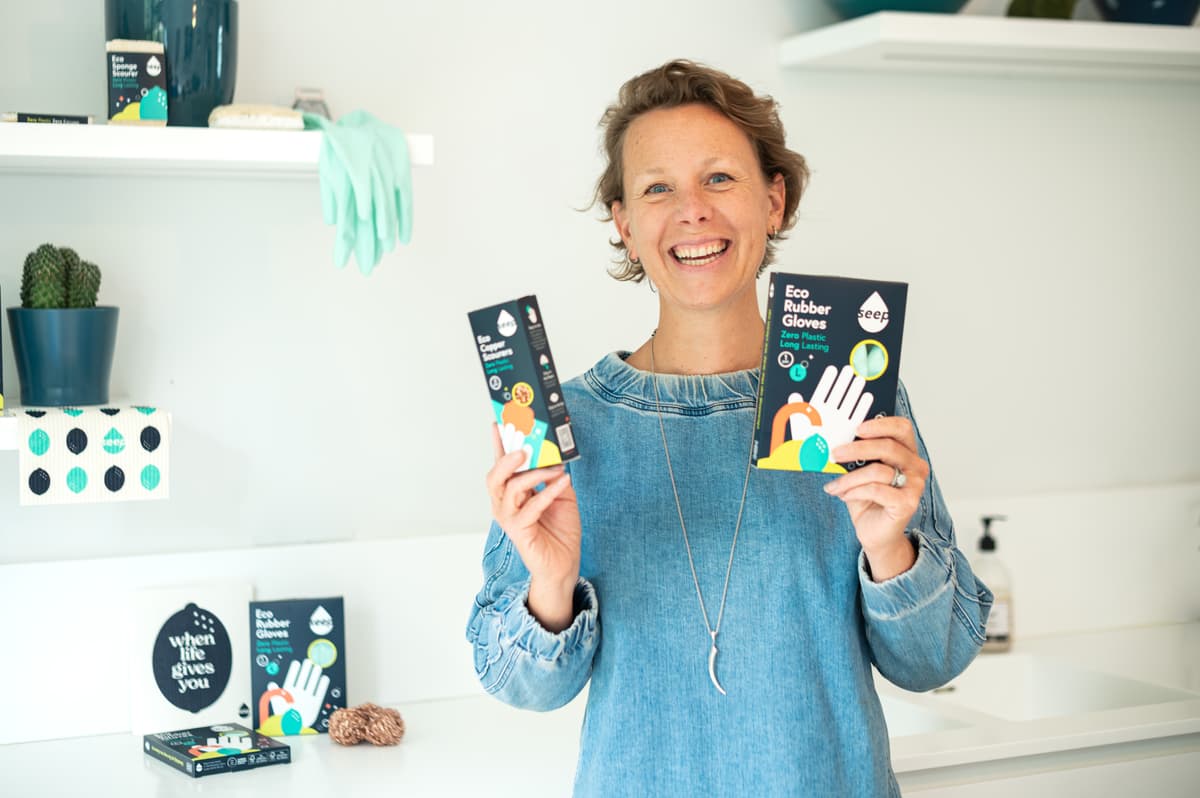
We hear a lot about very young entrepreneurs; you started your business in your 40s; how did that change Seep's trajectory?"I used to think I'd missed the boat to start my own business. I was too risk-averse, and I had a mortgage to worry about. Then I got an idea for a cleaning essentials business - sponges and cloths - that no one else seemed to have spotted, and around the same time I read a Harvard Business Review article on the fact that the most successful entrepreneurs actually start their businesses in their 40s.At that age, I had learned, over a long career of highs and lows, how to make good decisions, how to trust my gut, and how to read people. I'd acquired a broad understanding of the general skills an entrepreneur needs, from how to pitch, to recruiting, to reading a P&L and how to negotiate with suppliers. I had a little bit of capital behind me too, so I could back myself in the early days.But the biggest advantage of all was my network - people I had helped out over the years, former colleagues, team members and bosses, former suppliers and customers, all of them now in roles where they can help, often in exchange for nothing more than a sponge. I wouldn't have got to where I am without my network. It's been an absolute superpower."How did you come up with an idea that stood out in a crowded market?"I was increasingly stripping toxic products out of my own home and switching to things that were better for my health, and the planet, and that looked better in my kitchen. One product, the green and yellow sponge, I just couldn't find a plastic-free alternative to. I couldn't understand why no one else had disrupted the category. The answer became pretty clear: it's the most unsexy product category there is.The first few people I mentioned my idea it to were ... shocked. How could I go from a director at Selfridges to setting up a sponge business? Investors felt the same. Nobody wanted to put their name behind a plastic-free sponge brand, people preferred a vitamin or beauty brand. But I kept coming back to one thought: if somebody else did this in five or ten years and I hadn't had the courage to do it myself, it would be one of my life's few regrets. I was also convinced that the humble sponge is one of the products that most UK households touch multiple times per day. Now I'm so glad that I backed an idea that no one else could see.We're growing fast, we don't have a direct competitor (yet), we're able to bring innovation and energy into one of the most tumbleweed aisles in the supermarket." What's the biggest lesson you've learnt so far?"What I wish I'd known before trying to get Seep onto supermarket shelves is quite how long it was going to take me. I started my career as a buyer, and I thought my idea was so good that everyone else would just see it too. It took five years of emailing, showing up wherever I thought I might find the right buyer, and building a solid set of evidence that the product would actually sell, before anyone would give me a meeting.If I did it differently, I'd be more patient. I'd focus on getting undisputable evidence on rate of sale first, proving that customers loved it - that would have saved me so many ghosted emails. Now I know what evidence you need, plus what level of audience you need to bring, so it's impossible for them to say no. Then retailers will have absolute confidence it's going to sell on the shelf."Was going on Dragon's Den worthwhile?"It was one of the best decisions I've made since setting up Seep. The casting team had been in touch a couple of times over a couple of years to see if I'd be interested in applying.. But I couldn't think of anything worse than being exposed in front of millions of people, my accounts and my numbers picked apart - anything could go wrong and it could have bene game over for Seep.Then an opportunity came up to be listed in Tesco, the UK's largest retailer, and I needed a way to drive brand awareness fast enough that people would actually pick us off the shelf. I asked the team if I should risk it, and everyone said yes. It was 100% the right thing to do.Since we aired in January 2025, we believe it's delivered over £1 million in equivalent media value, not just from the initial airing, but from the footage we've been able to use in ads since, and the support we've had from Deborah Meaden and Trinny to win competitions, deepen relationships with retailers, and reach their audiences. 10% of people still say they first heard of us through the show. It's the biggest unfair advantage you can get for your business in the early days. You just need the guts to do it, and to manage the emotional fallout afterwards."
How I built a million-pound sponge brand in my 40s - and got into Tesco
Full Article
Original Source
Read the full article at Standard →KhanList aggregates and links to publicly available news content. We do not host full articles from third-party sources. Always verify important information with original sources.