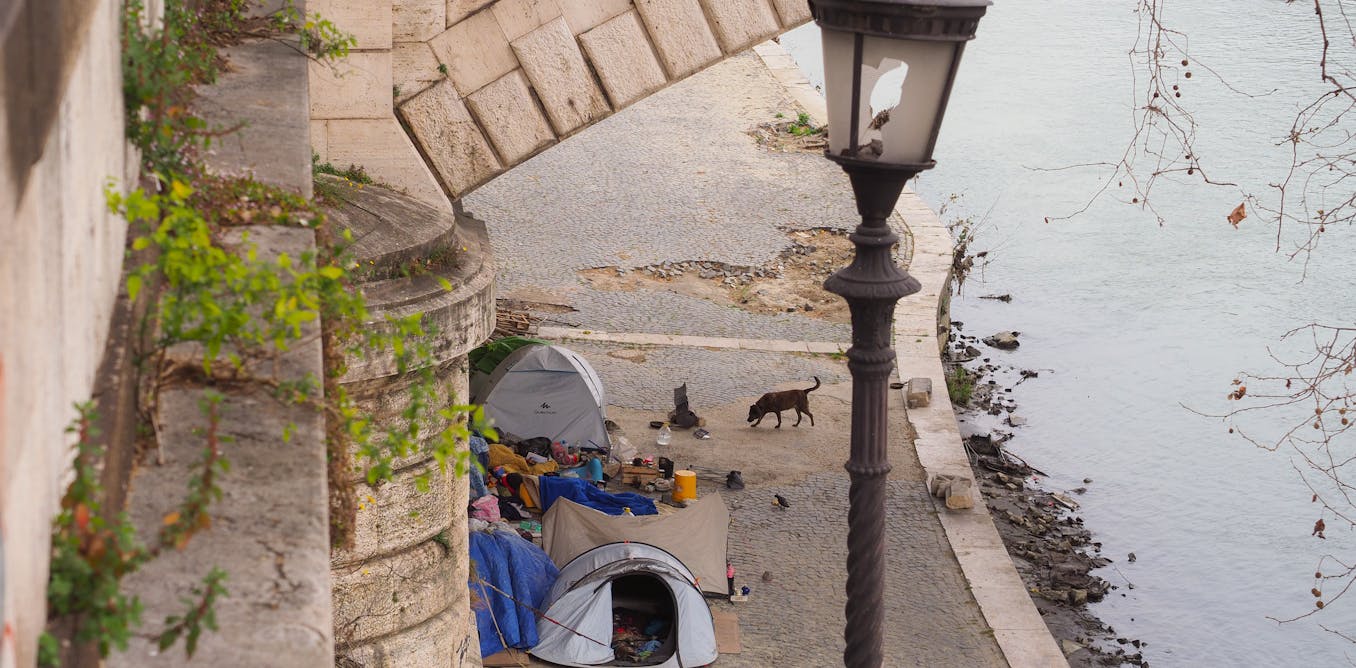
Cities are getting hotter. Building materials like concrete or asphalt trap and radiate heat. Heat emissions from vehicles and air conditioning units are concentrated in urban areas, and there’s less of a breeze in built-up places. Alongside fewer trees or the absence of cooling rivers, heatwaves can feel harsher in urban areas, where homeless people are among the most vulnerable to extreme heat. Researchers like me don’t yet know enough about how high temperatures affect those experiencing homelessness, or what exactly should be done to protect them as the effects of climate change become more severe. But we do already know that cities in the UK are not well adapted to high temperatures. Making matters worse, many people don’t have access to reliable and safe resources. In central Manchester, for example, there are few public toilets to access and free drinking water is not easy to find. In June 2026, reports have highlighted multiple instances of homeless people in the city suffering illness and sunburn from high temperatures. This summer, some charities and organisations have handed out provisions in hot weather, like cold drinks or suncream. Read more: How turning front gardens into driveways has added to night-time heat Alongside other vulnerable groups, Greater Manchester Combined Authority has recognised that people experiencing homeless face acute challenges from hot weather. But for those sleeping rough, advising people to avoid the heat can be unhelpful. Some people simply can’t escape the heat. This is not just an environmental problem. Homeless people are at higher risk of various health problems. A report from a Canadian organisation called The Homeless Hub outlines some heat-related emergencies that those experiencing homelessness are exposed to including heat cramps, exhaustion, heat stroke, as well as factors that can endanger health like insomnia or the ability to store food safely. Heatwaves also bring risks that come from sheltering or keeping cool by canals or rivers, as many homeless people do. Sadly, drowning is a serious issue, particularly among vulnerable people. In France, at least 74 people have died in unsupervised bodies of water since the beginning of the June-July heatwaves. My research is about everyday experiences of homelessness. I routinely see both the challenges from extreme weather and adaptations that are made to cope with that. While researching homelessness in Rome, Italy, I’ve seen people carrying all their belongings and clothes even in the searing summer temperatures, or hiding them, so they aren’t stolen or damaged. Others build shaded structures out of cardboard, around park benches or hang out in cooler spaces such as parks, by fountains or near rivers. Removing dangerous design During my fieldwork in Toronto, Canada, I saw people using public amenities like bus stops for shade. That’s especially commonplace because camping in green places like parks is not allowed in Toronto. In a tiring heatwave, a chance to lie down and rest is extremely valuable, and something many of us might take for granted. Toronto, August 2025: in hot weather, places like parks are important places to cool down and rest. Will Haynes, CC BY-NC-ND Hostile urban design, like the removal of park benches or integrating spikes into seats to discourage lying down, can be dangerous. People need more accessible public toilets and water fountains, not less. Toronto has a heat relief network, a citywide network of more than 500 cool spaces available all summer, signposted online – something UK cities could integrate as heatwaves become more commonplace. The Museum of Homelessness in London has a project called Severe Weather Emergency, where systems of care in the UK are assessed on their preparedness in facing the challenges of climate change. Council signposts can offer helpful advice to help everyone deal with the heat, like those suggested by a website called heat.gov in the US. Ending efforts to remove the presence of homelessness through policing should extend to all weather conditions, not just heatwaves or extreme cold. Recent research shows that future urban warming is likely underestimated. Considering the health risks, the perspectives and experiences of homeless people must be at the centre of a new urban heat strategy in Manchester and throughout the UK. These people have huge experience and appreciate the challenges they face very well. Involving more people experiencing homelessness in research, service provision and policy encourages the development of solutions that are suitable to a certain place and inclusive to all. This “nothing about us without us” approach is already used by some Canadian organisations working to support homeless people. Faced with shared environmental challenges and by listening to others, we can still make our cities fairer and cooler for everyone.
How heatwaves make life harder for homeless people
Full Article
Original Source
Read the full article at Theconversation →KhanList aggregates and links to publicly available news content. We do not host full articles from third-party sources. Always verify important information with original sources.