
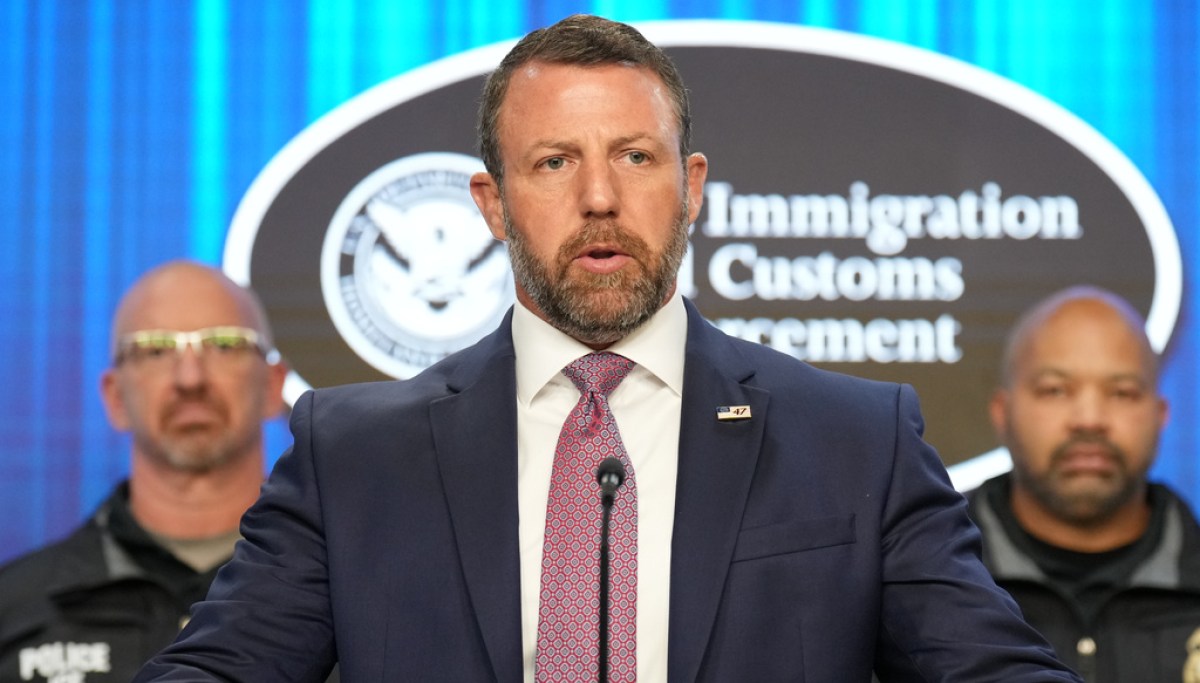
While much of the initial coverage treated the Department of Homeland Security data breach as a routine bureaucratic IT failure, the ongoing reality is far more dangerous. The mass exposure of over 41,000 personnel records is a politically motivated act of asymmetrical warfare designed to paralyze our border enforcement infrastructure.A radical hacktivist group calling itself the “Department of Peace” claimed responsibility for the theft, handing the data over to the transparency collective Distributed Denial of Secrets and hacktivist developer maia arson crimew to publish. The perpetrators openly admitted they timed this strike to retaliate against DHS Secretary Markwayne Mullin’s pledge to “turn up the heat” on immigration enforcement. By deliberately stripping federal officers of their operational anonymity, the attackers crossed the line from digital protest into active operational sabotage.As a physician and cross-sectional data analyst, I look at this breach the way a pathologist views a systemic failure in a critical containment environment. The perpetrators did not need to crack heavily fortified, deep-tier government servers. Instead, they exploited a singular immunodeficiency: the cloud-based Okta single sign-on identity portal used by DHS. While Okta maintains its core infrastructure was not breached, subverting DHS-managed credentials or directory permissions connected to that central portal gave the hackers a master key to exfiltrate 41,000 concentrated personnel records. The human cost of this structural failure is immediate and severe. This breach did not target financial records for identity theft or ransom; it was explicitly engineered to fuel a searchable public directory named “Icepick.” Covering roughly 15% of the total DHS workforce, the dataset exposes the names, work addresses, phone numbers, reporting chains, and internal assignments of more than 21,000 Customs and Border Protection employees and nearly 6,600 ICE personnel.Most alarming is the permanent risk to front-line operatives. Beyond basic contact details, the leaked files map sensitive information on undercover and surveillance programs across internal permission groups. These records identify personnel connected to certified undercover operations, federal wiretap programs, surveillance tools, and recent border enforcement actions. Even where group membership reflects administrative access rather than active field deployment, publishing these specialized associations alongside office locations hands a digital target list to violent cartels and domestic extremists. The physical safety of agents and investigators nationwide is now severely compromised.WHY STEPHEN MILLER CAN SALVAGE TRUMP’S LEGISLATIVE FUTUREContaining this threat requires immediate, aggressive counter-leak tracking. Federal investigators must deploy advanced cyber-forensics to audit the authentication logs, API calls, and entry protocols used during the SSO compromise. While DHS contractor ZeroFox successfully pressured the domain registrar to suspend the initial search portal — even after Icelandic host FlokiNET refused takedown demands — the operators swiftly migrated to an alternative domain and released the site’s source code for widespread mirroring. Following the recent string of breaches hitting the FBI and Pentagon, the Department of Justice must apply the same international intelligence-sharing playbook used against criminal syndicates such as ShinyHunters to locate, extradite, and prosecute these perpetrators.To prevent a failure of this magnitude in the future, our national security infrastructure requires a permanent structural cure. First, federal agencies must eliminate single points of failure by segmenting credential authorization; allowing a single administrative directory to map both routine staff and covert units is an unacceptable risk. Second, DHS must enforce a strict zero-trust architecture with tight API rate-limiting so a single compromised account cannot scrape tens of thousands of profiles undetected. Finally, centralized directories must implement rigorous data minimization, scrubbing sensitive field assignments and undercover group tags from general identity platforms entirely. We cannot afford to view this crisis through a purely political lens; we must diagnose it systematically and fortify our architecture before front-line agents pay the ultimate price.Eric Wargotz is a practicing physician, geopolitical analyst, and multisector policy writer whose commentary has appeared in the Washington Examiner, the Baltimore Sun, and the Jerusalem Post. He is a judge and the 178th president of MedChi, the Maryland State Medical Society, following a career that includes serving as a Senate nominee and elected county commission president. A clinical professor emeritus at George Washington University, his views are his own and do not represent his affiliates.
How hacktivist saboteurs exposed federal agents — and how to fix the breach
Full Article
Original Source
Read the full article at Washingtonexaminer →KhanList aggregates and links to publicly available news content. We do not host full articles from third-party sources. Always verify important information with original sources.