
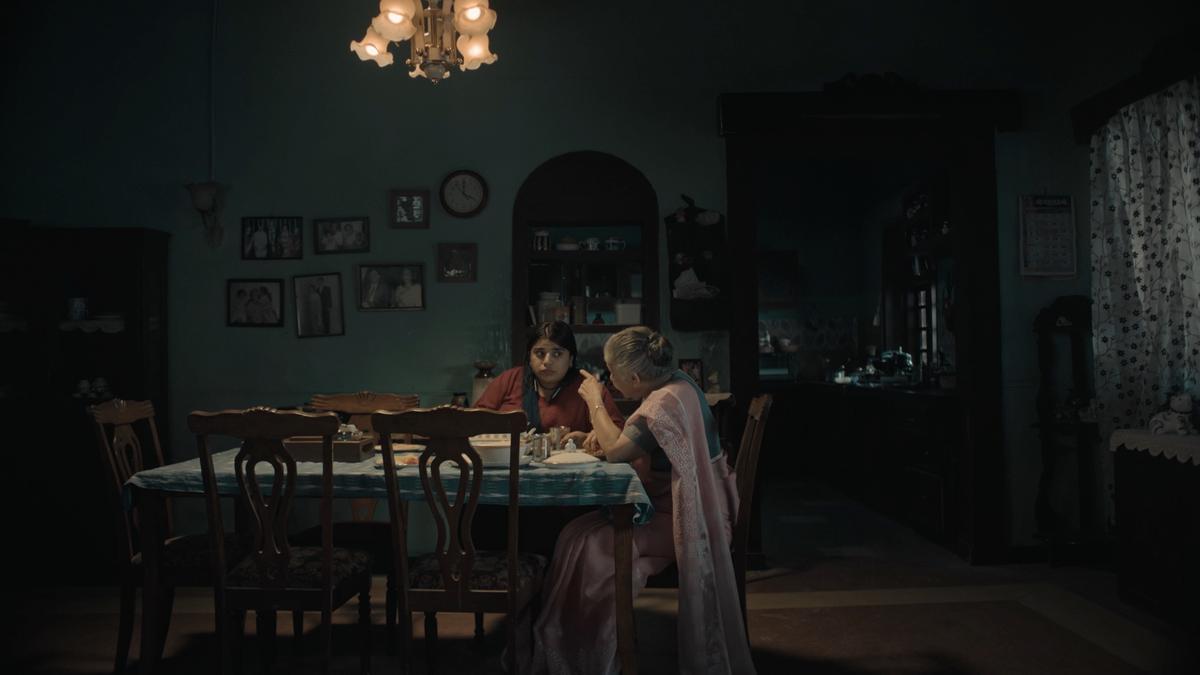
Before she turned 30, filmmaker Sulagna Chatterjee wanted to finance her short filmOlakh (2026) one last time.Olakh, Marathi for ‘identity’, contained the question that had been troubling her for a while: what remains of a woman after years of being somebody’s daughter, wife, mother, employer, employee, caregiver; after the thousand small accommodations made in the name of belonging?The film features senior actor Suhasini Mulay known for Lagaan (2001) and Dil Chahta Hai (2001), and casting director and actor Nikita Grover known for the series Pataal Lok (2020) and films like Shadows of the Moonless Nights (2026). A still from the short film | Photo Credit: Special Arrangement Crowdfunding summons up the image of a crowd already assembled, hands raised, wallets open. In reality, the crowd has first to be summoned. She had made films like Code M (2020), The Visit (2021) and Adulting (2018) and crowdfunded Pehli Date (2025). She knew that the process would involve attaching a monetary figure to a dream and return, again and again, with the faintly mortifying question of whether somebody might help pay for it. And so a film about identity began with an appeal to strangersOn August 20, the film had its world premiere at the Indian film festival in Melbourne. The crowdfunding campaign opened on April 20, 2025. By the time Olakh went on the floors on August 5, its ₹10 lakh budget had been assembled not through one magnificent cheque but through an accumulation of belief. Around 230 people contributed roughly ₹7 lakh, or 70% of the budget. The smallest contribution was ₹51, the largest, ₹1.5 lakh. The remaining ₹3 lakh came from co-producers, while other collaborators offered equipment and post-production support, reducing costs in ways that do not appear neatly in a ledger. Filmmaker Sulagna Chatterjee | Photo Credit: Special Arrangement Crowdfunding versus studio backing Sulagna believes that a producer or studio can absorb the innumerable practical problems of making a film, leaving the director freer to concentrate on the work itself, even if that arrangement occasionally means surrendering some creative control. Working independently allowed Sulagna to tell a braver story.The politics of appetiteThe first draft was written on November 26, 2024, after a difficult spell of introspection left Sulagna thinking about the two women around whom her childhood in Kolkata had been built: her mother and grandmother. She noticed a peculiar talent women acquire ie the ability to accommodate so completely that, after a while, accommodation ceases to look like an action at all. A poster of the film designed by Ankita Kadam | Photo Credit: Ankita Kadam “Why do we lose ourselves so much when we are trying to be loved?”, she asks.It is an enormous question. Olakh looks for its answers in a small room.The Hindi-language film unfolds largely inside a Mumbai home kitchen, where a landlady and her domestic worker encounter each other across the faultlines of caste, class, age and experience. Suhasini Mulay plays a Punjabi woman , a widow now, but once married into a Maharashtrian household, carrying one identity into the customs of another. In this kitchen, taste has a history, appetite has politics, even the apparently innocent question of what will be cooked contains another, less frequently spoken one: whose preference matters?Sulagna had seen something of this in her own family. Her mother, a Bangal (a Bengali who migrated before the Partition from East Bengal, now Bangladesh) who married into a Ghoti (Bengalis from the west of undivided Bengal) out of love. She preferred food with more heat than the family she entered. Marriage brought adjustments, including food. Over 35 or 36 years, Sulagna says, her mother accommodated the household so thoroughly that she seemed almost to have forgotten what she herself liked.The loss was too small to be called a tragedy. That was precisely what made it interesting. Identity does not always disappear with a slammed door. Sometimes it erodes one preference at a time.Cancer altered the arrangement. After surviving the illness, Sulagna’s mother began referring to the years ahead as “life 2.0”. The phase suggested a rebirth. She began returning to the food she liked. A woman reclaiming her appetite might appear an insignificant act beside surviving cancer. To Sulagna, it contained an entire argument about the self.From these memories came Olakh’s interest in the domestic sphere as a place where identity is continually made and unmade. Its two central women occupy radically different positions within the same household, and their intimacy does not erase the inequality between them. Sulagna became interested in the minute betrayals of caste and class, in the way an older generation can misunderstand the pain of a younger one, and in the way younger women can look back at their mothers and grandmothers and mistake endurance for contentment.The film has journeyed from one person’s insistence to a collective act of faith. Sulagna asked for help and 230 people answered.
How filmmaker Sulagna Chatterjee crowdfunded ‘Olakh’ with 230 supporters
Full Article
Original Source
Read the full article at Thehindu →KhanList aggregates and links to publicly available news content. We do not host full articles from third-party sources. Always verify important information with original sources.