
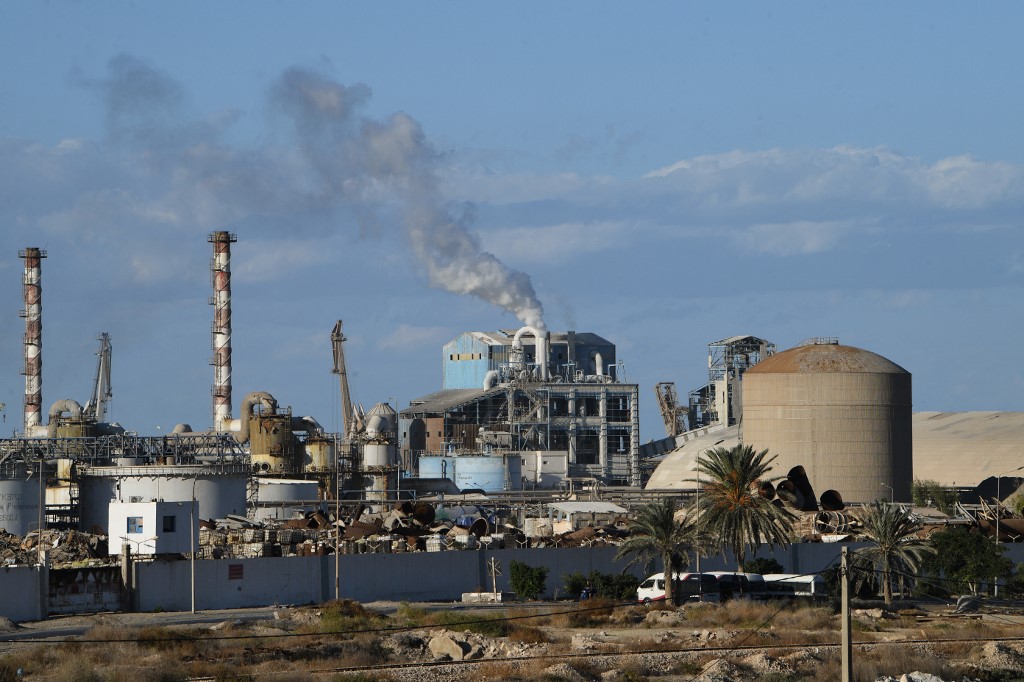
As Tunisia’s green hydrogen strategy is being promoted as a cornerstone of Europe’s clean energy transition, residents in the southern city of Gabes argue it could instead extend the life of one of the country’s most polluting industrial complexes while increasing pressure on scarce resources. On 21 October 2025, around 100,000 people marched through Gabes in one of the largest environmental protests North Africa has seen in years. Demonstrators demanded the closure of the Groupe Chimique Tunisien (GCT), the state-owned phosphate complex that has polluted the city’s air and sea for decades. Residents also mobilised against plans to decarbonise the GCT and turn it into a green hydrogen hub supplying Europe. Critics describe the project as a form of “green colonialism”, saying Tunisia would bear the environmental costs while Europe reaps most of the benefits. Germany, which expects to import 50 to 70 percent of its hydrogen demand by 2030, has been the leading force behind Tunisia’s National Green Hydrogen Strategy, published in July 2024. Berlin financed the strategy and provided the technical expertise behind its design through GIZ’s H2Vert.TUN project. As the strategy itself states, Tunisia aims to produce 8.3 million tonnes of green hydrogen annually by 2050. Of that total, only around 2 million tonnes would remain in the country. The strategy identifies the production of green ammonia at the GCT’s Gabes complex as the main and earliest domestic use planned for green hydrogen in Tunisia, while most of the remaining output would be exported to Europe. New MEE newsletter: Jerusalem Dispatch Sign up to get the latest insights and analysis on Israel-Palestine, alongside Turkey Unpacked and other MEE newsletters Green hydrogen would replace the fossil hydrogen the GCT uses to produce ammonia for fertilisers and reduce its carbon emissions. But this “decarbonisation” would do nothing to address the plant’s other major sources of pollution, including sulphur dioxide, fluorides and phosphogypsum, which have contaminated the environment for decades and continue to make Gabes’ residents sick. The hydrogen is expected to be exported to Europe through the EU-backed SoutH2 Corridor. In parallel, Brussels pledged €35.4m ($38.9m) for Tunisia’s renewable energy infrastructure, while agreements signed with energy multinationals envisaged €120bn in private investment. Yet little progress has followed. “Everybody is waiting for something to develop,” Edward Koenen, head of finance and sales at ABO Energy, one of the companies that signed a memorandum of understanding, told Middle East Eye. “The Tunisian government said they are not that interested in constructing anything, because there is no market for green hydrogen.” Officially, Tunis has not changed course. On 1 October, it reaffirmed its commitment to the SoutH2 pipeline project by signing the Algiers Ministerial Declaration, but nothing has progressed beyond paper. As the high costs associated with green hydrogen have become clearer, what some analysts once described as Europe’s “hydrogen hype” has begun to fade. In September 2025, the International Energy Agency cut its 2030 forecast for low-emissions hydrogen production by a quarter. No to ‘green facade’ However, according to Saber Ammar, a Tunisian activist and researcher at the Tunisian think tank Transnational Institute, there is another element behind Tunisia’s stall on its green hydrogen strategy: the opposition of Gabes’ residents and Tunisian civil society. Opponents argue that the projects would primarily benefit European consumers while entrenching an industrial model that many residents of Gabes want dismantled. “There was a coalition between the trade union, the social movement, the environmental justice movement, and we created some sort of an anti-green hydrogen front,” Saber told MEE. ‘Last year, starting from September, hundreds of people went to the hospital due to suffocation caused by the gases emitted by the industry’ - Islem Zrelli, member of Stop Pollution One of the key components in this coalition is “Stop Pollution”, an environmental movement born in 2012 in Gabes to oppose the severe pollution and health impacts caused by the GCT. Kheireddine Debia, one of Stop Pollution’s leaders, told MEE that what activists want "is to shut down the industrial complex, not to give it a green facade". Debia received a six-month suspended sentence last month for protesting against the GCT, while nine other activists were handed prison terms of up to a year as part of a broader crackdown on dissent since President Kais Saied’s power grab in 2021. Islem Zrelli, a young member of Stop Pollution, believes the GCT has already done too much damage. Last year’s protests erupted after more than 120 residents were hospitalised following severe gas leaks. “Last year, starting from September, hundreds of people went to the hospital due to suffocation caused by the gases emitted by the industry,” he told MEE. “Many of them were kids and students from Chatt Essalem, my neighbourhood.” Tunisia: Thousands protest in Gabes against chemical plant pollution Read More » The GCT’s phosphate processing and fertiliser production have caused long-term health problems among the population, including chronic respiratory illnesses. Its radioactive waste product, phosphogypsum, has been linked to higher cancer rates and has polluted the Gulf of Gabes, harming marine life and contaminating waters that residents rely on for their livelihoods and food. In 2017, thanks to Stop Pollution’s mobilisation and civil society pressure, the government promised to dismantle the phosphate unit. However, on 5 March 2025, a restricted ministerial council chaired by Prime Minister Kamel Maddouri reversed course. It removed phosphogypsum from Tunisia’s list of hazardous wastes, despite an estimated 70 million tonnes of the material having been dumped by the plant into the Mediterranean over the previous 25 years. The controversial move is part of a 2025-2030 plan to expand phosphate production from under three million to 14 million tonnes a year. The council also approved the creation of pilot green ammonia units in Gabes, envisaged as the cornerstone of Tunisia’s domestic green hydrogen industry and a key component of the export-oriented hydrogen economy outlined in the German-backed national strategy. For the people of Gabes, this means more phosphogypsum in the sea and higher emissions of toxic gases into the air, including ammonia, which a GCT audit found to be already exceeding permitted levels in 2025. Green extractivism Critics say Tunisia’s green hydrogen strategy could also carry significant social and economic costs. “The problem is that green hydrogen needs fresh water, and Tunisia doesn’t have any fresh water,” Fadhel Kaboub, associate professor of economics at Denison University and president of the Global Institute for Sustainable Prosperity, told MEE. “So the solution is desalination, and desalination plants produce the salt brine, which is chemically toxic for sea life, that is dumped usually in the ocean. It kills the blue economy.” ‘It is reminiscent of the fossil fuel system. And with green hydrogen, we risk reproducing that model, with more foreign debt’ - Hanen Keskes, Greenpeace MENA The worsening water stress that environmentalists have warned about for years has already become a reality in Tunisia. This year, the country faced its hottest summer on record, with power cuts that stopped the water pumps and left towns without water for days, prompting protests across the country. According to the Transnational Institute’s analysis of the strategy, exporting six million tonnes of green hydrogen would also require more than 90 gigawatts of solar and wind capacity covering 500,000 hectares, about 3 percent of Tunisia and roughly twice the area of Greater Tunis. Most of it would be concentrated in a planned “hydrogen valley” in southern Tunisia, much of it on communal land used by local communities for herding and small-scale farming. The strategy, however, offers few details on how such land would be secured. Since 2016, Tunisia has loosened land laws to open agricultural and collective land to energy investors. In villages such as Segdoud, collective land has already been appropriated by the state for solar projects without compensation, according to residents and rights advocates. Moreover, while the strategy promises more than 400,000 jobs by 2050, a 2021 study commissioned by GIZ warned that producing hydrogen with imported technology and exporting it as a raw material “would create limited jobs and value in Tunisia”. The study added that most of the jobs created would be temporary, tied to the construction of solar and wind projects. Green hydrogen: The EU's new resource grab in North Africa Read More » Hamza Hamouchene, a founding member of the Environmental Justice North Africa (EJNA) network and programme coordinator at the Transnational Institute, argues that the strategy risks reproducing an extractivist economic model, where Europe profits from North Africa’s minimally processed resources while local communities see few lasting gains. “Europe and its companies, what we call the Global North, want to continue to get their cheap natural resources, including green electricity and green hydrogen,” he told MEE. “Yet these projects end up not creating long-term, sustainable, good jobs for local populations.” Officials estimate that producing every million tonnes of green hydrogen would require $25bn in investment, a cost they acknowledge Tunisia cannot bear alone. Critics warn that the strategy could lock the country into a new cycle of foreign debt, with public financing used to reduce risks for foreign investors. “This is the built-in problem with extractivism, including green extractivism,” Hanen Keskes, political campaign lead at Greenpeace MENA, told MEE. “You de-risk the European corporations through government loans, while just exporting raw, very depletable resources. It is reminiscent of the fossil fuel system. And with green hydrogen, we risk reproducing that model, with more foreign debt.”
How Europe’s green hydrogen ambitions could keep Tunisia’s worst polluter alive
Full Article
Original Source
Read the full article at Middleeasteye →KhanList aggregates and links to publicly available news content. We do not host full articles from third-party sources. Always verify important information with original sources.