
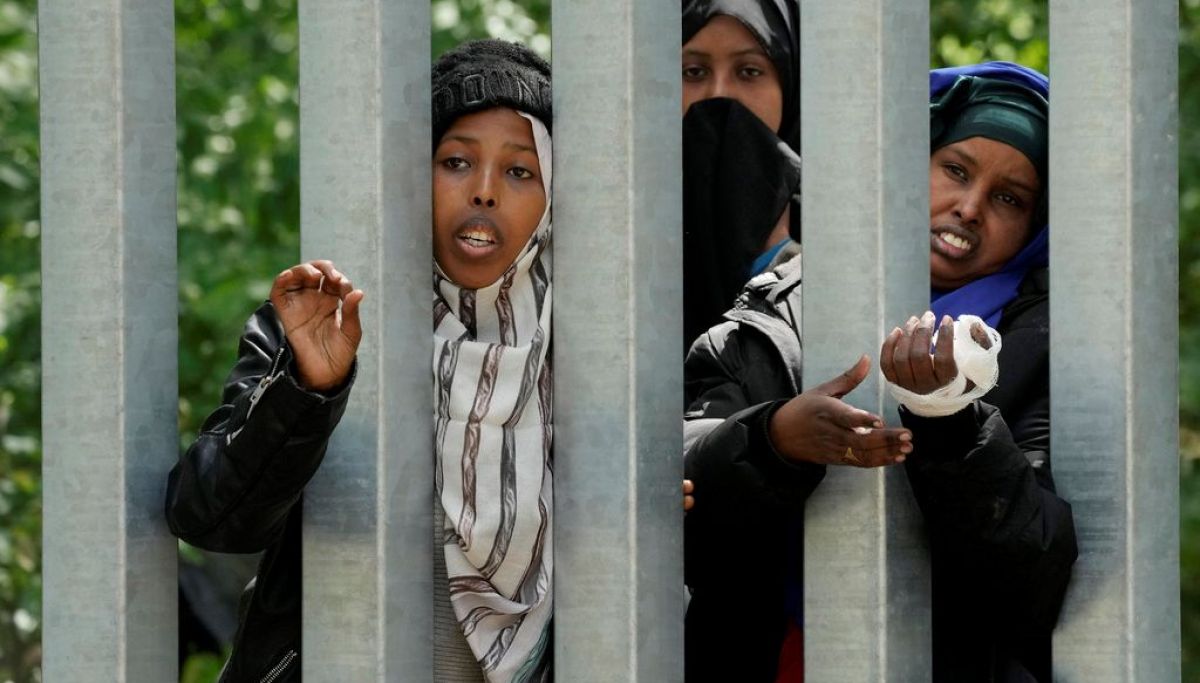
In recent years, migration crises have become a significant factor destabilizing the security situation, particularly in Western countries. The absence of a rational, proactively pursued migration policy and short-sighted decisions made by policymakers have contributed to the deep crisis with which Western Europe is struggling on many fronts, experiencing what appears to be the twilight of its former greatness. In order to break free from this decline, Europe must decisively tighten its migration policy, as the approach taken so far has proven ruinous. The situation in some European countries can now be described as an emergency. These nations face dramatic alternatives of seeing state services collapse or triggering civil unrest among huge groups of migrants.The United States understood this threat in time, turning toward a rational tightening of its immigration policy, avoiding a national catastrophe. The American experience of combating uncontrolled migration is a blueprint for those countries that seek to address the threats arising from migration crises. In Europe, Poland has been the country that avoided open-border policies prevalent in other Western capitals. Unlike France or Germany, Poland did not pursue ruinous migration and asylum policies. Following the crisis that struck Europe, especially after 2015 — when then-German Chancellor Angela Merkel encouraged migrants to come to Germany en masse — Poland firmly opposed the mandatory relocation of immigrants among EU member states. From the outset, we advocated sealing our borders against the threats posed by the uncontrolled admission of hundreds of thousands of illegal immigrants, mainly from Africa and the Middle East. Polish migratory policies focused rather on controlled labor immigration and admission of citizens from culturally proximate countries. Following Russia’s 2022 aggression, Poland welcomed nearly 2 million war refugees from Ukraine. Compared to the U.S. and many European nations, we are a safe country. In numerous surveys, a large majority of Poles assess Poland as a safe place to live, with crime rates significantly lower than in other European countries. The widespread sense of security is also noted by foreign tourists who portray Poland as a safe country where one can enjoy travelling without concern. The picture of safe daily life stands in stark contrast to the situation in Western European countries, which are now suffering the effects of years of left-wing migration policy. Countries like Germany and France are confronted with significant burdens on social welfare systems, Islamic radicalization, organized crime, and the transformation of certain districts into areas dominated by socially alienated immigrant communities. Such communities, often unintegrated for generations, are also a source of terrorist threats linked to Islamic extremism. Since the current migration crisis of 2015, many EU member states have been grappling with uncontrolled migration entering via the Mediterranean and the Balkans, controlled by organized criminal groups. The lack of effective border controls and the chaotic arrival of people (who often intentionally don’t even carry identity papers) is easily exploited by terrorist organizations and criminal networks that traffic people, arms, and drugs. All of this contributes to rising crime rates, destabilization, and social tensions.Additionally, mass illegal immigration has led hostile powers to send its operatives to Europe to orchestrate intelligence warfare activities. Though Poland remains stable and calm, we have experienced firsthand how migration can be employed by hostile intelligence services, notably by Russia. Coercive, engineered migration is part of the Putin regime’s efforts to destabilize NATO member states. This technique is employed alongside disinformation, influence operations, and other methods of hybrid warfare. Poland experienced the practical application of this hostile technique acutely in 2021, when large groups of illegal migrants — mainly from the Middle East — began appearing at our eastern border with Belarus, which also constitutes the eastern border of the European Union and NATO. Thanks to a swift response and the correct assessment of the situation, the Polish government had clarity from the outset that what we were dealing with was not an influx of asylum-seeking refugees, but an organized attack on Poland’s eastern border, orchestrated by the Belarusian security services with the Kremlin’s consent and support. It was the Belarusian services that arranged transports for migrants to Minsk and then instructed them on how to illegally cross our border, including attacks on Polish border guards. Today we know clearly that this illegal migration route was a prelude to Russia’s aggression against Ukraine in 2022, as destabilization of NATO’s eastern flank was intended to facilitate that attack. TO BLOCK THE RIGHT, GERMANY’S ESTABLISHMENT IS TEAMING UP WITH EX-COMMUNISTSToday, Poland finds itself in a difficult position. On the one hand, the hybrid attack on our eastern border continues at varying intensity. On the other, the consequences of the EU’s migration pact are looming over our future. The pact erodes national sovereignty by forcing migrant quotas in the name of “European solidarity.” The adoption of these harmful measures will only deepen migration problems rather than combat illegal migration and increase border protection. Such a prospect fills Poles with concern, as they do not wish to repeat the mistakes made by other European countries. A better model to emulate is the one adopted by the U.S., which has chosen to fight against illegal migration. Poland, too, should pursue a firm migration policy, strengthen migration regulations, and place the security of its citizens first. We must draw lessons from the experience of other states and avoid uncontrolled migration that leads to the breakdown of the state and devastates its governability. Today we need migration oversight, firm border protection, deportations of illegal migrants, and clear procedures regarding how and whom we wish to admit.Stanislaw Zaryn is an expert on intelligence, served as Poland’s deputy minister-coordinator for the Special Services, and advised two Polish presidents on matters of intelligence and national security. From 2021 to 2023, he was involved in countering the artificial migratory routes used by Belarus and Russia to destabilize Poland’s border.
How Europe destroyed itself with open borders — and why America and Poland got it right
Full Article
Original Source
Read the full article at Washingtonexaminer →KhanList aggregates and links to publicly available news content. We do not host full articles from third-party sources. Always verify important information with original sources.