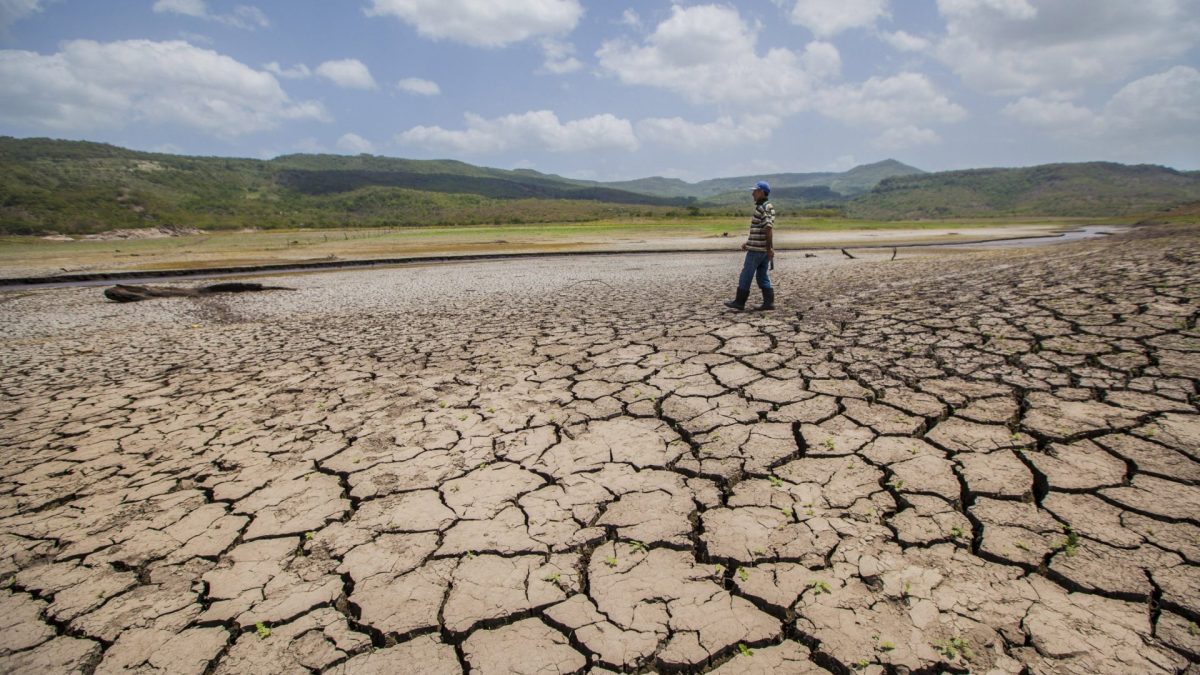
An “unprecedented” El Niño weather event is forming in the Pacific Ocean, causing ripple effects across the globe. For the UK, the climate pattern is expected to bring food shortages, prices rises and the chance of an even hotter summer next year. “It’s accelerating faster than it’s ever done in history and it’s predicted to be, by some considerable margin, much bigger than any one we’ve ever had in history to date,” said Professor Tim Benton, An El Niño is declared when sea temperatures in the tropical eastern Pacific rise to at least 0.5°C above average. These weather events typically occur once every two to seven years and last nine to 12 months. This incoming El Niño is arriving at a time when Europe is already reeling from the effects of extreme weather. Here’s how the El Niño will affect the UK in one month, one year and two years. One month Global weather patterns are heavily affected by a naturally occurring transition between warm and cool weather patterns in the tropical Pacific Ocean, known as El Niño and La Niña. The cooler pattern, La Niña, has been dominant since the end of 2024, but the warmer El Niño pattern is now emerging. The affects of the El Niño are first felt in the tropical Pacific Ocean along the west coast of South America. While it will take some time for this to affect the weather in the UK, it won’t be long until we start to experience the impact of El Niño in other ways. “An El Niño will really affect fisheries off the South American Pacific coast, because it kills things off and it takes a while for them to recover and migrate back in,” explained Dr Lloyd Peck, a marine expert at the British Antarctic Survey. Warming ocean temperatures are already disrupting a crucial global commodity: South American anchovies. These are not the anchovies we eat in a tin, but are primarily used as feed for fisheries. Peru, Ecuador and Chile account for roughly a third of the world’s fishmeal production, meaning an anchovy shortage will have an impact on the cost of farmed fish, such as salmon, sea bass and prawns in Britain. One year One year from now is when we’ll start to notice the impact of El Niño on the weather here in the UK. As a general rule across the globe, an El Niño “will make the extremes more extreme”, Peck explained. “So the wet bits will be wetter; we’ll have more floods because of it. And the dry things will be drier; it’ll exacerbate things like drought, wildfire,” he said. There are many factors that affect the weather here in the UK beyond El Niño, however if next summer does turn out to be a hot one then El Niño will “make that hot summer probably even warmer”. Climate scientists are alarmed that this strong El Niño is happening at a time when climate records are continuously being broken due to the effects of climate change. “We’ve had [El Niños] for a long time, and they’ve not really been a problem for us…but what’s happening now is that it’s overlaid on top of [global warming]. It’s reached the point where the extremes now aren’t extremes of 30, 31, 32°C in the temperatures. They’re extremes of 35, 36, 37, 38°C,” Peck said. So an El Niño could bring a more heightened version of what we’re seeing this summer in Britain, including a spike in heat-related deaths, droughts and wildfires. A moorland fire broke out near Manchester this week. Wildfires like this or even worse are probable next year due to the effect of El Niño on an already warm summer (Photo: Ioannis Alexopoulos/Getty) Two years The El Niño is also expected to have far reaching ramifications for the world’s food supplies. While we could start to see these effects in the coming months, the impact ion food production “plays out over quite a long timescale”, said Benton. Analysts at Goldman Sachs have predicted this El Niño could cause a 15.8 per cent surge in food prices, which would not be fully felt in the global economy until the end of 2028. Benton said this could translate into price rises of 3-4 per cent in the UK. While it’s impossible to predict exactly where we will see the biggest price rises, one of the foods most vulnerable to El Niño-related disruption is rice. This is because around 40 per cent of global rice exports come from India, which typically experiences drought in El Niño years. Chocolate is also particularly vulnerable to price rises as cocoa production is heavily concentrated in West Africa, which experiences both extreme drought and flooding as a result of El Niño. El Niño patterns also typically reduce global production of palm oil, an extremely common ingredient in ultra-processed foods in the UK. Benton points out that this El Niño is coming on top of a “long-running cost of living food price inflation crisis” driven by the wars in Ukraine and Iran, as well as the effects of climate change. Most recently, disruption in the Strait of Hormuz has driven up the cost of fertiliser for British farmers by up to 70 per cent, which is expected to have a dramatic impact on food prices over the coming year. Benton said the thing that is really worrying experts is “the impact of El Niño over and above it being one of the driest and hottest summers in European history” and “one of the most geopolitically volatile years in recent history”. It’s all of those things together that could have a devastating impact on food prices across the world, he said.
How El Niño weather patterns will change the UK after a month, a year and longer
Full Article
Original Source
Read the full article at Inews →KhanList aggregates and links to publicly available news content. We do not host full articles from third-party sources. Always verify important information with original sources.