
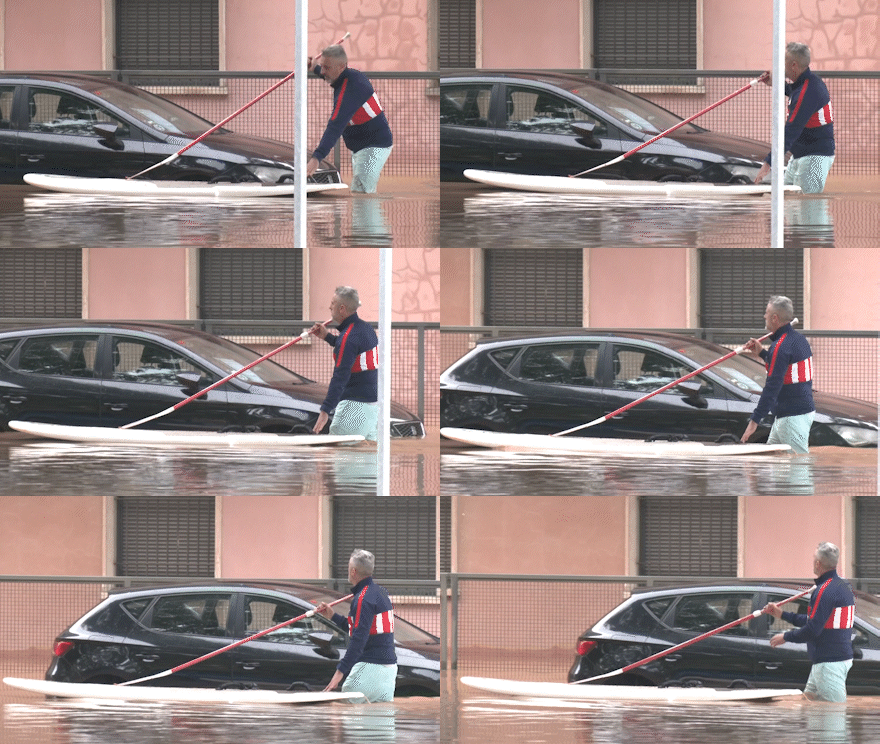
El Niño is the warming of sea surface temperatures in the Pacific Ocean. It happens every few years and is declared when temperatures in the eastern Pacific rise 0.5°C above the long-term average. The latest El Niño started in June and has been described as a “super” or very strong El Niño with sea surface temperatures forecast to reach highs of more than 3°C above normal. Its biggest effects are seen in the Pacific basin, with a mix of increased risks of wetter weather and typhoons or drought, depending on the area. Shorts The impact on the UK and the rest of Europe is less direct. However, El Niño releases heat into the global atmosphere, which can increase the intensity of heatwave events, including in Europe. This El Niño is expected to peak in November or December and to last until at least February. However, its impact can be felt for a few months or up to a year after it has ended. Professor Liz Bentley, a meteorologist and chief executive at the Royal Meteorological Society, told The i Paper: “This is probably the strongest El Nino that we will have experienced under our changing climate. [Climate change is behind] these extreme weather events, and all the El Niño is doing is amplifying these.” From flooding in Thailand to chances of snow in the UK this winter, here are five ways that the effects of El Niño could affect your holidays. Rainy autumn breaks – and flooding Reports of wildfires, flooding and droughts may deter some British travellers from planning a peak-summer holiday in Europe. Shoulder season is proving a popular alternative. Chris Wright, managing director of tour operator Sunvil, tells The i Paper: “We are seeing more interest in travelling to Mediterranean destinations in June, September and October. In fact, this October is on course to be our strongest on record.” But El Niño can increase the chances of wetter and stormier conditions this season, conditions that are already typical in autumn in some parts of Europe. Flash floods have hit parts of Spain, France and Greece in the last few weeks. Greece Crete is the southernmost Greek island (aside from the small island of Gavdos) and one of the best places in Europe for warm autumn weather. Yet it faced five days of intense storms and flooding in the first week of October in all four administrative regions. Spain Spain has also been affected, with severe flooding in several regions, including the Balearic Islands, parts of Catalonia, parts of Castilla-La Mancha, parts of Murcia and Andalusia and Navarra. Mallorca and Menorca were among the places affected by a cluster of thunderstorms east of Spain this week. Flooding was seen in Calvià, within a tourist area of Mallorca, for example. France Southern France has seen floods in the departments of Gard and Hérault. Twice in a fortnight, both areas saw heavy rain, followed by flooding. Bentley says: “There is some evidence that El Niño years can bring wetter conditions to parts of the western Mediterranean during autumn, while later in autumn and into winter the signal tends to shift towards wetter, stormier conditions across western and northern Europe.” Yet autumn trips to Spain or the Mediterranean are not guaranteed to be a washout. Bentley says: “You can have long periods of warm, dry weather punctuated by a few hours of extremely intense rainfall.” River cruise disruption The Rhine has seen record-low water levels this year (Photo: Thomas Lohnes/Getty) A recent report from Copernicus, the European Union’s Earth observation service, said that “record or near-record river low-flows occurred simultaneously across many major European rivers, including the Rhine, Danube, Po, Loire, Rhône and Seine, in July and August”. Sustained hot weather has contributed to low water levels, and the warming effect on the atmosphere of El Niño can make heatwaves more intense. Europe’s river cruise passengers have seen ships stuck and sailings disrupted due to low water levels, but what are their rights in such an event? Cruises are considered a package holiday as they include both transport and accommodation. Under UK package travel regulations, if a holiday is cancelled or undergoes a significant change, the customer has a right to a refund. But the regulations do not define what is “significant”. Cruise lines can determine this in their terms and conditions, and it may only include cancellation or failure to get passengers to the last call of the cruise, rather than diversions or missed port calls. A spokesperson for Clia, the cruise trade association, said: “Cruise lines closely monitor river conditions and work with local authorities and operational teams to assess any potential impact on itineraries. Where adjustments are necessary, [options] may include amended sailing schedules, alternative excursions, transfers by road or arrangements for guests to continue their journey on another vessel.” Drought and floods in winter sun destinations Ramkhamhaeng road was one of the hardest hit by flooding on 27 September in Bangkok, Thailand (Photo: Mailee Osten-Tan/Getty) Bentley says: “It’s the Pacific Basin that sees the greatest impact from the El Nino as it’s closely located to it.” There may be increased rainfall in the Pacific Basin during El Niño, including in California, and the East Coast of South America. Then the western side of the basin, which includes Indonesia and Australia, would be expected to have a deficit of rainfall. “Usually, Latin America and parts of Brazil, for example, the Amazon rainforest, go into drought conditions during El Niño. The southern half of Africa is likely to go into drought conditions, whereas the Horn of Africa is likely to see wetter conditions.” She adds there is no guarantee of these events, but El Niño increases the chances. Parts of Asia have been experiencing heavy rain and floods. Bangkok in Thailand, for example, has faced flooding since mid-September. About 300mm of rain fell in two days in late September. Bentley says: “In the Pacific, you see an increase in typhoon activity [during an El Nino]. “We’ve seen multiple typhoons developing, particularly in the eastern part of the basin. So, there were a few that kind of clipped into Mexico, across to Hawaii, for example, but also seeing them on the other side of the basin. “The likelihood of heavier rain, more stormy conditions, and high impact weather from typhoons increases. And not just for Thailand. Japan has recently had several typhoons.” A website called The Climate Brink has a helpful map of the most-affected destinations, which looks at the potential effects of an El Niño this year and next. Chance of snow and ice over UK winter breaks Scotland saw a strong 2025–26 ski season, and could enjoy another this winter (Photo: Ken Jack/Getty) Headlines have suggested there could be widespread snow in the UK this winter due to the interaction of the polar vortex and El Niño. However, the UK Met Office has answered some of these claims. It says: “Neither El Niño nor changes in the stratospheric polar vortex provide a precise forecast for the UK.” The polar vortex is a circulation of strong westerly minds above the North Pole. It is created because the air far above the North Pole gets very cold and dense in the winter. Its strength varies, and changes can impact the atmosphere below. When it weakens, the jet stream can become disrupted, which can make colder air reaching the UK more likely. The Met Office tells The i paper: “While El Niño may increase the possibility of colder weather later in the winter, particularly during February and March, it does not mean snow or severe cold is guaranteed. There are many other factors that influence the UK’s weather. “A weakened polar vortex has been associated with some notable cold spells and snow events in the UK, including Scotland, but the connection is not straightforward. Not every weakened polar vortex leads to snow, and the Met Office would describe any increased risk this winter as a subtle shift in the odds rather than a prediction of severe snow and ice.” If it did lead to colder weather, however, one impact for holidaymakers could be a strong ski season in Scotland. Negative effects of snow in the UK could include rail cancellations and disruption and difficult driving conditions. Temperatures of 50°C on your summer holiday Summer 2026 was the third warmest on record across Europe and the warmest on record for western Europe, according to Copernicus. It was also the UK’s hottest summer on record, according to provisional Met Office data with 40 days of temperatures above 30°C. El Niño increases the likelihood of Europe being even hotter next summer, says Bentley. “The highest temperature we saw this summer 48.4°C, which was in Sardinia in mid July, so we could see that record potentially being broken.” Persistent heat can cause hot, dry conditions in which wildfires spread. Last summer, fires affected large areas of Europe. There were extensive burnt areas in the Iberian Peninsula, southern France, Italy, Greece and the Balkans, according to the EU. In the UK, July 2026 was the worst on record for wildfires, according to provisional government data. Could summer 2027 bring worse wildfires? Bentley says: “Wildfires are to do with rainfall and a lack of rainfall. A wetter, stormier start to the winter allows more vegetation to grow, which provides fuel for wildfires. “Temperatures [next summer] are likely to be similar or exceed this year’s. High pressure and a lack of rainfall in summer can then also increase the chance of wildfires.” Ben Lynam from Travel Forward, an independent non-profit that works with the tourism sector, says: “The important point for tourism is that extreme heat, drought and wildfire are risks we increasingly need to plan for rather than treat as exceptional events. “That means adapting holidays as well as destinations: more flexible itineraries, avoiding strenuous activities during the hottest part of the day, providing better access to shade, drinking water and air conditioning, and potentially changing when and where particular trips are offered.”
How El Niño could affect your holidays, from a 50°C Med to skiing in Scotland
Full Article
Original Source
Read the full article at Inews →KhanList aggregates and links to publicly available news content. We do not host full articles from third-party sources. Always verify important information with original sources.