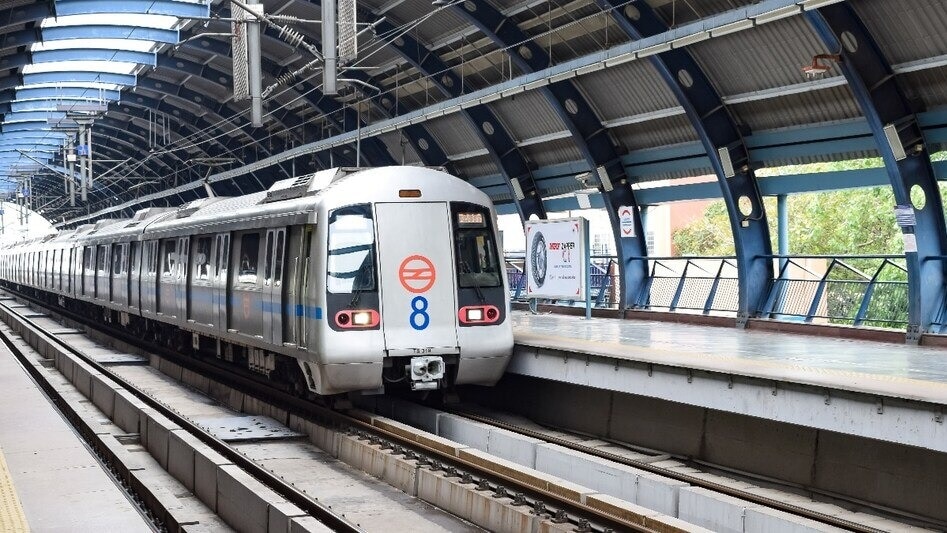
Delhi Metro is known for its high punctuality, but what exactly counts as a delay? Unlike systems that may allow several minutes before recording a train as late, the Delhi Metro Rail Corporation follows a much stricter benchmark.Under its operational standard, a train arriving at its destination station more than 59 seconds after its scheduled arrival time is considered delayed.WHAT IS THE 59-SECOND RULE?The rule is simple: if a train reaches its destination within 59 seconds of its scheduled time, it is counted as punctual.For example, if a train is scheduled to arrive at 10:00 am:Arrival at 10:00:30 — counted as punctualArrival at 10:00:59 — counted as punctual Arrival at 10:01:00 — counted as delayedThis strict benchmark makes the punctuality figure more demanding than one based on a delay of several minutes.HOW DOES DELHI METRO CALCULATE PUNCTUALITY?Punctuality is assessed based on whether trains reach their designated destination stations within the prescribed time.The calculation considers the number of trains that meet the punctuality benchmark against the total number of trains operated. A train that exceeds the 59-second threshold is counted as delayed under the DMRC's stated criterion.DELHI METRO'S PUNCTUALITY HAS REMAINED HIGHAccording to DMRC, train punctuality stood at 98.27 per cent in 2003 and increased to 99.64 per cent in 2005.Since then, the network has maintained punctuality levels of around 99.9 per cent year after year. In 2026, DMRC reported punctuality of 99.95 per cent, despite the expansion of its network and fleet.WHY IS PUNCTUALITY IMPORTANT?For a large urban rail network, even small delays can have a cascading effect. A delayed train can affect the movement of other trains, increase crowding on platforms and lead to longer waiting times for passengers.Maintaining a tight schedule becomes even more challenging as passenger numbers, routes and the number of trains increase.TRAINS NOW RUN CLOSER TO EACH OTHERDelhi Metro has also reduced the time between trains on its busiest corridors.During its early years, the gap between trains was around seven minutes. According to DMRC, the headway on the busiest corridors has now come down to 2 minutes and 18 seconds.WHAT IS HEADWAY?Headway refers to the time gap between two successive trains operating on the same route.A shorter headway means passengers do not have to wait as long for the next train, but it also requires precise coordination between trains, signalling systems and operations.WHAT DOES 99.95 PERCENT PUNCTUALITY MEAN?The figure means that, according to DMRC's stated benchmark, the overwhelming majority of trains reached their destination within the permitted time.Importantly, the number needs to be viewed in the context of the 59-second threshold. A delay that may seem insignificant to a passenger can still affect the official punctuality calculation if the train crosses the prescribed limit.FROM 8.4 KM TO A 416.5-KM NETWORKDelhi Metro began operations in December 2002 with a 8.4-kilometre corridor and six stations.Today, according to DMRC, the network spans 416.5 kilometres across 12 lines and 303 stations, with 31 interchange stations.Despite this expansion, the Metro has continued to maintain high operational punctuality and reliability.Delhi Metro's punctuality is measured against a notably strict benchmark: a train arriving more than 59 seconds after its scheduled destination time is counted as delayed. With a reported punctuality of 99.95 per cent in 2026, the system has maintained a high level of schedule adherence even as its network has expanded.- EndsPublished By: Chaitanya DhawanPublished On: Aug 10, 2026 10:28 IST
How does Delhi Metro measure punctuality? The 59-second rule explained
Full Article
Original Source
Read the full article at Indiatoday →KhanList aggregates and links to publicly available news content. We do not host full articles from third-party sources. Always verify important information with original sources.