
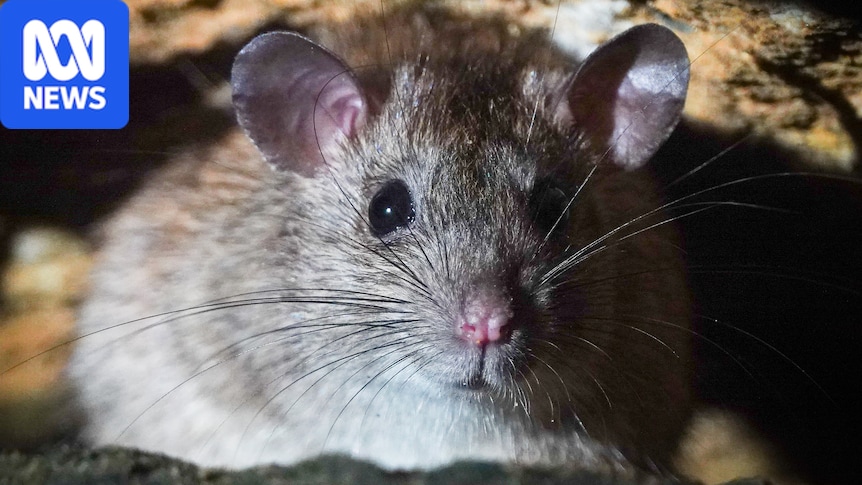
Rats have been used for more than a century in experiments to help us understand our own brains.But conservation scientists have flipped this dynamic, taking a common advertising tactic to trick more invasive rats into traps.Black rats (Rattus rattus), which are thought to have been established in Australia with European colonisation in 1788, can be like customers when you're trying to catch them.Conservation biologist Peter Banks, of the University of Sydney, said selective pressure had made the invasive species wary of our deadly devices."There's, like, 4,000 patents to try and trap rats because we've been trying to trap rats for forever," he said."We've exerted thousands of years of selection on them to not go into traps because the ones that did ended up being killed."To catch more rats, you have to think about how the animal makes decisions, including whether it will make irrational choices.So, Professor Banks and his team set up an experiment based on how humans respond to "nudge marketing" to increase the number of times a rat entered a dummy trap.Their study, published in the Journal of Applied Ecology, used a method that could be easily replicated at home or by pest controllers using a cappuccino chocolate shaker.How to trick mammals with marketingNudge marketing is a subtle behavioural psychology tactic that can guide your decision-making.One type of this marketing uses a "phantom decoy" to lure you in and make a choice that's preferred by a seller.An example of this would be a shop advertising a television you want to buy but it's sold out. You still want a TV and don't want to go elsewhere, so you purchase a similar and cheaper option you had never thought about."Sold out stuff on websites try to make us value the stuff we can get more, even though it might be lower quality," Professor Banks said.Peter Banks researches ecologically based management of pest species. (Supplied: University of Sydney)Professor Banks said we often think of decisions as being one choice over another, for example, buying a TV versus not buying one."But then if you put a third thing in, that can change the kind of decision options," he said."And if you make that third thing inaccessible, it can change their decision."Testing peanut butter advertising on ratsTo try this concept on rats, the researchers set up 5-metre polypropylene pipes (known as tracking tunnels) across 226 sites in urban bush reserves in Sydney over two years.A chocolate duster containing a peanut butter ball can be left at the front of a trap to entice the rat. (Supplied: University of Sydney)The tracking tunnels were closed at one end and most contained low-quality bait (bread), a higher quality bait (bread with jam) or nothing.Half the tunnels had a peanut butter bait ball in a steel shaker with a mesh lid outside the entrance that rats couldn't access."It's peanut butter with oats, which we know that the rats really like," Professor Banks said."That was our phantom decoy that we thought would get them to go into the traps more."There was also a control where a peanut butter bait ball was put at the end of a tunnel with no decoy at the entrance.Rat entries were 83 per cent higher for tunnels containing just bread if there was a decoy at the entrance.Fewer tunnels were entered if they had no bait at the end, whether there was a decoy or not.Rats were also less likely to enter tunnels that contained a peanut butter ball if there was no decoy."We're thinking that when there's rats that perceive bait as low-quality, the decoys might get them to go in more often," Professor Banks said.Method may mean fewer native wildlife poisoningsEdith Cowan University conservation biologist Rob Davis, who was not involved in the study, said the method had the potential to reduce the number of rat baits used that can kill other wildlife from secondary poisoning.Dr Davis said the technique provided "an exciting opportunity" to increase the capture rates of invasive rats in a range of traps, including live catching."Rats are notoriously afraid of new things and often require multiple approaches for successful control."This study provides hope that a number of currently used approaches, including live and lethal traps, could be enhanced by the use of phantom decoys."Dr Davis said the technique could also improve data collection for the monitoring of rat incursions.Professor Banks said he was sure there would be skepticism about using these tactics on rats."Just thinking about how well these tactics work on us, there does seem to be evidence of it working in other places on other organisms as well."But I think maybe humans might be more vulnerable to these sorts of tactics if the size of the marketing workforce is anything to go by."
How do you trap a rat? Trick it with human marketing techniques
Full Article
Original Source
Read the full article at Abc →KhanList aggregates and links to publicly available news content. We do not host full articles from third-party sources. Always verify important information with original sources.