
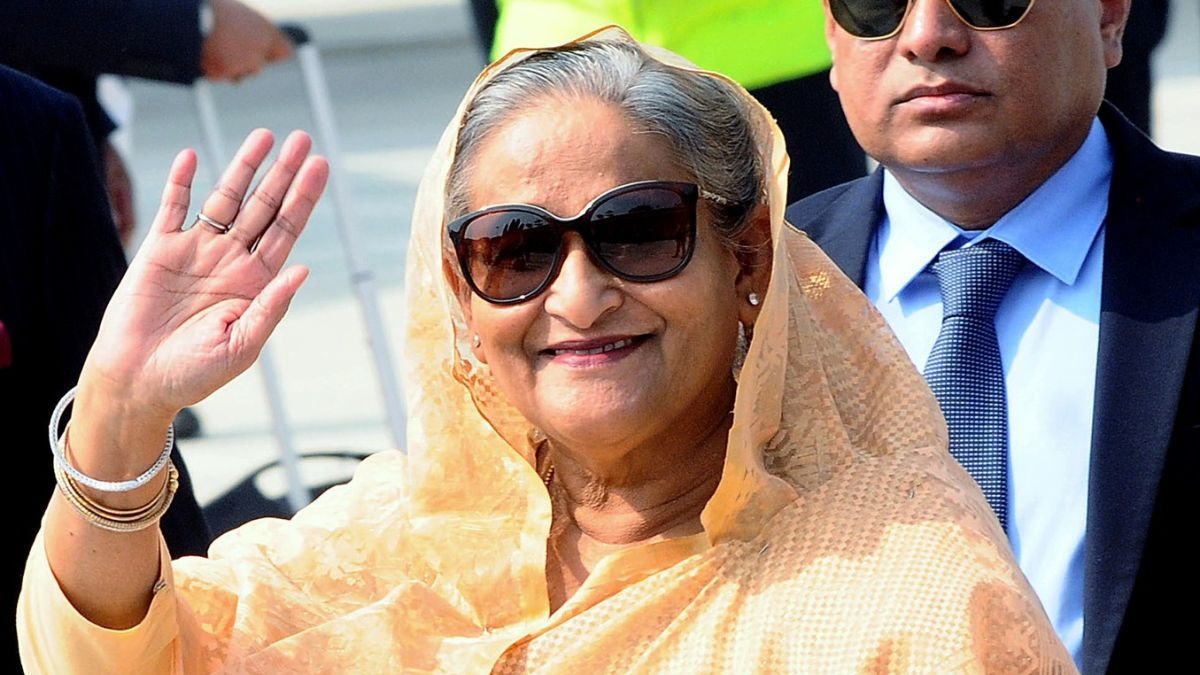
Former Bangladesh prime minister Sheikh Hasina’s announcement of returning home from exile next month has coincided with a spate of fresh violence in the country and mounting tensions from a proposed nationwide shutdown called by her banned party, bringing the political turmoil in India’s eastern neighbour into renewed focus.The developments come even as a comprehensive assessment prepared by security agencies has claimed hundreds of alleged killings, custodial deaths, arrests and attacks targeted at leaders and supporters of Hasina’s Awami League since her government’s fall in an uprising in August 2024.The latest violence occurred in Gopalganj, Hasina’s hometown, where clashes between rival groups left at least 30 people injured. Crude bombs exploded and shops stood vandalised, underlining how deeply polarised and unsettled the country remains over two years after the regime change, which forced Hasina into exile in India.The Awami League’s decision to call for a 48-hour nationwide shutdown on November 29-30 has raised fears of further confrontation. The unrest comes amidst fresh mobilisation by the League and an intensifying crackdown by the authorities. The paramilitary Border Guard Bangladesh has deployed 56 platoons in Gopalganj as part of a broader 109-platoon security deployment across seven districts ahead of Hasina’s planned return on December 16—a day celebrated in Bangladesh as Victory Day to mark the nation’s independence from Pakistan in 1971.Dhaka alleges that Hasina and her supporters are fomenting unrest from Indian soil. Bangladesh prime minister Tarique Rahman has made a veiled but unmistakable accusation against India, linking it to the latest political unrest. On November 19, while addressing a rally in Lalmonirhat, Rahman accused Awami League leaders who had fled Bangladesh of conspiring against the country with the backing of their “masters” across the border. The reference was widely understood to be directed at India, where Hasina has been living since August 2024.India’s ministry of external affairs (MEA) declined to comment on Rahman’s remarks, stating that the developments in Bangladesh were the country’s “internal affairs”. “I would like to reiterate that our consistent position has always been that we want to build a positive, forward-looking and constructive relationship with Bangladesh, one that is rooted in our shared history, shared sacrifices and common cultural values,” MEA spokesperson Randhir Jaiswal said.The assessment by security agencies mentioned above has attempted to document, up to November 19, 2026, what it describes as a sustained pattern of political persecution, retaliatory killings, custodial deaths, torture and destruction of property following the regime change on August 5, 2024.The assessment presents a detailed account of alleged violence against Awami League leaders, activists, supporters, as well as security personnel and their families. It also documents alleged attacks on businesses, residences and party establishments associated with the League.The assessment lists 370 Awami League-affiliated individuals allegedly killed, besides 23 group incidents. It separately identifies 49 security personnel killed and four group incidents; 62 documented custodial deaths; 68 representative cases of attacks, torture and intimidation; and 56 incidents involving arson, looting and destruction of property. The last two categories are described as representative samples of a much larger number of incidents across the country.While the compilation brings together media reports, human rights monitoring records, legal documents and other publicly available material, the numbers cited, however, need independent verification.One of the most disturbing aspects of the assessment is the alleged continuation of retaliatory violence even two years after Hasina’s exit. The document records alleged incidents of lynching, targeted killings and attacks on homes and businesses associated with Awami League leaders. Several cases relate to the violence of August 5, 2024.The assessment also draws attention to the deaths of police personnel during the July-August 2024 political unrest. It identifies 49 officers and four group incidents, highlighting the violence faced by security personnel. The attacks on police stations and personnel, it argues, were followed by a breakdown of institutional accountability in several parts of the country.Custodial deaths constitute another major concern. The compilation records 62 alleged cases and cites monitoring organisations that have reported deaths among both convicted prisoners and undertrial detainees. It highlights the poor state of prison healthcare, overcrowding and inadequate medical facilities. The assessment claims that more than 50 Awami League- and affiliate-linked detainees died in custody. The figure, though, requires case-by-case verification.A February 2026 investigation by The Daily Star, a leading Bangladesh newspaper, had found that 73 of the country’s 75 prisons lacked full-time or night-time doctors while 48 had no ambulance facilities.The scale of arrests and criminal proceedings cited in the assessment is equally significant. Between August 6 and September 25, 2024, according to figures collated in the document, 1,474 criminal cases were filed, naming more than 92,000 defendants. There were subsequent arrest drives, including Operation Devil Hunt launched by the interim government in February 2025 and a large wave of arrests in April-May that year.Allegations of mass implication, arbitrary detention, denial of bail and re-arrest after release have raised concerns about the use of criminal proceedings as a tool of political pressure.The political exclusion of the Awami League has complicated the situation. The Bangladesh Chhatra League, the students’ wing of Hasina’s party, was banned in October 2024, followed by the suspension of the Awami League’s political activities and party registration in May 2025.Geopolitical analysts argue that the restrictions have contributed to the political marginalisation of a large section of Bangladesh’s political establishment. Human rights groups have also raised concerns about due process and the implications of blanket political exclusion.The latest round of violence suggests that the confrontation is far from over. Last month, a special tribunal sentenced Awami League joint general secretary Mahbubul Alam Hanif to death in absentia in the 2024 uprising case. On November 17, former Dhaka South City Corporation mayor Sayeed Khokon was arrested and sent to seven days of police remand while 10 members of Awami League-affiliated organisations were arrested in Rangamati. The registry also records attacks on residences of former Awami League leaders in Netrokona and Pirojpur.The Bangladesh government, however, maintains that the latest unrest marks attempts by Awami League activists to destabilise the country. In a briefing to diplomats on November 24, state minister for foreign affairs Humaiun Kobir alleged that Awami League activists were behind crude bomb attacks, arson, vandalism and assaults on security establishments. He cited 158 incidents across 41 administrative units between November 1 and 21.While these allegations, too, require independent scrutiny, the government said law enforcement agencies had been instructed to respond proportionately and investigate the incidents.Observers refer to an Article 15 communication submitted to the International Criminal Court (ICC) in October 2025, alleging that the pattern of killings, imprisonment, torture and political persecution could amount to crimes against humanity. Such a communication is not the same as an ICC investigation or a judicial finding, but it signals an attempt to take the allegations beyond Bangladesh’s domestic political and legal framework.Strategic experts pointed towards the broader question as to whether Bangladesh’s post-Hasina transition was towards an inclusive democratic order or was trapping the country in cycles of retribution. They believed that the violence against protesters during Hasina’s tenure and allegations of abuses by her administration must be investigated. At the same time, attacks on political opponents, custodial deaths, arbitrary arrests and the targeting of families and properties could not be justified as retaliation for past injustices.As December 16, Hasina’s declared day of return, approaches and periodic violence rocks Bangladesh, the country needs credible investigations, accountability of perpetrators irrespective of political affiliation, protection for political dissent, and an independent judicial process. Without these safeguards, the regime change in 2024 risks becoming a change of political beneficiaries rather than a genuine transition towards democratic accountability. Subscribe to India Today Magazine- Ends
How Dhaka draws India into crossfire as Sheikh Hasina plans return
Full Article
Original Source
Read the full article at Indiatoday →KhanList aggregates and links to publicly available news content. We do not host full articles from third-party sources. Always verify important information with original sources.