
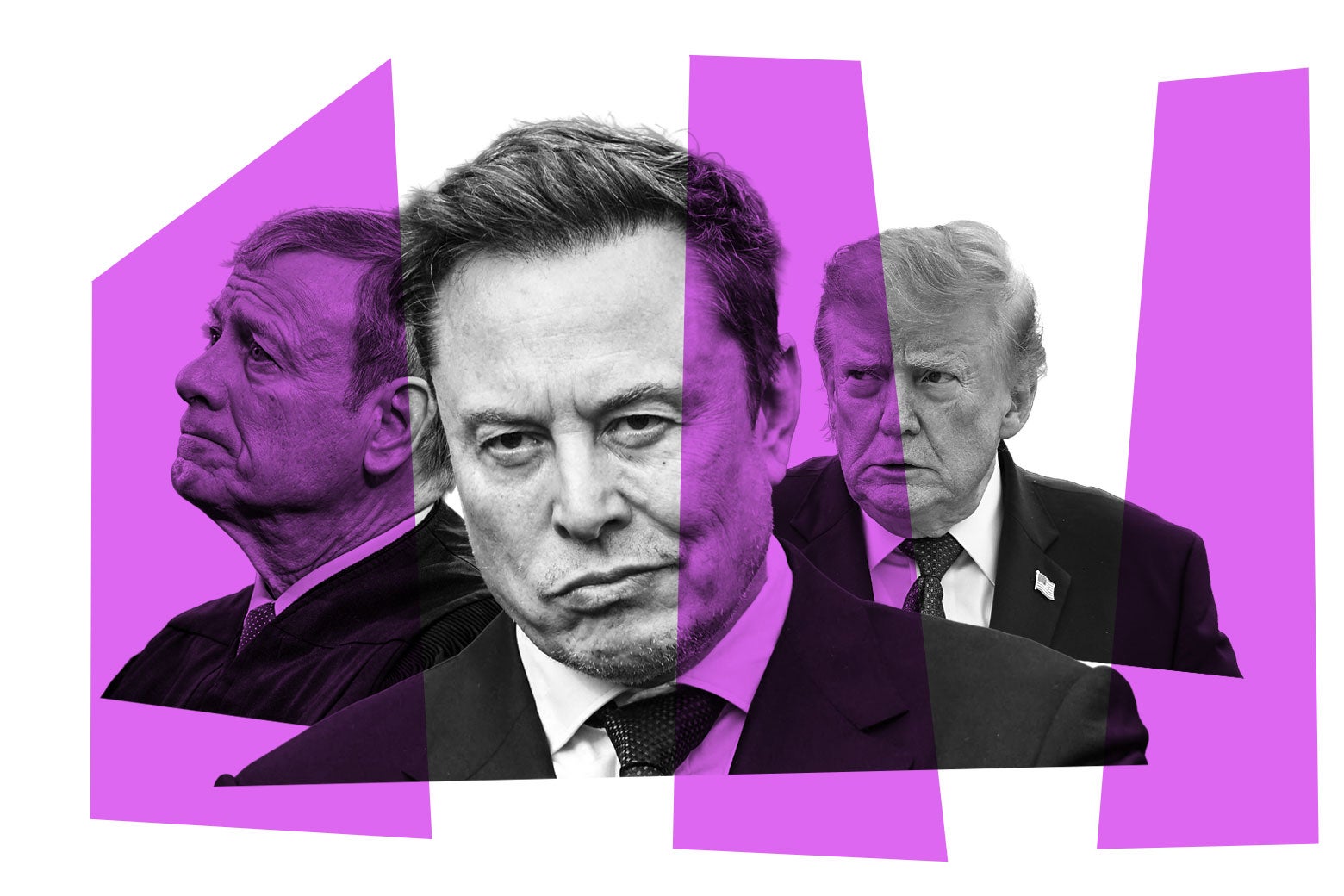
Jurisprudence Kenny Holston/Pool/Getty Images Sign up for the Slatest to get the most insightful analysis, criticism, and advice out there, delivered to your inbox daily. In the midterms, the American public issued a dramatic rebuke to the excesses of the Trump administration and its approach to governance. With Democrats winning across the board even in deep-red districts, there is now an urgent demand for the next Congress and even 2028 presidential hopefuls to deliver on meaningful, tangible change. A big focal point for that demand for change is affordability and economic instability. But the demand for results also extends to the need to rein in the rampant abuse of power unleashed by the Trump administration and its allies in Congress, whether in the form of masked ICE agents ripping families apart or the arbitrary blocking of funds intended for disaster relief out of a political vendetta or the dumping of Americans’ personal data into a vast new surveillance apparatus. These actions have destroyed lives and livelihoods, and part of the relief the public demands is an end to those abuses of power. For Democrats seeking to govern, it is critical that the urgent need to deliver an affirmative economic agenda be paired with dramatic changes that ensure these autocratic practices and structures, now that they have been supercharged, are unwound and dismantled so that they cannot be flipped back on should another extreme, reactionary coalition regain political power again. Already some leading voices in the Democratic Caucus have signaled their commitment to a robust accountability agenda. Congressional hearings are essential to shine light on abuses of power and to restore the rule of law by addressing flagrantly unlawful actions that have led to direct harms on the American public. There is a link between abuse of power, corruption and self-dealing, and material impacts on the public. But beyond hearings, what would it take to actually ensure the excesses of ICE, of Department of Government Efficiency–powered surveillance, of arbitrary presidential manipulation of grants and funds do not repeat? In my new book, Remaking the State, I argue that for democracy to deliver and be durable, we need to do more than change policy; we need to remake the bureaucracies and institutional structures that enabled autocratic overreach. Specifically, that means restructuring the agencies most connected to the abuse of power, and addressing the role that certain for-profit corporations and oligarchs have played in implementing, enabling, and resourcing autocratic overreach. There is no question the Trump administration bears responsibility for the worst abuses of power of the last few years, including for the killing and detention and rendition of innocent Americans in its brutal immigration enforcement crackdown, the weaponization of government to pressure law firms, universities, states, and political opponents alike, and blocking of public funds, among other abuses. But the Trump administration didn’t invent all of its tools for autocratic overreach from whole cloth. The overbroad discretionary powers of the Department of Homeland Security and Immigration and Customs Enforcement in particular owe a great deal to the post-9/11 expansion of the national security state, including the growth of the modern system of secret state surveillance. Meanwhile the steady militarization of domestic law enforcement—at both the local level and among federal officers in DHS—has been a continued development since the Iraq War. Furthermore, many of these structures have deeper roots in long-term practices of racial subordination. The vast expansion of the carceral system including via for-profit detention facilities provided a ready playbook for ICE to rapidly build out its capacity to detain thousands of people, as the agency deployed much of its vastly expanded budget to purchase detention facilities and enter into contracts with for-profit prison companies. Even as many lower courts have upheld the law and pushed back on abuses of governmental power, the Roberts court has wildly exacerbated these abuses by using its shadow docket to further shield the Trump administration from legal restraint. The Supreme Court has intervened proactively to enable ICE to racially profile Americans and to rendition detainees to third-party countries. By contrast, in the face of other blatant federal violations of constitutional rights—such as free speech violations stemming from administration pressure on media companies and universities to suppress speech—that same emergency judicial power has been conspicuously unused. The next Congress and future presidents committed to democracy need to close these legal loopholes and extend checks and balances into these domains more rigorously. That could take a range of forms. First, policymakers should extend procedural constraints and reduce overly broad executive discretion in the agencies that have overreached the most. We need a clear-eyed accounting of which emergency powers need to be reduced—from national security to tariffs to domestic deployment of the military. We should extend greater privacy protections to DHS data use specifically to prevent the dangerous weaponization of individuals’ personal data. Second, policymakers should increase the ability of external actors—individuals who are harmed by overreach, states, and civil society organizations—to have greater legal recourse and impose accountability when needed. Under current law, it is exceedingly difficult to hold federal officials—including frontline ICE officers, for example—liable for violating basic civil rights, thanks to a host of legal doctrines such as qualified immunity. We are already seeing important proposals to create legal remedies for violations of constitutional rights, to enable victims of statist abuse of authority to sue, and to create liability in individual states like California for violations of basic rights. Third, we should take a serious look at restructuring federal agencies altogether. DHS itself was a creation of the post-9/11 fear of terrorist attack, yet before then, immigration enforcement was perfectly capable of meeting the public need in a more restrained fashion based out of the Department of Justice. Rep. Delia Ramirez has already proposed a bill to rewind the clock and reverse the creation of DHS itself, including by shutting down ICE and Customs and Border Protection, limiting the use of surveillance, and preserving as freestanding agencies entities like the Federal Emergency Management Agency and Transportation Security Administration, which currently live within the DHS umbrella. At a minimum, Congress should claw back the over-bloated budget for ICE, given its systematic abuse of power, and separate the civil immigration enforcement apparatus from criminal enforcement. A second key frontline for unwinding the structures fueling the autocratic abuses of power in the Trump administration is not the structure of the state, but the role of private power: those corporations and wealthy oligarchs who have played a key role in bankrolling and helping implement the abuses of power. Consider, for example, the expansion of immigration enforcement, detention, and the surveillance apparatus. A significant component of the expanded capacity of the state to surveil, capture, and detain rests on partnerships with private actors. The government has relied on Silicon Valley partners like Palantir to build its new surveillance apparatus fueled by both the personal data seized from previously protected governmental databases and contracts with private data brokers. The vast expansion of the detention capacities of ICE similarly depends in part on contracts with for-profit firms. The role of private power, however, extends beyond the carceral and immigration contexts. A big reason why the autocratic overreach of the last two years went as far as it did depends on the cooperation and active partnership of some CEOs and wealthy oligarchs in these corrupt abuses. Think for example of Elon Musk’s role in firing civil servants, destroying critical agency functions that people depend upon, and helping the Trump administration in its surveillance efforts. Federal contracts with surveillance companies, data brokers, and for-profit detention centers could be cut, if there is sufficient political will. More broadly, there is much to be learned through transparency, oversight, and documentation. We know some of what these corrupt deals look like thanks to journalistic reports. But more needs to be understood about what happened, and what solutions might be possible. In a moment where many of these questions about immigration and the use of state power are deeply contested, it is critical that the project of unwinding overpowered agencies take place in context of two broader projects, without which the unwinding project cannot succeed. First, any genuine unwinding effort will require some strategy for reforming the judiciary, particularly the Supreme Court. While many lower courts have admirably held the line on defending individual rights and existing laws against Trump-era overreach, the Supreme Court has consistently used its powers—particularly its shadow-docket rulings—to block lower court rulings to check abuses and has declined to exercise its powers to stop the administration’s blatant violations of people’s rights. The big issue is a political one: how to ensure that democratizing reforms are not struck down by a hostile and hyperpartisan Supreme Court. And second, any unwinding project will have to be complemented by a coequal project of delivering affirmative, tangible, transformative results for an American public struggling with a range of economic and social dislocations and harms. The two projects are closely related: The abuses of power have had direct, material impacts on thousands if not millions of Americans. But the next Congress will have to simultaneously advance both an affirmative and inspiring agenda and an agenda of undoing the building and expansion of dangerous concentrations of autocratic power. Congress Donald Trump Jurisprudence 2026 Midterms
How Democrats Can Ensure the Past Two Years Never Happen Again
Full Article
Original Source
Read the full article at Slate →KhanList aggregates and links to publicly available news content. We do not host full articles from third-party sources. Always verify important information with original sources.