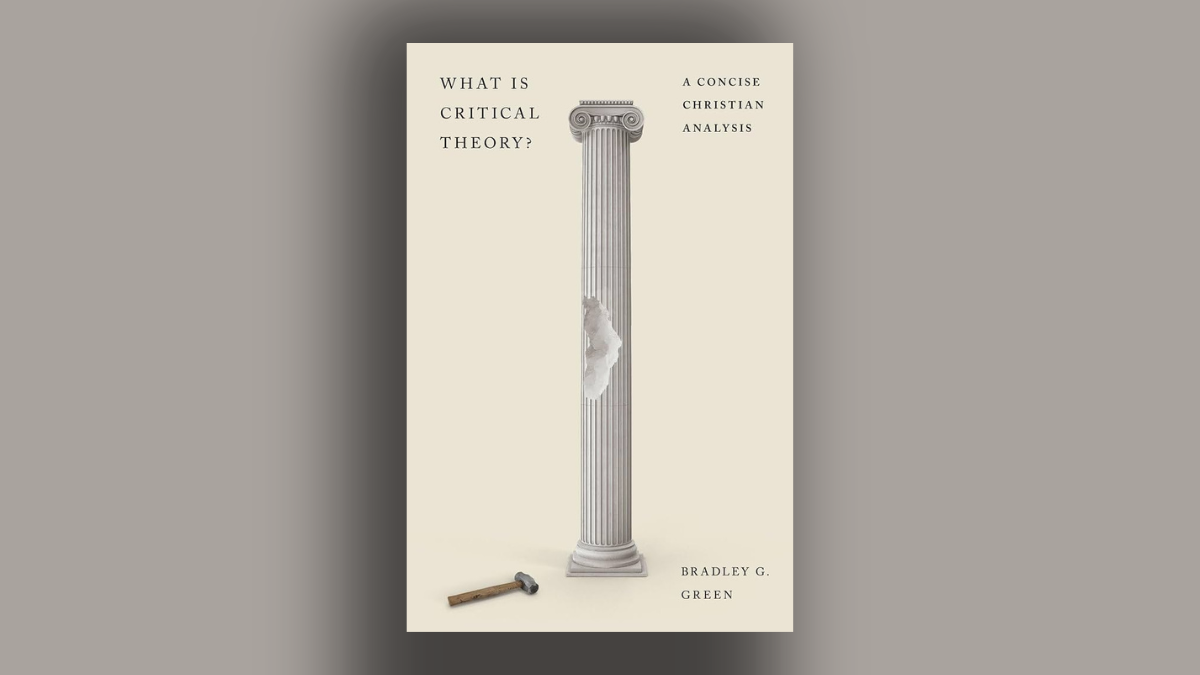
Although the word “metanarrative” was popularized by a postmodern French philosopher who did not believe that such a thing existed, Christians have adopted the word, using it in a positive sense to describe the overall shape of God’s providential plan. The metanarrative of creation, fall, redemption (many today add reconciliation and glorification) defines the movement from Genesis to Revelation, even as it contains all other stories. Sacred and secular stories alike are hallowed by their connection to the biblical metanarrative, a connection that infuses them with transcendent meaning and ultimate purpose. Whether the story is told by epic fantasy writers, Hollywood movie moguls, Nazi propagandists, Marxist revolutionaries, progressive politicians, entrepreneurial CEOs, or snake oil salesmen, the same pattern of creation, fall, redemption emerges: There was a time when things were good and right and whole; something happened to disrupt and fragment that original wholeness; but all can be set right again. We are all of us trapped in the second act of the play, unable to go back to the lost time of primal innocence but yearning to go forward to a new age of gold. Marx was an atheist who denied not only God’s existence but the existence of the supernatural; and yet, as a man made in God’s image, he could not break completely with the creation-fall-redemption pattern that is woven into the tapestry of reality. Like Rousseau before him, he looked back to a lost Eden of equality before the “sins” of private property and socioeconomic inequality chained the bodies of the poor and the minds of the rich. Still, both thinkers harbored a faith that utopia was coming when all would be equal again. That Rousseau and Marx’s perversions of the biblical metanarrative led, respectively, to the French Revolution’s Reign of Terror and to the Soviet Gulag and show trials has not disrupted the faith of their disciples. In his judicious and lucid analysis of the key critical theorists of the Frankfurt School who reworked the ideas of Marx and passed them down to the architects of the sexual revolution and LGBTQ+, the critical race theorists of BLM, and the progressive purveyors of woke education, Bradley G. Green makes effective use of the creation-fall-redemption narrative in his latest book, What is Critical Theory: A Concise Christian Analysis. By measuring the theories of Max Horkheimer, Theodor Adorno, Walter Benjamin, and, especially, Herbert Marcuse against the three stages of the metanarrative, Green skillfully unpacks the assumptions and implications of critical theory, exposing it as “a kind of Christian heresy.” The Frankfurt School Green, professor of theological studies at Union University, begins by explaining one of the key motivators of the Institute for Social Research, which was established in Frankfurt, Germany, in 1923. In the wake of the collapse of Germany after WWI, the Marxist intellectuals of the Frankfurt School expected a Communist revolution would take place to liberate the proletariat from the bourgeois capitalists who were exploiting them. Instead, living conditions and salaries rose as revolutionary zeal waned. To make matters worse, “the growth of Nazism and fascism from 1924 to 1933 (especially with Hitler in Germany) seemed to move against the much-hoped-for Marxist revolution.” How could such things be? Had Marx not “proven” scientifically that man’s beliefs, actions, and consciousness were products of economic forces over which he had no final control? Had he not, along with Engels, demonstrated that “communism (the abolition of private property as well as the abolition of the division of labor) is good, proper, and inevitable [and that] economic forces and the economic situation of man proceed historically in such a way that communism will emerge?” And yet, though Marxism had predicted that industrialized Germany — as opposed to feudal Russia — would give birth to a textbook revolution, it did the opposite. The critical theorists of the Frankfurt school made it their business to figure out why Marx’s progressive vision did not take root in Germany. Green contends that the critical theory they produced functioned, and continues to function, “as a kind of alternative — indeed, parasitic — religion” that parallels, while perverting, the stages of creation, fall, and redemption. His contention is persuasive, but he begins his analysis of the first stage (“creation and reality”) by subverting the expectation of the reader. In contrast to Rousseau and Marx, Green argues, critical theory dismisses an Edenic state of innocence: Whereas the Christian faith posits a period in history that existed prior to sin or the fall, one seeks in vain for such an era in the view of critical theory. That is, in critical theory the problems or dilemmas that man faces have virtually always been around. In that sense, we might say that critical theory has a kind of conceptual link with gnosticism—for in gnosticism the world (or reality) as given (i.e., from the very beginning) is rife with problems, tensions, and conflict. For the Christian, however, such problems, tensions, and conflicts—including death and suffering—enter the scene after the entrance of sin into the world. For critical theorists like Marcuse, injustice, prejudice, and exploitation are endemic to humanity. Things like marriage, work, and culture-building are not inherently good things created by a good God (see Genesis 1:28), or even by a benevolent mother nature. To long for a lost garden is to be deceived; we need to wake up (be woke) to the deeply-rooted nature of racism, sexism, and classism. Wishful thinking is a tool of capitalism meant to keep the proletariat docile. The wage-earner and the housewife only think they are happy because the bourgeois patriarchy has brainwashed them to be content with empty consumerism and to believe the lie that the family is a God-ordained institution that is essential to human flourishing. As for the second stage of the metanarrative (“sin and the human dilemma”), critical theory identified it with the false consciousness indoctrinated in people by capitalism and the patriarchy. It is this conditioning that prevents people from achieving full and total autonomy, but that conditioning is not broken but reinforced by the liberal democracy of the Enlightenment. Such political ideologies repressed rather than liberated the individual human being. That is why, as contradictory as it might sound, theorists like Marcuse argued that “the centralization of political power is necessary if the individual is going to be truly free.” Marcuse, together with Wilhelm Reich, saw a dark side to liberal democracy, capitalism, and patriarchy. All three considered sexual liberation to be a threat to morality, the family, work, and progress, and so repressed it in our bodies and our psyches. By doing so, they prevented individuals from achieving true autonomy. For Marcuse and Reich, “sexual restraint was not a sign of virtue, maturity, or obedience to divine command,” but a tool of oppression. “Man,” Reich taught, “comes into the world with certain sexual desires and proclivities. It is inherently oppressive and immoral to control or deny such desires. Indeed, to control or deny such desires leads ultimately to fascism.” As irrational as it may seem, critical theorists like Marcuse and Reich — and their sexual revolutionary heirs, both in the 1970s and the 2020s — switched the poles of right and wrong, good and evil in the realm of sexuality. The guilt we feel when we give way to our unchecked libido is a tool of patriarchal, ecclesiastical, and governmental repression, rather than a signal that we are in breach of moral/ethical reality and becoming slaves to our animal instincts. Critical theory seeks to disrupt and remake the institutions of society so they will encourage, rather than dissuade, citizens from what religion and reality alike identify as self-destructive behavior. “It is not too much of a stretch,” writes Green, “to assert that much of what is troubling, progressive, or explicitly anti-Christian in contemporary educational theory and practice can be conceptually linked to the older critical theory.” Once autonomy is hailed as the chief good and is redefined to mean unchecked sexual pleasure and experimentation, it is only a matter of time before public education enforces LGBTQ+ ideology and holds up the traditional church and family unit as the antagonists in the struggle for freedom. What then can be done to bring about the third stage (“redemption, history, and eschatology”) of the metanarrative. Marcuse, Green demonstrates, was the most optimistic theorist, certain that freedom from external and internal repression could be achieved. Green’s argument is organized around a series of carefully selected quotes from Marcuse and his fellow disciples: “All liberation presupposes a revolution, an upheaval in the order of instincts and needs: a new reality principle. . . . This total transvaluation of values would affect the being of nature as well as the being of man.” Green exposes how Marcuse couches his remedy for false consciousness in religious language that is all about new births and transformation from within. The old reality principle of religious and liberal repression which seeks to chain the pleasure principle for the supposed good of society must be overthrown and replaced with a new one. “The civilized morality,” writes Marcuse, “is reversed by harmonizing instinctual freedom and order: liberated from the tyranny of repressive reason, the instincts tend toward free and lasting existential relations — they generate a new reality principle.” One more quote from Marcuse reveals the connection between the ethos of the sexual revolution and the increasing attacks on the nuclear family by groups like Black Lives Matter and QueerAF: “This change in value and scope of libidinal relations would lead to a disintegration of the institutions in which the private interpersonal relations have been organized, particularly the monogamic and patriarchal family.” Only such a civilization-shattering break from the traditional nature and reality of marriage will usher in the sought-for revolution and provide freedom in the most radical, existential sense. There is, Green explains, “an odd kind of hyperindividualism lurking at the heart of critical theory. Liberation — at one level — has to do with liberating the individual from the constraints of civilization, and this includes a liberating of sexual or erotic desire.” ‘Repressive Tolerance’ Having unpacked critical theory by way of the creation-fall-redemption pattern, Green offers an incisive and illuminating analysis of one of the most disturbing and unexpected aspects of critical theory, both then and now: Its willingness to censor what it deems “hate speech” in its quest for free speech. How can this seeming contradiction be explained? Green offers two complementary answers. First, “hate speech” is the critical theory equivalent (and perversion) of Christian anti-blasphemy laws. The zeal with which today’s social justice warriors shout down all speech with which they disagree is essentially religious, as if they were guarding something holy and sacred. But there is a second reason that goes back to the origins of critical theory. Marcuse was willing to resort to what he called “repressive tolerance” because, Green explains, if “fascism is to be stopped, to be kept from developing again in the West, it is necessary to stop its development before it even has the opportunity to get started.” What critical theorists, then and now, call “hate speech” is speech that they believe (with or without proof) will incite a new rise of fascism. Green’s analysis, which rests firmly on the writings of Marcuse and his heirs, explains a strange political phenomenon: President Trump is consistently accused of being Hitler or a fascist by young people who know nothing about WWII or the actions and manifestos of the National Socialist party. Indeed, in sharp contrast to the president, such accusers often share Hitler’s antisemitism and his control of all media and take the side of nations and groups that ascribe to what may best be described as theocratic fascism. What is Critical Theory is a much-needed book that deserves to be read closely by anyone who hopes to see religion, the traditional family, and liberal democracy survive the next two decades. If we do not know where we came from and what the real problem is, we will hanker after a solution that is anti-free, anti-just, and anti-human. Louis Markos, professor in English and scholar in residence at Houston Baptist University, holds the Robert H. Ray Chair in Humanities. His books include "Apologetics for the 21st Century," "On the Shoulders of Hobbits," and "Restoring Beauty: The Good, the True, and the Beautiful in the Writings of C. S. Lewis." book reviewBooksBradley G. GreenChristianityCritical theoryFrankfurt schoolWhat is Critical Theory
How Critical Theory Redefines Good As Evil
Full Article
Original Source
Read the full article at Thefederalist →KhanList aggregates and links to publicly available news content. We do not host full articles from third-party sources. Always verify important information with original sources.