
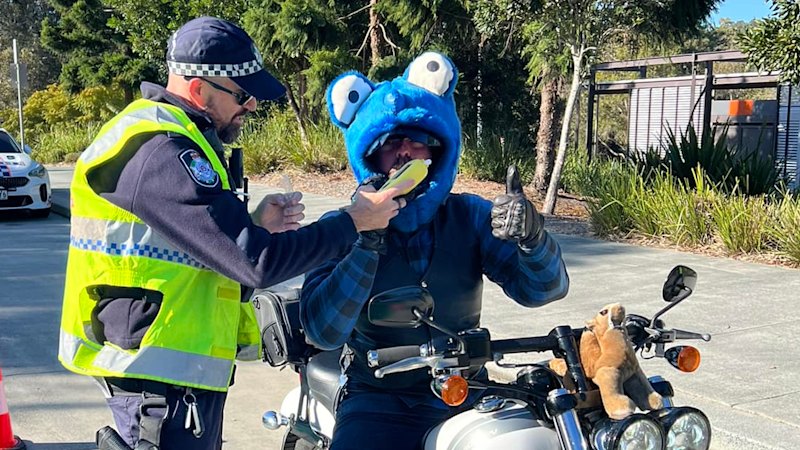
November 6, 2026 — 6:00amQueensland police officers were given a script to improve relationships with drivers and riders, but found some of the emotional and two-way conversation points too challenging to put into practice.The Griffith University study analysed transcripts from footage taken on body-worn cameras at a random breath-test stop north-west of Brisbane, to observe how police officers applied a script provided by the researchers.The script was informed by elements of procedural justice – a philosophy including neutrality in decision-making, treating people with respect, giving citizens a voice, and demonstrating trustworthy motives through genuine concern.The research project took place at an RBT at Mount Glorious.It was part of a larger road policing project, Operation Whiskey Rider, looking at interactions with drivers and motorbike riders at a high-crash mountain road location, Mount Glorious, in Moreton Bay over a six-month period from April to October 2024.Officers who were part of the experiment were asked to do an online module in procedural justice, which included a script they had to memorise and adapt into their own words.Griffith University criminology lecturer and former police detective Dr Margo van Felius.Co-author Associate Professor Lyndel Bates said many officers reliably introduced themselves, conveyed road toll information, explained the survey, and offered a courteous farewell.But other parts of the script were far less consistently applied.Lead author and former police detective Dr Margo van Felius said police officers generally followed the respectful and straightforward parts of the script, but elements requiring emotional engagement and two-way conversation were much harder to put into practice.The researchers suggested it may have been difficult for officers to talk about notifying families about deaths because of the emotional impact on themselves, or they might have thought it was inappropriate in a brief roadside stop.The script - and the delivery rateHello, my name is... (91%)You have not been singled out today. We are pulling over as many drivers and riders as we can today. (6%)Did you know there were 277 deaths on our roads in 2023. The largest group of fatalities was drivers. (70%)One of the hardest jobs is to tell a person that their loved one has died in a traffic crash. (24%)Mountain roads are particularly dangerous. (30%)Can you please help us to reduce crashes by riding carefully and responsibly. (51%)Thanks for chatting today. Here is a flyer that provides some safety tips. (54%)The flyer explains that drivers can increase their safety by driving at or below the speed limit and according to the conditions. (11%)Researchers at the university are running a survey about our interaction today. There is a survey link on the flyer. They would really appreciate your feedback. (89%)Do you have any other questions for me about this traffic-stop or anything else? (14%)Thank you for your time and attention today. Enjoy your drive. (92%)The script included mentioning that one of the hardest parts of their job was telling a person their loved one had died in a traffic crash.Point-to-point cameras tracked behaviour after the interaction, revealing a noticeable reduction in speeding.Co-author Chief Inspector Corey Allen said police had worked with Griffith University researchers since 2024 to develop a model officers could use to improve interactions with the public.“From my own experiences as a police officer, I know that people often remember how an officer made them feel long after the interaction has ended,” he said.“Taking time to listen, explain our actions and treat people with dignity can make a significant difference to their confidence in police and their willingness to do the right thing.”Queensland Police Chief Inspector Corey Allen.The research, by the Griffith Criminology Institute, was published in Police Practice and Research.A police spokeswoman said officers used several tactics to make roads safer, including high visibility operations, to deter dangerous driving and intercept people breaking the law.“While conducting a traffic intercept, police always aim to engage with the public courteously, informatively and professionally, with the intent of providing education, conducted enforcement and ultimately reduce the risk of serious and fatal traffic crashes.”So far this year, 250 people have died on Queensland’s roads, nearing the 254 deaths on the road at this time last year.Overall, 2025’s road toll was Queensland’s worst in 16 years.The National Road Safety Strategy aims to reduce road deaths by 50 per cent and serious injuries by 30 per cent by 2030, with a target of zero by 2050.More:Queensland PoliceFor subscribersRoadsTrafficBrisbaneFrom our partners
How closely police officers stuck to the script at a random traffic stop
Full Article
Original Source
Read the full article at Smh →KhanList aggregates and links to publicly available news content. We do not host full articles from third-party sources. Always verify important information with original sources.