
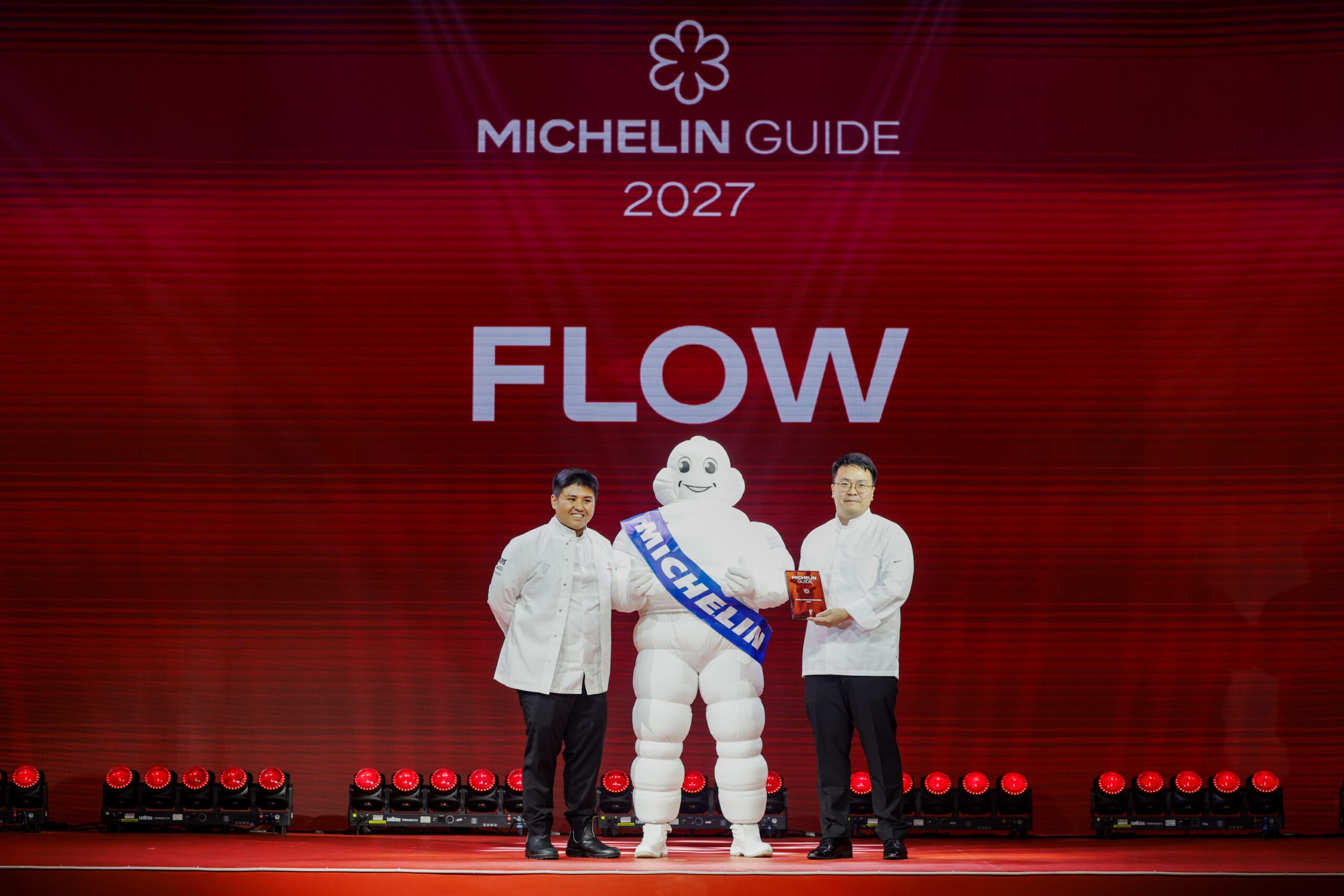
The hardest thing chef Kevin Uy had to unlearn after returning to the Philippines was not a cooking technique. It was how to speak. Abroad, Uy said, he could communicate directly with colleagues and express his thoughts without much hesitation. But after becoming a boss at FLOW, the Makati restaurant he co-leads with fellow chef Gabriel Ong, he realized that straightforwardness alone was not enough. “What I had to unlearn was being more diplomatic, because I’m not a very diplomatic person,” Uy told Rappler. The adjustment revealed an unexpected lesson from his years in international kitchens: Professional experience does not automatically translate into knowing how to lead in a different environment. The 32-year-old chef spent years training and working in Barcelona and Peru before returning to the Philippines. His experiences abroad helped shape his culinary perspective, but building a restaurant at home required him to reconsider how he worked with people and dealt with constraints he had not encountered in quite the same way overseas. For Filipino chefs who leave to learn, the journey home is not simply about bringing back recipes or techniques. It can also mean discovering how much they still need to understand about the country where they grew up. A different kind of culture shock Uy graduated from Enderun Colleges in 2016 with a degree in International Hospitality Management, specializing in Culinary Arts. He completed an internship at Hotel Arts Barcelona in Spain, later studied at the Basque Culinary Center, and spent years working with the group behind Peruvian restaurants Central and Mil and research initiative Mater Iniciativa. His five years in Peru, much of them spent working under chefs Virgilio Martínez and Pía León, helped him approach food through the environments, ingredients, and people behind each dish. But returning to the Philippines presented challenges beyond the kitchen. One was sourcing. Uy said he had worked in prestigious restaurants abroad where obtaining supplies seemed relatively easy. Starting out in the Philippines made him realize that getting ingredients was not always as straightforward as he had expected. Although he said his own suppliers had been accommodating, he had heard from other chefs who struggled to obtain particular ingredients. Ong, who also worked abroad before returning to the Philippines, said logistics can affect the quality of produce by the time it reaches a restaurant. “Some of the produce being so nice, the raw materials being so nice, gets through a three-hour traffic,” Ong said. “[Of] course, at the end, it ends up in your restaurant, it’s not the same quality.” For chefs accustomed to working in established international kitchens, the challenge is not simply finding ingredients. It is learning to work with the quality, availability, and consistency of what reaches their kitchens locally. Ong sees this contrast as both a limitation and an opportunity. International exposure gives returning chefs a reference point for the standards they want to achieve, while working in the Philippines shows them how much room there is to improve sourcing and distribution. “The learning is the contrast,” he said. Managing people posed another steep learning curve for Uy. Despite prior experience in Europe and Latin America, this was his first time leading a local team as an employer — not to mention his first job in the Philippines. FLOW’s staff of about 18 came from different parts of the country, including Leyte, Bacolod, Antipolo, and Laguna. Uy said working with people from different backgrounds taught him that communication involves more than giving instructions. “It’s not just all about saying things and people follow,” he said. “It’s making sure that they understand it and that they respect you for it.” The road to a Michelin star It was the same group of people that helped push FLOW to the periphery of the Michelin Guide’s anonymous inspectors, who felt that the fine dining concept deserved to receive its own highly coveted Michelin star. WORTH A STOP. One Michelin star is awarded to restaurants that are ‘worth a stop.’ Photo courtesy of Michelin Guide During the 2027 Michelin Guide ceremony, FLOW became the latest addition to the Philippines’ mighty roster of one-star restaurants. Uy and Ong were present to receive the glass trophy on stage, while their 18 staff members were at FLOW preparing for the upcoming dinner service. While the recognition had come as a shock to the two chefs, they knew it had all been made possible by their hardworking team. “I think just working hard every day,” Uy told Rappler just after the ceremony when asked what they think FLOW was doing right to have earned a star. “And the team is behind us. So they understand, and they work just as hard, and it’s because they care as much as we do. So that’s something that I think that they recognize as well.” “It’s our team who deserves all of this award. We could not have done it without them,” Ong added. The accolade had clearly come as a surprise to the two chefs. Anytime a member of the press would ask how they were feeling about it, they would answer that they were still processing the fact that they had received a Michelin star, but were nonetheless grateful for it all. Perhaps one of the first things you would notice about Uy and Ong is that they are of Filipino-Chinese descent. Culinary is not a common path for the people in their community to take, but it was something both chefs were willing to gamble on — all the more now that FLOW finally has a Michelin star to its name. “I think more than anything, for Filipino-Chinese in particular, [we have] perseverance, perseverance in the fact that we are able to push and prove to our families who really are skeptical about this entire industry, that we can manage to make it. And that’s something very important to us,” Uy told Rappler. Uy and Ong take perseverance seriously in their work. Evolution is expected in the world of gastronomy, and the two know that by heart. A chef’s original vision must be tested against sourcing, preparation, consistency, and the experiences of the people expected to bring it to life. For Uy and Ong, adapting also means learning from one another. Uy contributes much of FLOW’s creative direction, while Ong helps translate those ideas into a working kitchen. Ong said chefs returning from abroad have a responsibility to use their experience to help improve the industry around them. Rather than demanding that local colleagues adopt the same standards or methods they encountered elsewhere, they must find ways to communicate what they learned. “For me, I think it’s about being the bridge,” Ong said. Coming home with humility Asked to compare his years abroad to a television show or film, Uy settled on Emily in Paris. The comparison, he explained, was not about glamour but about a person finding her way in an unfamiliar place and building a life in an industry she wanted to join. It is a fitting description of the experience he and Ong now encourage other Filipino chefs to embrace: being willing to learn even after gaining experience in prestigious kitchens. Uy said chefs returning home should be flexible enough to absorb lessons from the people around them, rather than assuming their overseas experience has prepared them for everything. “The only difference is what they were doing is where they were doing it,” he said, referring to Filipino chefs who built their careers locally while others trained abroad. Uy said working overseas does not mean that a chef knows more than everyone who stayed, nor does growing up in the Philippines guarantee that returning professionals understand the local industry. “Just because you grew up here doesn’t mean you know everything, and just because you worked there doesn’t mean no one else knows everything,” Uy said. His advice is simple: “Be humble.” The value of going abroad, for Filipino chefs, may lie not only in what they learn elsewhere, but in how they use those lessons when they return. The work at home is not simply to recreate an international kitchen; it is to understand the people, ingredients, and constraints around them, then find ways to build something that belongs here. – Rappler.com Dominique Astucia is a Rappler intern studying BA Journalism at the University of Santo Tomas.
How chefs Kevin Uy and Gabriel Ong steered FLOW to one Michelin star
Full Article
Original Source
Read the full article at Rappler →KhanList aggregates and links to publicly available news content. We do not host full articles from third-party sources. Always verify important information with original sources.