
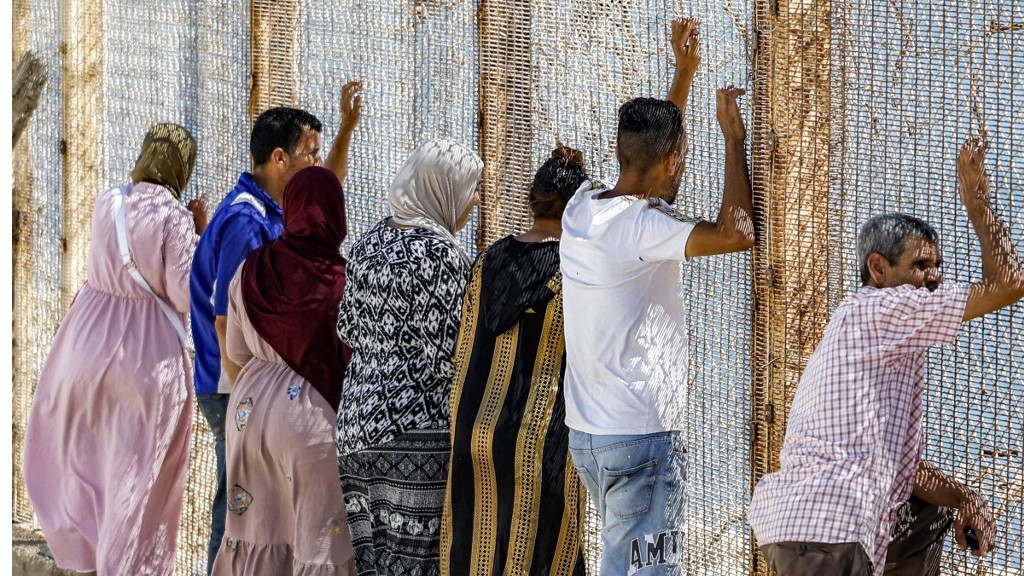
Spain is heading into snap elections after a turbulent period defined by a severe housing crisis and tensions over migration, fuelled by an incident in which 70,000 migrants from Morocco entered the Spanish enclave of Ceuta in late July. Prime Minster Pedro Sanchez’s position became even more tenuous after Spain’s second fatal train crash of 2026, which killed 69 people in October, just a few weeks after the snap election announcement. Ceuta has been a dominating factor on the campaign trail so far, with the migration crisis playing directly into the hands of the opposition parties. The consensus is that Spain’s conservative People’s Party (PP) and the far-right Vox will likely form the country’s ruling coalition, together providing enough seats to secure a 176-seat parliamentary majority. Polls suggest the PP could win about 130 seats, the Spanish Socialist Workers’ Party (PSOE) 110, and Vox 63. Rather than starting his campaign in Madrid, PP leader Alberto Nunez Feijoo soft-launched in the enclave of Ceuta shortly after the snap election was announced. The move placed migration, border security and the future of Ceuta at the core of his political messaging. New MEE newsletter: Jerusalem Dispatch Sign up to get the latest insights and analysis on Israel-Palestine, alongside Turkey Unpacked and other MEE newsletters The Spanish enclaves of Ceuta and Melilla are the European Union’s only land borders with Africa. Since the Ceuta incident, an unprecedented tragedy that caused 141 deaths, Reuters estimated last month that around 10,000 migrants remained in the enclave. The current focus on Ceuta has overshadowed Spain’s domestic failures, namely its housing crisis. The PP and Vox recently joined forces to vote against emergency reforms aimed at protecting tenants, tabled after an 87-year-old woman, who has since died, was evicted from her home over unpaid rent. Border rhetoric Across Spain, evictions reportedly affect some 25,000 people annually. During a general strike this month, an estimated four million workers took to the streets to protest soaring rent costs and the national housing deficit. But rather than focusing on these issues, Feijoo and Vox leader Santiago Abascal, like many right-wing western politicians, have opted to bolster their rhetoric on a hardline anti-immigration stance, presenting Ceuta as a test of the government’s ability to manage Spain’s external borders. Feijoo has been open in blaming Rabat “for action or omission” in the migration incident. His stance starkly contrasts with the position of Sanchez, who has repeatedly said there is no evidence of any involvement by Morocco. Feijoo as prime minister could risk freezing bilateral relations from day one if he arrives in Rabat leading with hardline policies and ultimatums Abascal has been highly critical of Sanchez’s leadership on Ceuta, dubbing him “the candidate of Morocco”. If elected, Feijoo maintains his first trip would be to Morocco to establish a “red line” with King Mohammed VI, ensuring that Spain’s “territorial integrity and sovereignty” is not compromised. Yet despite the efforts of the far right to rally anti-immigration and wider anti-Morocco sentiment as a campaign weapon, the hardline posturing is inadvertently strengthening Rabat’s hand. Calls for troop deployments or harsher border crackdowns in Ceuta ignore the fact that security relies on Rabat’s cooperation. This was evidenced in Ceuta. Spain deployed its army to help stabilise the border, and began to return tens of thousands of people. Such a large-scale operation, with more than 48,000 returned in 24 hours, would not have been possible without the cooperation of Moroccan security forces. By blaming Rabat for “action or omission”, Feijoo is effectively emphasising that Morocco has the upper hand on border security. Bilateral relations Amid the snap election theatrics, Morocco made its position clear at the opening of parliament on 9 October, when King Mohammed VI defended Rabat’s relationship with Spain. He also explicitly warned that Morocco would not be influenced by “pressure, threats or blackmail”. “I wish to point out that this partnership is a sovereign choice and a voluntary commitment,” the king said. His comments didn’t appear to sway Feijoo, who has remained steadfast in his border narrative. In an interview with El Pais published on 10 November, Feijoo was asked whether he feared reprisals from Morocco if he were to become prime minister. Morocco's revived claim to Ceuta and Melilla is not a demand for decolonisation Read More » In response, Feijoo referred to the Ceuta incident as an “invasion” of Spain - a term he has used on several occasions - and vowed that if elected, he would tell Morocco that Spain would never invade its land, and ask for reciprocity. “What I hope for is to restore confidence with Morocco and clarify who was behind this,” he said. “To know why the interior minister, the defence minister and the prime minister hid information from us.” Feijoo added: “The two states must be allies and collaborators, because that benefits both sides. I am not an enemy of Morocco. Now, I won’t compromise on Spain’s territorial integrity.” Three separate opinion polls published on 16 November weighed in the potential right-wing coalition’s favour, even though Sanchez’s PSOE managed to regain some popularity. But pairing up Feijoo and the unrelenting Abascal would mean less flexibility when it comes to diplomatic talks on all important topics with Rabat, including border security. Considering his abrasive tone, Feijoo as prime minister could risk freezing bilateral relations from day one if he arrives in Rabat leading with hardline policies and ultimatums - a far cry from Sanchez’s soft approach. The views expressed in this article belong to the author and do not necessarily reflect the editorial policy of Middle East Eye.
How Ceuta and migration are defining Spain's snap election
Full Article
Original Source
Read the full article at Middleeasteye →KhanList aggregates and links to publicly available news content. We do not host full articles from third-party sources. Always verify important information with original sources.