
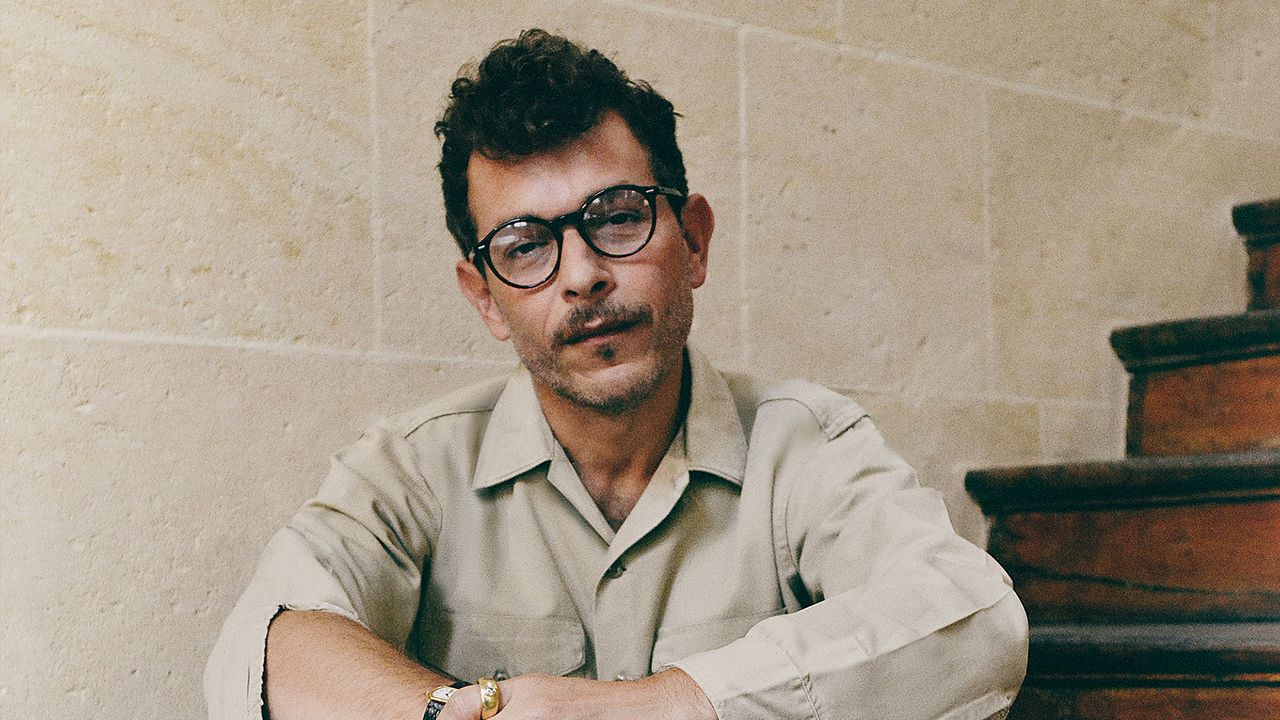
The unassuming D.C designer has turned the European house into the only thing anyone in men’s fashion wants to talk about—or wear. And he’s ready to explain how that happened.You can tell a lot about a designer by the scene backstage after a show. Usually, it’s sweaty, manic, crammed with hangers-on—the fashion equivalent of an airport lounge during a blizzard. But on the unseasonably warm October day of Michael Rider’s most recent Paris runway show, the space was alive with Champagne toasts and bubbly conversation.The co-ed summer 2027 runway was a blowout party hosted by Rider with models channeling twitchy new-wave dancers, preppy ’80s croquet players, and the heroic DIY divas from Paris Is Burning. Rider showed new tailoring shapes for men, specifically loose, floppy blazers and slim cigarette-leg pants, cropped confidently above the ankle. A showstopping look of gleaming pink separates somehow avoided silliness. Rider’s signature styling took the edge off. A silver shimmering suit was mildly de-glammed by a jacket tied around the waist. A jaunty black hat topped off an outfit with a white long-sleeve shirt and shorts. Improbably, these wild ideas felt coherent—a hard-won sleight of hand.In the garden of the National Archives Museum, friends of Rider like Hannah Einbinder, Tracee Ellis Ross, and Dan Levy milled around waiting for the designer to finish telling critics about his “intuitive” approach to fashion. Like something out of Lewis Carroll, a spread was unfurled on a long outdoor table. Waiters poured Champagne into a tower of coupes; editors licked homemade popsicles and bit into crunchy sandwiches of jambon-beurre. No one seemed like they had anywhere to be. This was the place to be.In less than two years, Rider has cleaned the slate following Hedi Slimane’s shrunken, skinny rock era at Celine. He’s brought more accessible, artfully styled fashion to the stores. He’s delivered at least two hit shoes: the dirty white jazz lace-up, and, this past September, an immediately sold-out collaboration with Reebok that reissued the 1982 Freestyle Lo sneaker in decadent leather, in shades from oxblood to buttery yellow.In the process, his Celine has become a favorite among fashion-minded men. Ebon Moss-Bachrach, the tall Girls and The Bear actor, told me backstage that Rider’s menswear feels “masculine without any kind of footnote.” Youngjae, from the K-pop band TWS, explained the allure of Rider’s vision. “The Celine man is very free,” he said—just as the wild-haired designer burst outside for a smoke, laughing and relieved.Wearing a standard-issue, backstage-friendly black crewneck sweater, Rider wasn’t exactly channeling the improvisational look of the brand he’s re-engineered in only a handful of shows. He assumed the role of artistic director in 2025, succeeding Slimane. Before taking Celine’s reins, he put in time under Nicolas Ghesquière at Balenciaga (2004–08) and at Phoebe Philo–era Celine (2008–17). But the secret to the Rider Effect—his unique ability to conjure clarity from chaos—was a lesson he picked up during his tenure at Ralph Lauren.Rider worked for the all-American designer as creative director of women’s Polo Ralph Lauren from 2018 until he decamped for Celine. Early on, he threw himself into staging his first “rig room.” A very Ralph tradition, the rig room is an installation of a fashion collection designed to be presented to Lauren internally—a fully immersive world complete with music, decor, props, and reference photos. Rider worked on his first one incessantly for two months. When Lauren arrived, he looked around in silence while Rider stood beside him, sweating in a navy blazer.At last, Lauren asked, “Why do you want to confuse people?”“I think about that a lot,” confesses Rider when we speak in a circular antechamber at Celine’s Paris headquarters a few days after the show. Disappointing Lauren was a turning point for Rider. He had gotten the job designing Polo after 14 years in the upper echelons of European fashion. “Mixing references and confusing people was part of the game,” he remembers. “You elevated yourself and your brand through adjacencies and pastiche. Ralph was the total opposite.”“I definitely appreciated going back to the States and hearing from a master: Be clear,” says Rider. The ongoing tension of his current work lies in resolving his tendency toward anarchy with a desire for legibility. His Celine is layered and unfettered and fun. But it is also as clear, as the French say, as water on rocks.Sitting in the same room where he and Philo “dumped our bags and met people” during his first stint at Celine, Rider looks calm and perfectly at home. Now that he’s at the helm of the 81-year-old LVMH maison founded by Céline and Richard Vipiana, the “rotonde” room has a few framed New Yorker cartoons propped on a wicker bench, some personalized thank-you cards to send, a pack of cigs, Evian, and not much else. Twinkly and alert, with no phone in sight, Rider wears a blue button-up, dark khaki pants, black canvas trainers, a gold Cartier watch, and some chunky rings. His hair sticks straight up like one of his inspirations: Isaac Mizrahi.Mizrahi’s Unzipped documentary, which recently celebrated its 30th anniversary, was one of the references for the summer show. So, too, was another canonic ’90s documentary, Paris Is Burning, about the queer ballroom scene in late-’80s Manhattan. Both films look at the human side of fabulosity, something that interests Rider. Brands are the creations of curious, restless minds, and the best transcend desire, attracting something close to faith. Rider himself has been one of those believers, lusting after Ghesquière’s Balenciaga during his first real job, when he was just an underpaid teacher. (“I would have killed for something from there,” he says.) In his show notes, he wrote about “our desires and frustrations. Memories, moments that made us love fashion. Moments where you get a glimpse of possibility.”In practice, that looks like something you want to buy, but that has soul. Rider, like Lauren and Mizrahi, is a designer who makes clothing and accessories that feel just familiar enough to strike a nostalgic chord, but fresh enough that they can’t be replaced by trawling The RealReal. In his first Celine collection, shown in July 2025 under a sudden Parisian downpour, the looks bore a healthy pinch of Polo-honed prep: red blazers, diagonal-stripe ties, pressed jeans, loafers. Now that style is officially everywhere, with every middle-class menswear brand and fast-fashion factory churning out their own versions.What separates Rider’s Celine is that it gets men excited to dress, says Nordstrom men’s fashion director Jian DeLeon: “It triggers that lizard-brain impulse that inspires them to shop. They didn’t realize they wanted a bright-blue military jacket, and then when they see it in store, Rider’s design nuances—like oversized, ruched sleeves and slightly different blocks of color in the fabric—further satisfy the kinds of bells and whistles that men’s fashion enthusiasts nerd out about.”In his first solo men’s presentation this past January, Rider brought his Ralph-perfected merchandising flair to Celine for a rig-room-esque installation of styling combinations that shouldn’t have worked—like a paisley tie layered beneath a red-string, hippie pendant necklace—and yet, did. Loafers in every shade played to an audience of ’90s kids who lusted after stacks of Benetton sweaters. Army jackets became accessories, belted around waists. It was American mall culture whipped through a blender with ready-to-wear refinement.Rider’s Celine made an impact even earlier with his very first outing, the co-ed spring 2026 collection, shown in mid-2025. Soon after that range was available, Paul Anthony Kelly, who played nouveau John F. Kennedy Jr. in Ryan Murphy’s hit FX series Love Story, wore a Kennedy-ish Celine look: a white Oxford shirt, red-and-navy striped tie, navy blazer, jeans, white socks, loafers. The message was clear: Kelly had arrived—and so had Rider. Kelly’s stylist, Warren Alfie Baker, says he got hundreds of messages from people saying, “Oh my God, I need to go and buy that.” Why did he think it hit so hard? “What Michael does really well is it feels relatable,” Baker explained. “Everybody wanted to replicate it or have a version of it.”Baker, who styles classic leading-men types like Glen Powell, Andrew Scott, and Andrew Garfield, says Rider’s work was heating up in Hollywood ahead of the fall awards season. “When you see a runway with 45 looks, and you’re like, ‘I could actually use 40 of them,’ that’s the dream scenario.”Slimane had introduced menswear to Celine in 2018 for the first time in the brand’s history with skinny black jeans, skinnier black ties, and shrunken leather jackets—an aesthetic driven more by rock-and-roll than red carpets. When he brought the brand to Los Angeles in late 2022 for an 87-look fashion show-cum-concert at the Wiltern, rockers including Iggy Pop, the Strokes, Interpol, and the Kills wore Slimane’s indie-sleaze uniforms to perform. “Celine’s past has been very skinny. Maybe some guys wouldn’t have known that they could wear it,” conceded Baker.Rider’s Celine offers more elbow room, literally and otherwise. “It’s not such a rigid idea of how a man should dress,” says fashion commentator and stylist Nicky Bell, who has styled Mark Ronson in several Rider looks, including a custom leather jacket for this year’s Brit Awards. “Other menswear brands are too rigid: They want you to be this really formal, masculine man, or they want you to be super androgynous. He lands in this in-between space.”Born in 1980 to two do-gooder attorney parents in Washington DC, Rider was raised in an intellectual, progressive household well outside the fashion bubble. Musing on why he’s still drawn to things that are a little off, and the stalls at the flea market with “the mangiest, strangest assortment of clothing,” he says. “My parents are not materialistic in any way. There are nice things around, and they make things. My mom’s an incredible cook, there’s needlepoint, my dad [told] great stories. But it wasn’t a situation where aesthetic perfection was the goal.”“I was always in my own strange lane,” says Rider. “Everybody who seemed cool to me was on their own path.” His older cousin introduced him to the Grateful Dead, a lifelong love. Rider was, naturally, first drawn to the T-shirts—“the merch always brings me in”—but then became fascinated by the totality of Deadhead culture. “I was very attracted to the experimentation and freedom and fewer rules,” he says. “I like color, I like people who customize things, and I like weirdos.”The Dead were a gateway into an adolescence full of experimentation. “I had all the phases,” Rider says, from Birkenstocks worn with Thorlo hiking socks, to hip-hop streetwear, to skate style that he finessed in shops like Green Barrel in Georgetown and Stüssy in the suburb of Potomac. He also dabbled in the all-American look he’d later help shape at Polo. “We went to public school and were proud of it, so preppy was a bad word, but everybody at my school worshipped Polo. They just wore it differently, and we mixed it all.”Rider’s still mixing. “It’s always been a lot of fun for me to get dressed,” he says. When he lived in New York City while at Ralph Lauren, he had standing movie nights at the Battery Park City cinema with the photographer Tommy Ton and designer Trevor Ballin (who works with him now at Celine), both friends. Ton, a street-style savant, loved seeing the outfits Rider would pull off at the cinema, like ankle-chopped Uggs with an Hermès shawl, or Grateful Dead bear–embroidered shorts. Levy says he could see Rider’s own vacation wardrobe in the women’s looks of the summer collection. “He shows up to dinner in caftans and sandals, or harem pants.”Which can be hard to square with the fact that Rider went to Brown University with the intention of becoming a teacher. He moved to Oakland after graduating and taught ninth grade at a charter school. “Everyone was bigger than me,” says the petite designer. Living in the Bay Area, going out a lot, and experimenting with clothing, he eventually felt a pull to the creative world that he couldn’t shake, which would lead to him interning with his then hero, Ghesquière.Rider, the former teacher, remains a perpetual student. He tells me, with a glance at his PR minder, that the kind of fashion profiles he loves—like Judith Thurman’s unvarnished 2005 New Yorker story on Rei Kawakubo—aren’t really possible anymore. In the post-Galliano-meltdown, recession-hardened luxury landscape, publicly traded conglomerates protect their creative directors from criticism like the precious assets that they are.A lifelong New Yorker subscriber, Rider recently had lunch with David Remnick in New York. He felt starstruck seeing Remnick’s editors at a meeting in a conference room, laughing and pitching. Rider has always loved NPR (especially Terry Gross) and The New York Times, and vintage issues of The World of Interiors—but he ignores podcasts and social media. “I definitely wouldn’t be alive if I could access that much rotting, addictive imagery and self-aggrandizing. It’s self-preservation,” he says.Disconnecting is a skill he learned from Philo, his boss for nine years during a meteoric time at Celine. “She’s comfortable in privacy, and that allows her to be herself,” he says. While he admires her discipline, he waxes nostalgic about how much fun they had together at the studio. “I laughed a lot, and enjoyed it a lot, and cared a lot,” he says. “And she made me want to work very, very, very hard.”So he painstakingly protects his distance—but doesn’t sacrifice his sense of humor in the process. You’ll see it in the pop of outrageous purple, a woolly outdoorsy fleece, those shimmering suits. There’s a sense that being too serious is just kind of sad. He likes when people talk about Celine as “good-time clothes” that they wear when they go out. “I would be mortified if anyone thought silliness was on the menu,” Rider says. Still, “Things are very funny to us, and that has to be felt somehow. I think humor is really stylish.”Eons have passed, seemingly, since Rider interned in the menswear department of Balenciaga in the mid-aughts. “Fashion for men was very fringe then,” he says, remembering that the men’s collection at the label totaled maybe a dozen looks. At the time, Slimane’s strict silhouettes for Dior Homme were in; Rider wore some of that, along with the stiff selvedge APC jeans that became part of the ascent of #menswear. He recalls Ghesquière being obsessed at the time with making the ideal men’s wardrobe, from button-ups to parkas.“Menswear has completely opened up now,” Rider says. “It’s a different ball game. Because it’s so much broader now, and people have phones; people everywhere have access to so much and are engaged in more conversations. Not always for good, but it moves. The rules can move, and the goalposts can move.”Rider, after an almost Forrest Gump-y run of consistently being at the center of gravity—at Balenciaga, with Philo, and at Ralph Lauren—without having tried so hard to be there, is now the one doing the goalpost-moving. And he has no interest in hard rules or self-inflicted limitations.“I think a lot of people who do this thing end up living, or trying to live out, the same story over and over,” he says.He resists sheeplike notions of what’s considered cool—“this artist, this pottery, this lamp, this show space collaboration,” as he puts it. And he’s careful not to follow the flock too closely. “Paris is amazing, but Paris is insular,” says Rider. “Everyone’s eating at the same canteen, gossiping about the same thing. There’s a gigantic world out there.”So Rider keeps doing his own thing. He revels in American pop culture—he’s just as passionate about going to the multiplex near his weekend home in Normandy to see the latest Wicked as he is paging through those old World of Interiors magazines. He’s started weight-lifting, in the evenings. Learning Arabic is on his bucket list. And often he finds himself going back to his roots for inspiration.Every summer, he returns to Martha’s Vineyard, where his family has had a house since the 1970s. He loves its isolation, and its realness: “Against all odds, it has remained what it is. There’s no bridge, the airport’s still tiny, 85 percent of it is protected. There’s no Balenciaga.” On Martha’s Vineyard, he likes being out on the water.“The most American thing about me is that I like to paddle,” he says, laughing. “I’m my best self in a canoe.” ✦A version of this story originally appeared in the December 2026 issue of GQ with the title “This Quiet American Has Fashion’s Attention.”Sign up for Manual to receive useful advice on style, health, and more, six days a week.Rory Satran is a writer based in New York City. ... Read More
How Celine’s Michael Rider Quietly Seized Fashion’s Attention
Full Article
Original Source
Read the full article at Gq →KhanList aggregates and links to publicly available news content. We do not host full articles from third-party sources. Always verify important information with original sources.