
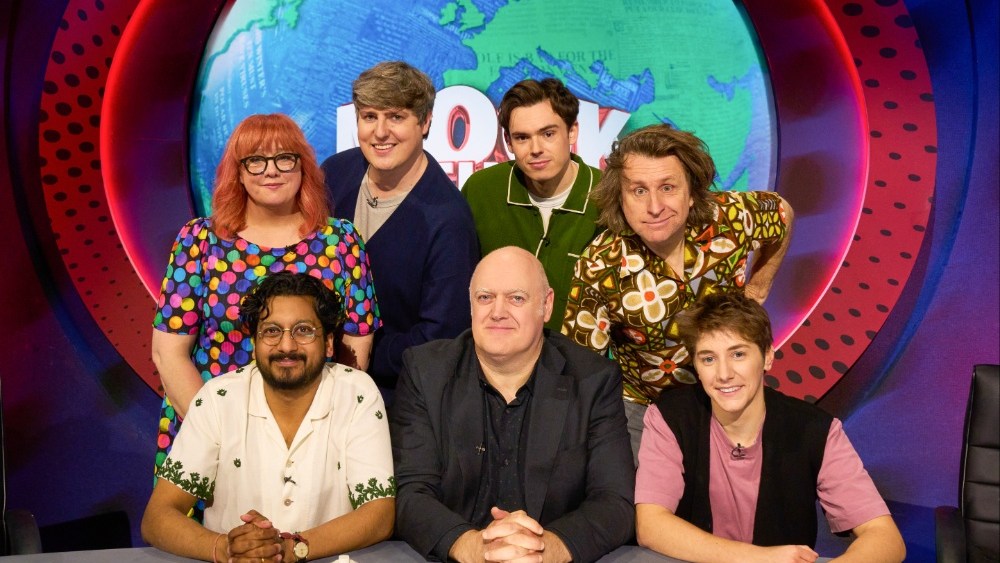
When long-running BBC comedy show “Mock the Week” returned to television screens after a three-year hiatus this past spring, fans may have noticed some changes: not only was the show longer and “looser” but it was also airing on TLC, the Warner Bros. Discovery-owned network. “It was also a surprise for me that it was TLC,” says comedian Rhys James, a regular on the series. “The first episode back was just loads of jokes about ‘Where are we?’ ‘Where have we woken up out of this coma?’ but TLC were well up for having a laugh about that.” Created by Dan Patterson and Mark Leveson in 2005, “Mock the Week” originally debuted on the BBC, where it spent 17 years until it was axed in 2022 due to budget cuts. But this past February the satirical news show (think “SNL’s” Weekend Update but more off the cuff) finally returned with a new length — 45 minutes instead of 30, excluding ad breaks — and slightly different feel after it was resurrected by TLC. Popular on Variety “I sort of expected it to be wildly different, but it’s not,” says comedian and fellow regular Angela Barnes, who made her first appearance on the show in 2014. “The set feels like home.” Not only was the set largely the same but so was host Dara Ó Briain, who has been the face of “Mock the Week” since it launched in the pre-iPhone era. “It has been a journey,” Ó Briain says of the two decades he’s worked on the show. With such a venerable IP, it may have seemed nabbing the show from under the BBC’s nose was a no-brainer but Patterson admits there were never any guarantees “Mock the Week” would return to screens after it was axed. Hopes that Channel 4 or U.K. TV might pick it up fell through, as did a U.S. version for Amazon, “So we sat there for a long time without it,” he says. By the time TLC (formerly The Learning Channel) finally called, he was doubtful they’d make a real offer. But not only was it real, they revealed they wanted to relaunch TLC as a free-to-air comedy and entertainment-focused channel with “Mock the Week” as their flagship show. “It was like, ‘Let me think about that. [It’s a] yes,’” Patterson says without missing a beat. (He adds a U.S. version is still in discussion). For TLC, a venerable IP with a built-in audience might have seemed like an obvious choice, but Graham Lafferty, SVP for content strategy & networks for WBD U.K. & Ireland, say it was “more risky than it may have looked” since they wouldn’t be able to deliver “BBC numbers” in terms of ratings (the BBC being the most prominent broadcaster in the U.K.) and the format would need to change slightly to accommodate commercial breaks (as the BBC is publicly funded it has no commercials). But with the show’s proven audience and the fact that news viewing is “through the roof” more generally, a satirical news discussion show was deemed worth the risk. In a way, the three-year hiatus was also helpful. “I do think absence makes the heart grow fonder,” says Patterson, pointing out that if the show had been picked up just a few months after being canceled on the BBC, people might have been more negative about it. “It just looks like we’re taking their leftovers,” he says. “Whereas with this, we’re not sloppy seconds.” The ratings have borne that out. “Mock the Week” Season 1, which launched in February and ran for nine episodes (the season finale was a special), peaked with 337,000 viewers for episode 5, more than the highest-rated episode of “SNL U.K.,” which launched the same weekend that “Mock the Week” wrapped. Both shows returned for a second season this past weekend: “SNL U.K.” on Saturday Sept. 12 and “Mock the Week” on Sunday Sept. 13. They will both air weekly, on Sky and TLC respectively, although “SNL U.K.” has a number of hiatus weeks built in. Interestingly, Lafferty says it isn’t just the viewing figures for “Mock the Week” but also the audience profile that ticks the right boxes, given TLC is a commercial channel that relies on ad sales. In fact, he was so happy with the results of the first season he quickly ordered a summer special plus four more seasons, taking the show through to Season 5 in 2027. “It is hard these days to cut through,” Lafferty says. “So if you have something successful, double down on it.” The commercials are also why the show was extended to around 45 minutes from 30, which has subtly changed its rhythm, mostly for the better, the comedians agree. “I think it’s got looser,” says James. “By looser I mean more conversational. It goes with the flow a bit more, people are a bit more present.” Patterson agrees, although said he had a few sleepless nights about the extra 15 minutes before they launched. “I thought it worked at 30 minutes but actually, necessity being what it is, we had to expand it, and I think that’s worked well,” he explains. “Partly because the whole show breathes a little bit more.” That one change has also had the knock-on effect of making the show more collegiate. James, Ó Briain and Barnes all say that when it first started, “Mock the Week” had a reputation for predominantly male comedians talking over each other as they each tried to get in their best jokes. That has now dissipated almost entirely. As well as the longer format, James puts it down to the fact most comedians now have podcasts, so they’re better at listening, while Ó Briain thinks it might be age and experience that have simply made them more mellow. Whatever the reason, “it just feels like a better show for it,” says Barnes. “Just more balanced, a different energy, and it isn’t that sort of alpha male fest that it used to be.” (The show also features more female comedians). That collegiate feeling may also stem from the fact there’s currently something of a new dawn for comedy on television, with the return of “Mock the Week,” the launch of “SNL U.K.” earlier this year and the success of “L.O.L: Last One Laughing” on Prime Video. TLC in particular is building its slate around comedy, and recently commissioned a host of new shows including a Top Trumps-themed panel show hosted by comedian Katherine Ryan and a second season of “Unacceptable,” which is fronted by Ed Gamble and was renewed for a second season before the first had even launched. Ó Briain says he’s witnessed the repeated waxing and waning of comedy commissions throughout his career but even he has been surprised by the strength of feeling surrounding the return of “Mock the Week,” particularly from TLC itself. “Their enthusiasm is incredibly infectious,” he says. “And the audience are happy to see us back. So it’s a very positive thing.”
How British Comedy Show ‘Mock the Week’ Found New Life on TLC After BBC Cancellation: ‘Absence Makes the Heart Grow Fonder’
Full Article
Original Source
Read the full article at Variety →KhanList aggregates and links to publicly available news content. We do not host full articles from third-party sources. Always verify important information with original sources.