
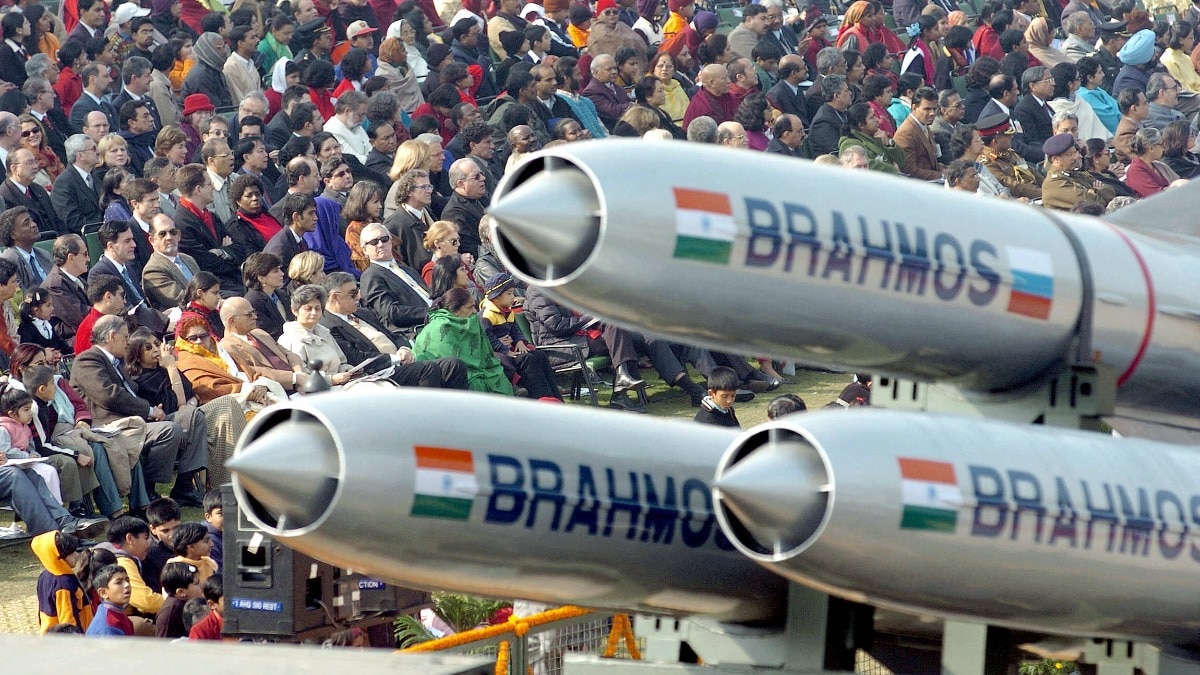
India's growing influence in Asia is not being built through economic muscle alone. The BrahMos missiles are entering the arsenals of Southeast Asian countries, while India's cultural legacy, from the Ramayana to its rich artistic and intellectual traditions, continues to forge enduring connections across the region.The BrahMos missile has found buyers in three Southeast Asian countries — the Philippines, Vietnam and Indonesia. At the same time, India's cultural influence is gaining ground in the region too. These two dimensions of India's reach have found a place in Australia's think tank, Lowy Institute's 2026 Asia Power Index, which records that India has strengthened its defence networks and cultural influence, narrowing its overall power gap with China to the smallest level since the index began in 2018.The report offers an interesting explanation for India's changing position in Asia's power equation. India has moved closer to China in overall power than at any point since the index began in 2018. However, this does not mean the two countries are now equals. China still scores 73.6 against India's 40.5, retaining an overall power advantage of about 80%.However, India's growing defence ties with Southeast Asia are reflected in the BrahMos, a supersonic missile jointly developed by India and Russia and now being bought by countries in the region. (Ai Illustration/India Today Digital) BRAHMOS IS TAKING INDIA'S DEFENCE REACH FURTHER IN ASIAIndia's BrahMos missile exports have given its defence diplomacy a new dimension in Southeast Asia. The supersonic missile, which is developed jointly by India's Defence Research and Development Organisation (DRDO) and Russia's NPO Mashinostroyenia, BrahMos has become one of India's most prominent defence exports.The Philippines became the first foreign buyer in 2022, signing a $375 million agreement for three shore-based anti-ship missile batteries. Deliveries began in 2024. The deal was significant because it gave India an entry into the Philippines' coastal defence modernisation programme, as Manila faced growing maritime tensions with China in the South China Sea. The Philippines is now considering expanding the purchase. In early November, Reuters reported that India was in final-stage discussions with Manila for a possible additional order of about five systems and nearly 60 missiles, potentially worth $700 million to $800 million. The proposed purchase would be substantially larger than the original contract.Vietnam has also signed an agreement to procure BrahMos missiles from India. India's Defence Secretary Rajesh Kumar Singh confirmed the agreement in May 2026. Reuters reported that the potential deal could be worth around $629 million, including training and logistical support.Indonesia has become the third Southeast Asian country to enter an agreement to procure a missile system. Its Defence Ministry confirmed the agreement in March 2026, saying it was part of efforts to modernise military equipment and strengthen maritime defence capabilities.The three agreements are important not only because they expand India's defence export market. Missile procurement can create longer-term relationships through training, maintenance, logistical support and continued military engagement. For India, this offers an opportunity to deepen defence ties with countries that are seeking to strengthen their maritime security.The Lowy Institute links the increase in India's Defence Networks score to greater regional defence engagement and BrahMos sales to Southeast Asia. India's score rose to 18.6, taking it up two places to ninth in the measure in 2026. This is a significant improvement, although defence networks remain one of India's weaker areas in the index. (Ai Illustration/India Today Digital) BRAHMA AND INDIA'S CULTURAL FOOTPRINT INFLUENCE GROWS IN ASIAIf BrahMos represents India's hard-power outreach, Brahma stands for the country's wider cultural and civilisational influence. India's cultural links with Southeast Asia, however, are much older than its modern defence partnerships.The Ramayana, one of India's major epics, travelled across the region and became part of local traditions, performing arts and literature. Its influence can be seen in Cambodia's temple heritage, Indonesia's Ramayana performances and Thailand's Ramakien, a national epic rooted in the Ramayana tradition. Hindu and Buddhist philosophies, temple architecture, iconography and artistic practices also travelled across Southeast Asia through centuries of maritime and cultural exchanges.India's Ministry of Culture has documented these historical connections with countries including Cambodia, Indonesia, Laos, Malaysia, Myanmar, the Philippines, Singapore and Vietnam. These links demonstrate how Indian ideas and traditions became part of the cultural histories of societies beyond the subcontinent.But India's cultural influence today is not limited to its ancient heritage. Cinema, music, dance, yoga, educational institutions, media and diaspora networks contribute to the country's contemporary presence abroad.The Lowy Institute, in its latest report, measured Cultural Influence through dimensions like cultural projection, information flows and people exchanges. These include cultural exports and heritage, the regional appeal of media outlets and universities, international students, diaspora communities, migration and travel connections.India's score in this measure increased by 2.3 points to 43.8 in 2026, keeping it fourth among the 27 countries and territories assessed. The report attributes the improvement to gains across all three dimensions. China, however, remains ahead with a score of 60.2.This is an important distinction because India's cultural influence is expanding, but the report does not suggest that any single cultural export or historical tradition was responsible for the improvement. Its assessment covers a wider set of indicators that capture how a country's culture, information and people connect with the rest of Asia. (Ai Illustration/India Today Digital) HOW THE TWO ARE CHANGING INDIA'S POWER EQUATIONThe BrahMos agreements and India's cultural footprint point to two different ways in which a country can build influence. Defence exports can deepen strategic relationships, while cultural connections can shape perceptions and sustain people-to-people links. Both help India build relationships beyond its immediate neighbourhood.The Lowy Institute's findings are particularly notable because India's economic performance in the index was mixed. Its Economic Capability score fell by 0.7 points to 26.4, affected by a weakening rupee and changes in the International Monetary Fund's measurement of economies. Its Future Resources score, however, rose to 56.2 on the back of an improved economic forecast.India's overall power score reached 40.5, retaining its third position in the index. Its gains in Defence Networks and Cultural Influence came alongside improvements in economic relationships and future resources. These developments helped India narrow its Power Yield, which is the gap between the power expected from its resources and the influence it actually exercises, for the first time since 2023.The report does not attribute the narrowing India-China power gap solely to BrahMos or cultural influence. Rather, the two have been cited to illustrate how India is translating its capabilities and connections into greater regional influence.China remains substantially more powerful, with advantages across several measures. But India's growing defence partnerships and cultural reach show that its influence in Asia is no longer being measured only through economic growth or military strength. India's missiles are finding buyers, while its cultural links continue to travel across borders. Together, they offer a picture of a country seeking a larger role in the region's changing balance of power.- Ends
How BrahMos and Brahma influence brought India closer to China in power race
Full Article
Original Source
Read the full article at Indiatoday →KhanList aggregates and links to publicly available news content. We do not host full articles from third-party sources. Always verify important information with original sources.