
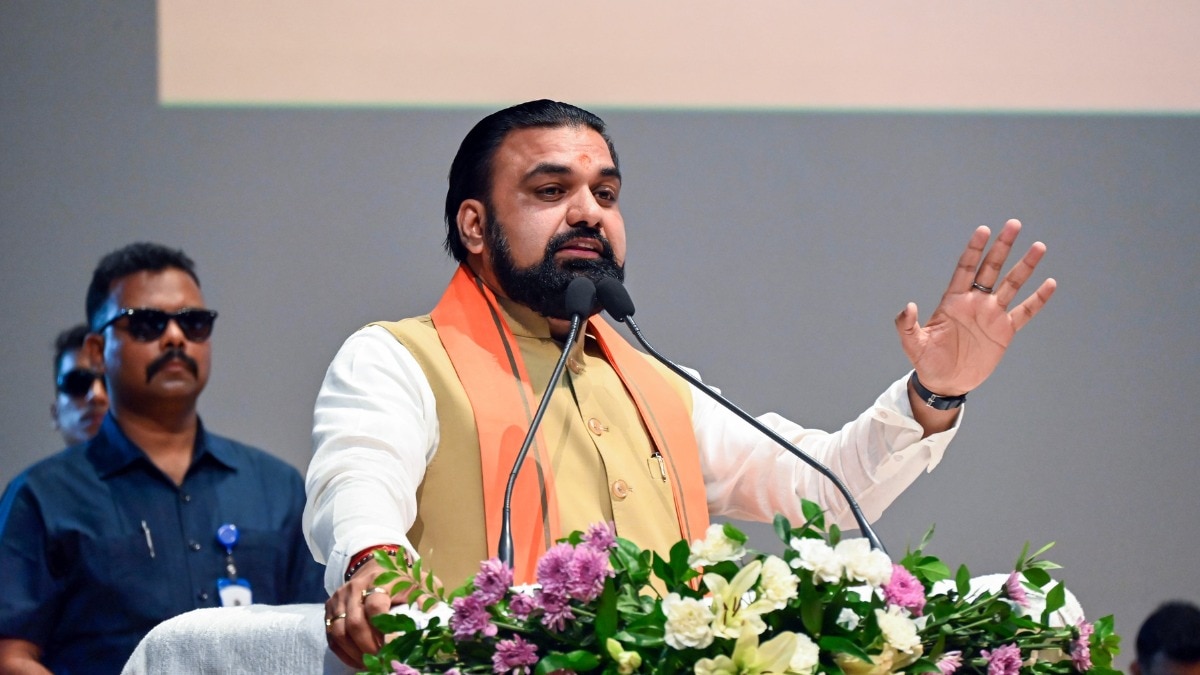
CM Samrat Choudhary's new complaint system for students promises action within 30 days, and automatic escalation to his office if officials fail to respondThe most revealing thing about Bihar’s new student grievance portal, announced by chief minister Samrat Choudhary on August 17, may not be the portal itself. It is the timing.After a youth-led agitation at New Delhi’s Jantar Mantar ended with the resignation of Dharmendra Pradhan as the Union education minister and protests in neighbouring Jharkhand entered its fourth week, with job aspirants demanding a CBI probe into recruitment irregularities, Bihar is attempting to stay ahead of growing student discontent with a promise of time-bound grievance redressal.Choudhary launched the Vidyarthi Sahayog Portal, a single-window system through which students can complain about academic problems, hostel facilities and other educational issues. They can register grievances online or call a toll-free number. Their identities, the government assures, would remain confidential.But the more interesting feature is what happens after a complaint is lodged: the government promises resolution within 30 days, with written intimation to the student. If no action begins within 10 days, an automatic notice is to be issued from the chief minister’s office on the 11th day. Further notices are scheduled for the 20th and 25th days. If the matter remains unresolved after 30 days, action can be taken against the responsible official. Given the red tape of Indian officialdom, where a complaint can travel from one desk to another for months before vanishing into the administrative ether, Bihar’s promise is striking: the state has put itself on the clock.That is precisely why the portal matters in the current political climate. The events in Delhi and Ranchi have demonstrated that students are no longer necessarily willing to wait for the system to correct itself. The Delhi episode, besides Pradhan’s resignation, also forced various government assurances on the protesters’ demands, including dropping cases against them. In Jharkhand, the agitation continues despite repeated rounds of negotiations and the Hemant Soren’s government’s decision lately to cancel a large bouquet of recruitment exams.The two agitations are not identical, and Bihar’s portal should not be presented as a direct reaction to either. Bihar already had a system of student-help camps; the new portal formalises and expands that mechanism. Yet the political atmosphere in which it has been launched is difficult to ignore. Governments across India have spent recent weeks speaking the language of yuva shakti. What has changed is that young people have demonstrated that they can turn that rhetoric around and ask whether the state is prepared to listen when they are the ones doing the talking.Choudhary’s response is therefore strikingly administrative. Rather than another speech about the energy of young India, Bihar is offering a grievance number, a complaint portal and escalation dates.The physical version of the scheme is equally important. From August 25, the state will begin the Vidyarthi Sahayog Abhiyan across schools and hostels. On the fourth Tuesday of every month, educational institutions will hold Vidyarthi Sahayog Camps, where students can raise problems and offer suggestions directly.There is a logic to the approach. Protest is, at its simplest, a demand to be heard. A grievance system attempts to institutionalise that hearing before the complaint becomes a protest. The portal is, in that sense, less about technology than about political timing: it is an attempt to build a valve into the system.The state is also trying to broaden the offer. Choudhary has spoken of 211 new degree colleges, the expansion of degree courses in 342 B.Ed colleges, and efforts to make higher education more affordable. The Student Credit Card scheme, he said, has provided financial assistance worth nearly Rs 18,000 crore. The government is developing modern model schools at 551 locations and working towards live teacher support for students studying at home through mobile phones and laptops, including late into the night.There is a familiar political temptation here: to bundle every educational announcement into the larger promise of transformation. But the grievance portal occupies a different category. A new college may take years to become a functioning institution. A student complaint about a hostel, scholarship, examination or academic service exists today. The government is promising that it will not simply receive it but answer it.That promise may matter particularly to students because educational grievances often come with an asymmetry of power. A student who depends on an institution for accommodation, assessment or certification may be reluctant to complain about the institution itself. Confidentiality, therefore, is not merely a technical guarantee. It is part of the political architecture of the scheme.Whether that architecture survives contact with the bureaucracy is another matter. Despite the government’s high-sounding promises of a more responsive and transparent education system, Bihar’s own record offers reasons for caution. The state police have often faced criticism for relying on force to deal with protests, while competitive examinations have repeatedly been dogged by allegations of paper leaks, irregularities and administrative lapses.Equally troubling is the state’s record in taking recruitment-related cases through to conviction, leaving students with the impression that even when wrongdoing is exposed, accountability can be painfully slow. The credibility of the new portal will therefore depend less on the language of its launch than on whether the administration can demonstrate, in practice, that complaints are acted upon and officials are held to account.A portal can receive a million complaints; it cannot by itself make a negligent official diligent, a teacher competent, an examination secure or a university responsive. Bihar’s 30-day deadline may eventually run into the oldest obstacle in Indian administration: the distance between the authority to promise and the capacity to deliver. A grievance system that escalates automatically but resolves slowly could become little more than a more efficient way of documenting frustration.This is also where Bihar’s initiative intersects with the larger politics of youth unrest. In Ranchi, the government has spent weeks trying to negotiate with students who no longer trust assurances alone. The protests have survived arrests, police action, hunger strikes and multiple rounds of talks. The lesson for other governments is uncomfortable: once distrust becomes collective, another committee or assurance may merely lengthen the argument.Bihar is attempting something earlier in the chain. The idea is not to wait for a complaint to become a movement. That distinction may prove politically significant. The initiative is not a solution to youth unemployment. It does not repair the credibility of recruitment examinations. It will not, on its own, transform teaching quality or make Bihar’s colleges competitive with those elsewhere. But it does represent an important change in administrative instinct: respond before the grievance becomes a movement.The success of the scheme will therefore be measured not by how many complaints are filed but by whether students begin to believe that filing one is worthwhile. That may be the real political test.After Delhi and Ranchi, governments have been reminded that young people are no longer content merely to be described as the country’s future. They want to know what is being done about their present. Bihar’s answer, for now, is a portal, a helpline, a monthly camp and a 30-day deadline. The larger question is whether that administrative promise can prevent the next grievance from becoming the next protest.Subscribe to India Today Magazine- EndsPublished By: Akshita JollyPublished On: Aug 18, 2026 18:38 IST
How Bihar is ensuring students' grievance doesn't become their next protest
Full Article
Original Source
Read the full article at Indiatoday →KhanList aggregates and links to publicly available news content. We do not host full articles from third-party sources. Always verify important information with original sources.