
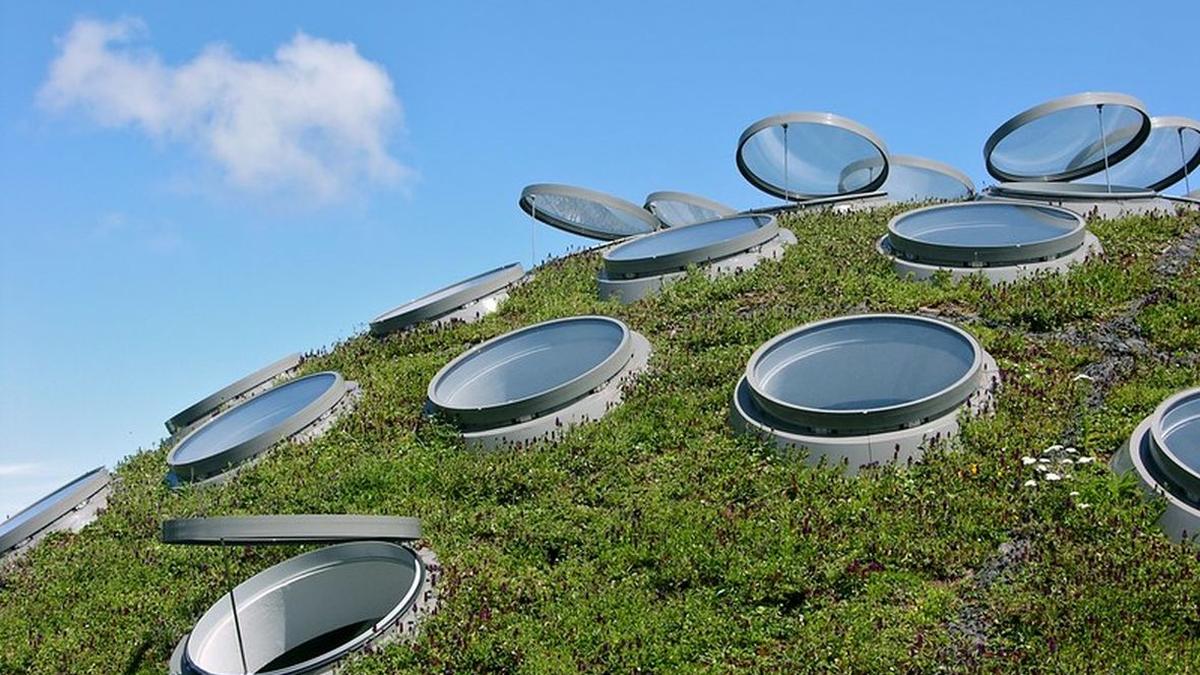
Green Roof of the California Academy of Sciences | Photo Credit: Flickr What does it take to design a building? There’s creating spaces that are efficient and pleasing, and bringing in beauty with colours, lighting and aesthetics. Structural engineering that makes buildings stand and not topple over. Plumbing and electricity. Ventilating the building to make sure people are comfortable irrespective of the weather. While there is an ‘art’ side to architecture, there is also a ‘science’ side to it.ALso Read: The seven Shiva temples of MylaporeConcepts from PhysicsIn Physics, you may have come across concepts like thermal conductivity, energy and acoustics. All these play a role in building science. We shouldn’t feel too hot or too cold inside a building. The noise we make shouldn’t bounce off the walls and echo uncomfortably. We should have natural light, but not be blinded by glare. Keeping in mind climate change, the building shouldn’t consume too much energy and natural resources. Building science deals with all these factors and architects and experts try to control how much heat enters the building, how to capture wind, how to reduce energy consumption and carbon footprint, and make buildings work better.Take the example of heat. A building’s temperature can be controlled mechanically with ACs, fans or heaters, or ‘passively’ through its design. This is based on Science: how quickly does heat pass through the walls? Do they absorb or reflect heat? Your grandma may tell you not to wear black in the blazing summer but to choose light, airy cottons because dark colours absorb heat.Traditional ideasTraditional buildings have always used intuitive knowledge of Science. For example, the thicker a mud or stone wall is, the more slowly it absorbs and releases heat. So, in extremely hot or cold places, walls would be even a foot thick so that people could be comfortable indoors. Wind towers in hot climates bring in cool air and suck out hot air, aided by the principle of air moving from high pressure to low pressure. Solar panels on the roof of a house | Photo Credit: Getty Images/iStockPhoto Over time, many modern buildings stopped using these principles and depended entirely on artificial methods like ACs. But, with climate change concerns, there is a push to bring back natural methods and combine them with mechanical methods for better energy efficiency. Materials can be selected based on their heat conductivity, insulation layers can be added for more indoor comfort, and daylight can be brought in to reduce artificial lighting. Technology is exploring ways to make air-conditioners guzzle less energy, to power devices with solar energy, to have flushes that consume less water and green roofs that can cool buildings.Architecture and Science are closely linked; from the materials used in desert houses to designing soundproof movie theatres to solar chimneys. The next time you visit an old building, try to look for what principles of science it uses! Published - February 28, 2025 09:12 am IST
How Architecture uses scientific principles
Full Article
Original Source
Read the full article at Thehindu →KhanList aggregates and links to publicly available news content. We do not host full articles from third-party sources. Always verify important information with original sources.