
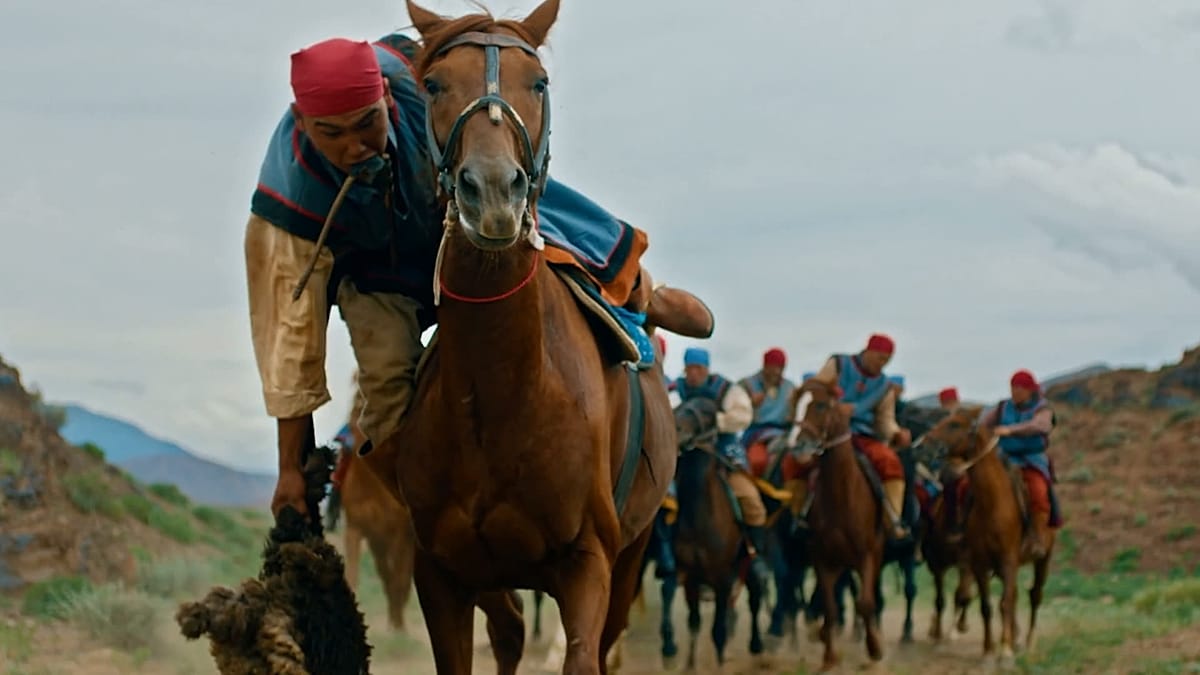
When the sixth World Nomad Games were held in Kyrgyzstan in September 2026, many visitors and journalists were struck by the scale of the event. ADVERTISEMENT ADVERTISEMENT What began in Kyrgyzstan in 2014 as an effort to revive and promote nomadic sports and traditions has grown into a global event. More than 3,000 athletes from 109 countries took part in the 2026 Games, competing in 43 sports. Participants came from across the world, including many countries with no direct connection to nomadic culture. What began as a regional cultural initiative has developed into a major international sporting event. So, what are the skills that have attracted such widespread interest? Historically shaped by battlefield training, hunting and the demands of nomadic life, these skills helped develop strength, endurance, agility and horsemanship. Today they are sports, but for peoples with strong nomadic traditions, including Kazakhs, Kyrgyz, Uzbeks, Turkmens, Tajiks and Mongols, they also remain expressions of history, identity and cultural continuity. Historical accounts describe wrestling, archery and horsemanship as important parts of warrior training and social gatherings across the steppe. These traditions have survived for generations. “Just as every nation has its own national games, our equestrian and national sports can be called the soul of the Kazakh people. Of course, in a developing world, riding horses and shooting arrows might seem unusual or like something from the past to some people, but for us, national sports are our wealth,” said Baurzhan Mugyzharov, trainer of Kazakhstan’s kokpar team. There are many different nomadic games. Athletes at the 2026 World Nomad Games competed in 43 sports, but those demanding endurance and strength from both horse and rider often attract some of the greatest public interest. Kazakh nomadic culture is closely associated with horses. Equestrian games remain popular and are often part of social events and celebrations. Among the best known is kokpar, described in the 19th century by American diplomat Eugene Schuyler as a game in which “one man holds a kid thrown over his saddle and everyone else tries to tear it from him.” In modern competition, four riders from each team are on the field at a time. Players try to pick up a dummy carcass from the ground while riding and carry it towards a designated scoring circle. The game demands strength and agility from both horse and rider. The dummy used in competition weighs around 30 to 33 kilograms. Kokpar is part of Kazakh tradition and has an equivalent in Kyrgyzstan known as kok boru. Thousands of spectators travelled from Kazakhstan to watch the kokpar finals at the World Nomad Games in Kyrgyzstan, while many young Kazakhs continue to take up the sport. “Kazakhs have a tradition of getting children onto horses from a very tender age. Once they grow up enough to hold the reins properly, they are made to race in competitions and play kokpar. We guide each child according to their aptitude, because this is our national sport and a tradition handed down from our ancestors,” Mugyzharov said. Traditional horse racing in Central Asia often places greater emphasis on stamina than short-distance speed. At the 2026 World Nomad Games, long-distance races included a 25-kilometre event, while a separate 300-kilometre endurance marathon was held over three days. Horsemanship also forms the basis of other traditional sports. Audaryspak, or horseback wrestling, is one of the clearest examples of how skills once associated with mounted warriors developed into organised competition. Two riders try to unseat each other from the saddle, gripping, pushing and pulling while controlling their horses at the same time. “At the recent World Nomad Games, which brought together representatives from many countries, we saw significant progress in the development of audaryspak in Kazakhstan. Here in Kazakhstan, national championships are held systematically for youth, juniors and adults. The results speak for themselves. At the competition held in Issyk-Kul, Kyrgyzstan, four of our six Kazakh wrestlers won gold medals, one won silver and one won bronze. As a result, Kazakhstan took first place in the team standings,” said Zhanbatyr Bekmusaev, Vice-Chairman of Kazakhstan’s Audaryspak Association. Wrestling is also among the most popular non-equestrian traditional sports. Several Central Asian nations have developed their own forms, each with distinctive rules, clothing and rituals. In Mongolian bökh, wrestlers wear traditional clothing known as zodog and shuudag and perform a ritual dance before competing. A wrestler loses when any part of the body above the knee touches the ground. Kazakh kuresi is fought standing, with competitors wearing special jackets and trying to throw their opponent onto their back or shoulders. Uzbek kurash is also fought standing. Ground wrestling and grips below the waist are prohibited, with competitors relying on throws and sweeps to defeat their opponent. For those who prefer precision to strength, there is archery. Traditional archery takes several forms, including disciplines practised on horseback. In Kazakhstan, horseback archery reflects techniques associated with mounted warriors who needed to shoot while moving at speed. “In our Kazakh tradition, our ancestors used to shoot while riding on horseback. That's why, when shooting from horseback, the arrows need to stay in place and not move around. So we shoot differently from Europeans. They used long bows from the ground and pulled the string with three fingers. Horsemen could accidentally release that pinch so we are using our thumbs to pull. On the thumb, there’s a thumb ring. The rings can be made of leather, wood or brass,” explained Nurzhan Zhaksylikuly, an archer from Kazakhstan’s Zhetysu region. There are also traditional games that require less physical strength but remain closely linked to nomadic life. In Zhetysu, known as the region of the seven rivers, schools teach young boys and girls games such as asyk and bes asyk. Asyk is a traditional game played with sheep knuckle bones. Players use one bone to knock others from a marked area, with accuracy and control determining the winner. “Asyk is a traditional heritage left to us by our ancestors. It is played by everyone, from five-year-old children to the elderly. This is our national game. Speaking of its benefits, asyk fosters flexibility, agility and accuracy,” said Zhetysu regional team trainer Ashat Turlybekov. “If we look at the recent championship held in Kyrgyzstan, we can see that games like asyk atu and bestas are developing actively,” Turlybekov said, adding that the games also have practical benefits. “Instead of children sitting on their phones, it is much better for them to learn useful skills like precision, agility and marksmanship. In a single game, each child is given five to seven minutes. Moving back and forth gives the child strength and energy.” There is also a Mongolian competition in which participants break animal vertebrae with their bare hands, another example of how demonstrations of physical strength have developed into organised contests. Governments and sporting organisations across the region continue to invest in traditional sports. Many have dedicated federations, schools and championships aimed at widening participation and passing skills on to younger generations. International interest is also growing. The presence of athletes from more than 100 countries at the World Nomad Games has given these sports a new role in tourism and cultural promotion far beyond the communities where they originated. For nomadic cultures, however, their revival is about more than international attention. “We are reviving our history and bringing forgotten heritage back to light,” said Erlan Ashym, founder of an equestrian club in Karaganda. For Ashym, developing national sports is also a way of strengthening cultural identity and reconnecting younger generations with traditions associated with horses and the steppe. “Ultimately, our main goal isn't just to promote sports; it is to restore our core national identity through the strength of our history, traditions, national sports and the horse.”
How ancient nomadic survival skills became global sporting events
Full Article
Original Source
Read the full article at Euronews →KhanList aggregates and links to publicly available news content. We do not host full articles from third-party sources. Always verify important information with original sources.