
Anyone who’s ever been trapped on a stalled subway or a WiFi-less flight knows how screwed we might feel without access to our phones. Last week’s tech outages––first, a failure of Microsoft’s systems, then, a national grounding of flights, followed by problems from Charles Schwab to Apple iCloud––were a reminder of how fragile our digital infrastructure is, especially at the dawn of AI. Preppers on Reddit, better known for discussing generators and the storage of food, began talking about how to AI–apocalypse proof the devices we’re all so dependent on. “getting serious about my preps with all the cyber attacks going on,” one user wrote. “I work for a security company so I get a front row seat to a lot of the chaos. I’m specifically prepping for prolonged loss of power.”Many found their way to Nomad, a pocket-sized device created to aid in offline situations. “I had huge, huge spikes in traffic,” said Jackson Studner, creator of Nomad and a student at Millersville University of Pennsylvania. (“I’m not a company or a startup, just a college student who enjoys building useful things and sharing them,” Studner’s website reads.) With the help of his professors, he built Nomad to provide some entertainment on camping trips and cross-country trips with friends. They’d hit a dead zone, and realize they wanted to watch a movie, or run video game software. Nomad is a miniscule server with TV and films, the entire Wikipedia library, and portable Wi-Fi, and offline maps. “I really like the reliability aspect,” Studner tells me. “I like to own my stuff. It's kind of that simple.” He’s also added navigation for his new community preparing for the apocalypse (or at least a grid shutdown). “It will actually tell you how to go along the road, it can tell you how to walk there, it'll calculate times, that kind of stuff,” he said.Elsewhere, there are emergency libraries that you can download to your existing computer, with offline chatbots that can tell you how to find clean water or start a fire: lastbook.org, which includes how-to videos; Survival LLM, which offers up information from the CDC and FEMA; and Project Nomad (different from Studner’s Nomad), from Chris Sherwood, a prominent YouTuber. Sherwood is best known for posting explainer videos showing viewers how to build their “homelabs”—personal, at-home computing devices—under the name Crosstalk Solutions.The interest in Project Nomad, Sherwood said, has been overwhelming. “It’s got over 40,000 stars on GitHub, which means that 40,000 people not only saw the project and were on the page, but they clicked the little button to favorite it. And I'm getting over 200,000 views on the website per month,” he said.Despite his new fans, Sherwood himself isn’t a prepper. He was inspired by the Information Technology Disaster Resource Center (ITDRC), a non-profit that goes into disasters and provides internet services when they are completely down. “I had the opportunity to go on deployment with [ITDRC] when Hurricane Ian came through, and I saw firsthand all these people that were offline. It was a disaster. Getting people back online was almost as important as the food and water supplies that were getting set up to help with the recovery,” he explained.Studner wasn’t a prepper either–– at first. But since Nomad took off and he’s found himself in more “prepper” corners of the internet, his feelings have slightly changed. “It’s for peace of mind. I have my little go bag. I'm not too, too worried about it, but I like to know that if there ever was a real problem, I'd be okay in that situation.”
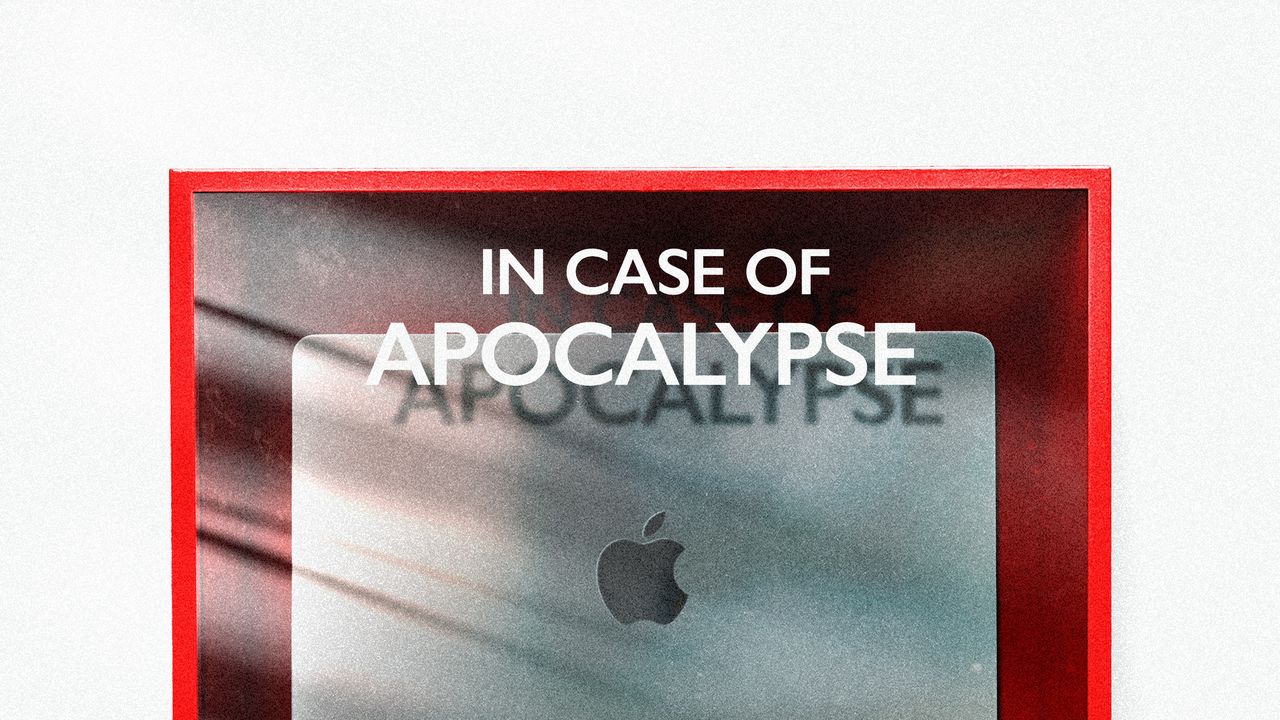
How Am I Supposed to Survive the Apocalypse Without My Phone?
Full Article
Original Source
Read the full article at Gq →KhanList aggregates and links to publicly available news content. We do not host full articles from third-party sources. Always verify important information with original sources.