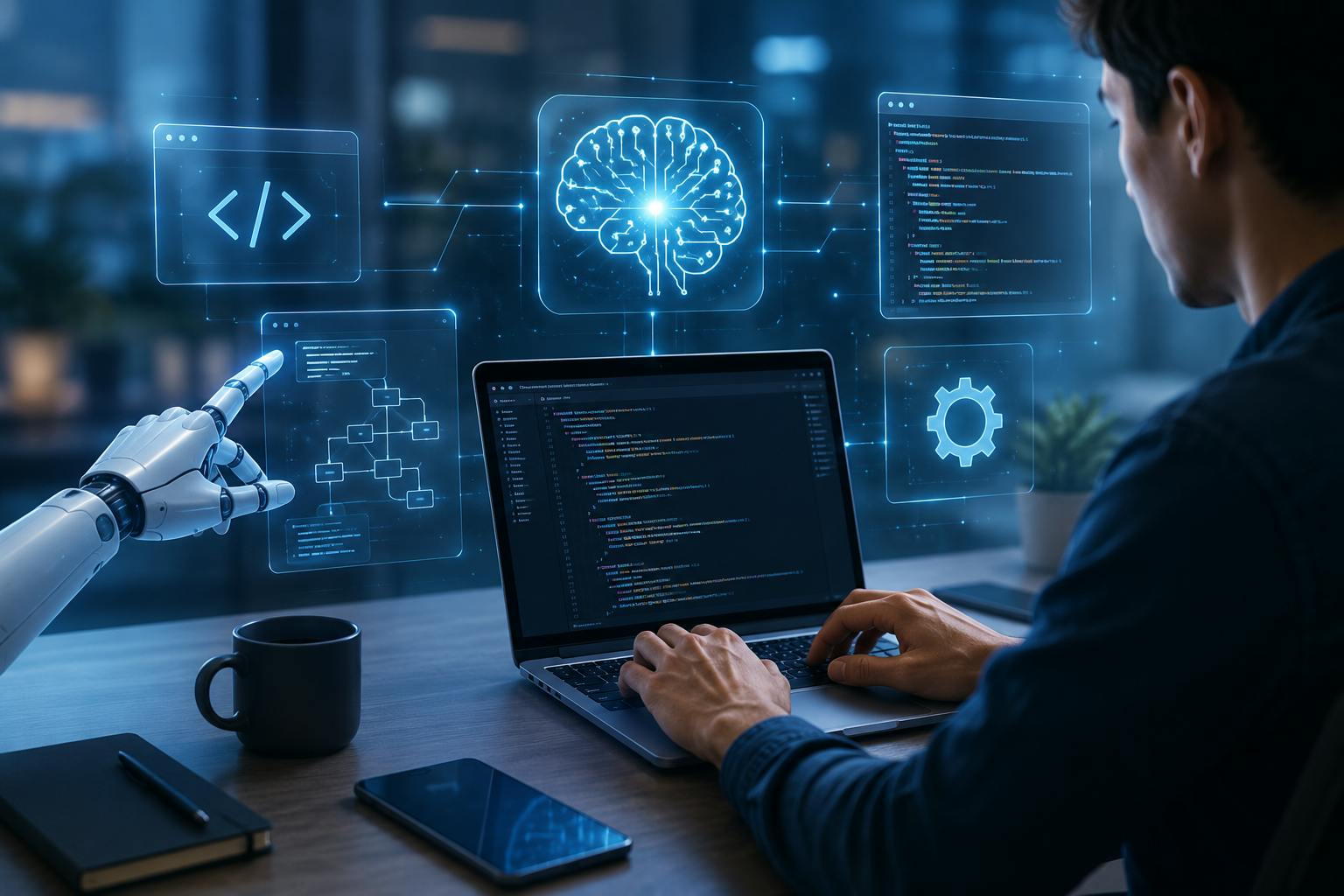
Software development is now at a transformative stage where artificial intelligence is no longer a vision of the future but a practical partner in daily workflows. Development teams are increasingly adopting AI-powered tools to achieve higher productivity, reduce manual effort, and improve the quality of output. The most interesting aspect of this shift is not only the speed at which it is occurring, but also how it is changing the way developers think, work, and solve problems. Engineers can now devote more time to innovation and strategic decision-making rather than repetitive coding tasks, ultimately leading to better software outcomes. Figure 1: Key features of AI-powered developer tools. This diagram shows how AI-assisted capabilities improve productivity and software quality across development workflows. Smarter Coding with AI Assistance Among the most evident transformations introduced by AI is the way code is written. AI-driven tools can analyze natural language inputs and generate code snippets or even entire functions, enabling developers to translate ideas into implementation much more quickly. This capability significantly reduces the need to write boilerplate code and minimizes the risk of human error. Intelligent autocompletion features are also used to suggest subsequent lines of code, making the coding process smoother and more efficient for developers. Consequently, coding becomes less of a routine typing task and more of a process of guiding and refining intelligent systems. Enhancing Testing and Debugging Efficiency Traditionally, testing and debugging are time-consuming stages of the software development lifecycle. AI makes these processes more efficient and proactive. AI-driven tools can analyze patterns within the codebase to identify bugs, vulnerabilities, and inefficiencies early in development. They can also generate comprehensive test cases that cover a wide range of scenarios, increasing the reliability of the software. This reduces post-release defects and improves overall software quality, as potential issues can be identified before they escalate. As a result, developers spend less time fixing problems and more time building valuable features. Example configuration for an automated CI pipeline that supports faster testing and issue detection: name: AI-Assisted CI Pipeline on: [push, pull_request] jobs: test: runs-on: ubuntu-latest steps: - uses: actions/checkout@v4 - name: Set up Python uses: actions/setup-python@v5 with: python-version: '3.11' - name: Install dependencies run: pip install -r requirements.txt - name: Run tests run: pytest Transforming the Software Development Lifecycle AI does not only apply to individual tasks but also to the entire software development lifecycle, from start to finish. During requirements analysis, AI can process natural language inputs to generate more detailed and accurate specifications. In the design phase, it can suggest appropriate architectures and simulate performance to reduce potential design flaws. AI also accelerates code generation and improves accuracy during development, while in testing it automates validation processes and provides broader coverage. Once deployed, AI continuously monitors systems, detects anomalies, and recommends improvements. The result of this end-to-end integration is increased productivity at every stage of development. Redefining the Role of Software Engineers The role of software engineers is shifting as AI takes over repetitive and routine tasks. Developers are no longer just code writers but are becoming designers of intelligent systems. They guide AI tools, evaluate outputs, and ensure that solutions align with project requirements and goals. This shift allows engineers to focus more on problem-solving, system design, and innovation in complex areas. Despite concerns about excessive automation, AI is not replacing engineers but serving as an additional tool. Human expertise remains essential, particularly in critical thinking, creativity, and decision-making. Boosting Productivity and Business Outcomes Productivity indicators and business performance are directly impacted by AI-improved developer tools. Firms that adopt such tools experience faster development cycles, reduced operational costs, and improved software quality. By automating repetitive processes and enhancing decision-making, AI enables teams to complete projects more efficiently and accurately. It also supports better resource allocation and project scheduling. This leads to reduced time to market and provides a competitive advantage in an increasingly digital world. Balancing Innovation with Responsibility Even though the advantages of AI are significant, its implementation should be approached carefully. The use of AI tools can lead to a decline in skills as developers rely less on expanding their foundational knowledge. Issues such as security, bias, and transparency must also be handled with care. Measures to mitigate these risks include human oversight, regular auditing, and clear documentation. By finding the right balance between automation and human judgment, organizations can benefit from AI without compromising reliability and ethical standards. The Future of Developer Productivity The application of AI in software development is evolving, and its prospects are significant. As tools become more advanced, workflows become less complicated, collaboration becomes more effective, and new creative opportunities emerge. However, the true value of AI lies in its ability to support human intelligence. By effectively using these tools while maintaining professional expertise, developers can thrive in this new environment. Ultimately, AI-powered developer tools are not only increasing productivity but also redefining how software is built in the modern world.
How AI Powered Developer Tools Are Transforming Software Engineering Productivity
Full Article
Original Source
Read the full article at Hackernoon →KhanList aggregates and links to publicly available news content. We do not host full articles from third-party sources. Always verify important information with original sources.