
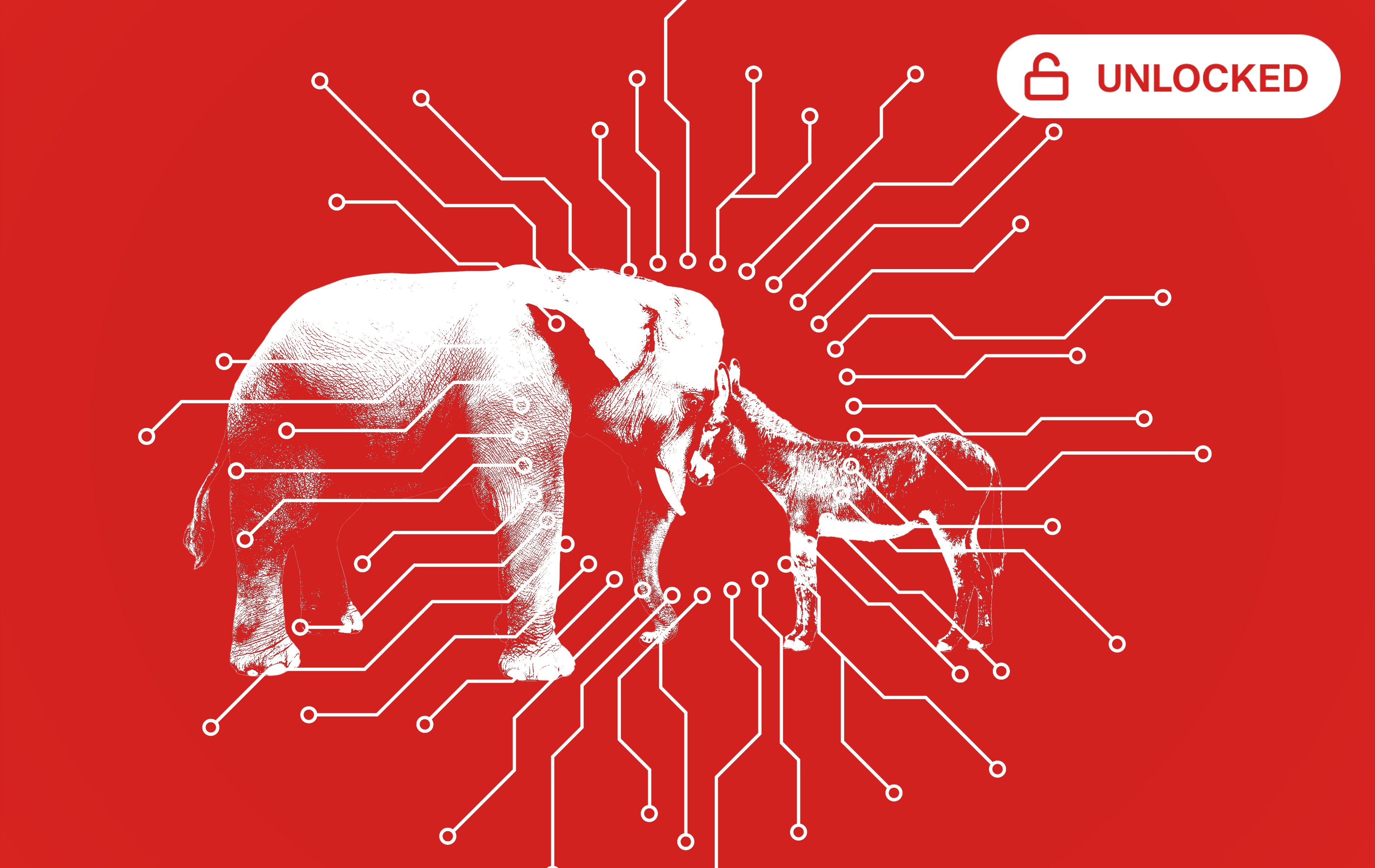
You’re reading Dispatch Markets, a weekly dive into the forces driving economic growth—and those holding it back—featuring Scott Lincicome, Kyla Scanlon, Karl Smith, Marian Tupy, and Adam Ozimek. Last week the Pentagon’s chief technology officer tweeted out a photo of President Donald Trump pumping his fist, with overlaid text saying, “Americanism, Not Effective Altruism.” The post itself said, “The United States will NEVER be an effective altruist country.” It’s safe to say that most of the 2.8 million viewers who saw it were left bewildered, a tiny fraction were outraged, and I was, as they say, shocked but not surprised. Let’s catch everyone up. Effective altruism is a community that began taking shape in the late 2000s around the premise that we not only have a duty to give to those in need but to do so in the most rationally effective way possible. The community’s membership was, from the beginning, I think it’s fair to say, nerd-heavy and extremely online. Over time, it morphed into a label for a certain Silicon Valley-centric subculture and the particular values it held dear. One of those values regarded the burgeoning field of artificial intelligence. This is where Trump comes in. Rebooting Our Politics Illustration by Noah Hickey/The Dispatch (Photos via Getty Images). Effective altruists were the earliest and most vocal proponents of heavily regulating and even banning AI altogether. These proposals are anathema to the Trump administration, which considers AI the central front in a growing cold war against China. Trump believes any attempt to restrict or slow the growth of U.S. AI capabilities plays into China’s hands. Hence, Trump’s Defense Department, and especially its Office of the Undersecretary for Research and Engineering, view effective altruists as thoroughly unpatriotic if not outright anti-American. Last week’s tweet was a product of the increasing attention that AI safety has received in the media over the last few weeks, after a former employee of OpenAI and later Anthropic blew the whistle on what he considered the reckless safety policies of both companies. Beyond that, however, the undersecretary’s office was formalizing the ideological battle lines between Republicans, whom the president expects to support all things AI, and Democrats, who are increasingly vocal in their skepticism—and in certain cases outright opposition—to the AI industry. As odd as all of this is—and it is odd—there is something predictable, even quixotically comforting, about watching the politics of AI play out like this. In a real way, Republicans and Democrats are gravitating toward their roots. The deep structure of U.S. political alignment. The Republican Party has long been the pro-business party, and Democrats the party of those who were skeptical of, if not openly hostile to, the business community. This dichotomy, more than any other, has defined the two parties’ relative positions through thick and thin. And it arises from foundational socioeconomic facts about the U.S. economy. Advertisement Stay ahead of the policies shaping free enterprise and impacting American business. Get the U.S. Chamber’s free newsletter for insights on the economic policy, workforce trends, and regulatory landscape that affect businesses and markets. By subscribing you agree to receive communications from the U.S. Chamber of Commerce. Something strange started to happen around the turn of the millennium that softened this dichotomy. It didn’t break down completely, but it weakened to the point that most major corporations were siding with Democrats on the most controversial issues of the day and that the electoral power of the Republican Party was grounded in working-class voters. It’s not entirely clear when this softening first began, but I think the last few years of the second Clinton administration are as good a place as any to mark the start. That administration presided over a record surge in stock prices thanks to the dot-com boom, and the stocks that surged most belonged to tech companies largely concentrated in the Bay Area, long a bastion of left-of-center politics. Notably, then-Vice President Al Gore, an early promoter of the internet, had a unique relationship with the very type of tech companies at the center of this boom. Gore was also a famously early voice on the dangers of climate change, which he argued, even then, would require new green technology. This coziness between the fastest-growing business sector in the country and the soon-to-be Democratic nominee for president was more than a product of Gore’s eccentricities. It reflected a deeper shift in the politics of profit: from an economy ruled by thermodynamically powered atoms to one dominated by electrically powered bits. A history of not-so-strange bedfellows. Since the mid-1800s, business—big business particularly—was associated with industrialization. Massive agglomerations of rock and steel, forged and fueled by the heat of oxidizing carbon. By their very nature, industrial businesses attracted certain enemies. As it turned out, the Republican Party emerged as the party protecting industrialists’ interests, while the Democratic Party evolved into the party advocating for their opponents. The most straightforward enemies of industrialization are environmentalists. By the late 1800s, long before anyone ever heard of climate change, Americans were becoming increasingly alarmed by the quantities of smoke, soot, and sludge that industry poured into the air and water as a necessary byproduct of normal operations. People varied in their level of alarm, with one end of the spectrum viewing pollution as a noxious but necessary evil and the other end as plain evil. The latter were the precursors of what we now think of as environmentalism. Environmentalism as a force to be reckoned with exploded in the mid-20th century, but the movement’s more storied institutions date back almost a century. And, as Breakthough Insitute founder and author Ted Nordhaus convincingly argues, the central organizing principle of core environmentalists has been, and remains to this day, opposition to the growth of heavy industry. That made it structurally impossible, Nixon notwithstanding, for environmentalism as a political movement to build a home in the Republican Party. And so, almost by default, it evolved into a core Democratic constituency. After environmentalists, the natural opponents of industry are readily identifiable core constituencies in the Democratic Party: labor unions, economic progressives, and what, for lack of a better word, might be called technocrats. Few people doubt the enduring animus between these groups and big business, or find their central position in the Democratic coalition surprising. Explaining it structurally, however, turns out to be a smidge more complex than you might assume. For starters, unlike environmentalists, none of the three are naturally opposed to industrialization per se. Labor unions—unlike tradecraft unions or guilds—depend on industrialization to exist. Tradecraft unions derive their power from their ability to collectively deprive the rest of the economy of access to their skills, either as workers or master teachers. Labor unions derive their power from their ability to collectively deprive industry owners of access to their machines. This is the power of the picket line. This power exists only because industrialization creates factories, railways, oil rigs, and other assets that can be hijacked. As these fixed concentrations of industrial production were replaced by office jobs that could be done in essentially any suitable commercial building, both the power of labor unions and their natural economic tension with big business declined. That’s a big part of what made the politics of the turn of the millennium what it was. But before we get to that, let’s briefly touch on the last two natural opponents of industry: economic progressives and technocrats. Building and operating a single factory, let alone an industrial empire, is radically unlike working for one. This isn’t true for all jobs. Being the managing partner of a giant law firm is very different from being a junior associate, but they are clearly gradations along the same spectrum. The same is true for most credentialed professions and tradecrafts. Crucially, hiring a bunch of junior associates or taking on lots of pipefitting apprentices today tends to boost the supply of potential law firm partners and master pipefitters tomorrow. As a consequence, the incomes of those at the bottom are, to some extent, naturally tethered to those at the top. Captains of industry, however, have had income and wealth completely untethered to that of their workers since the beginning, even their highly skilled workers. Andrew Carnegie’s fortune did not represent the going wage for an exceptionally good steelworker. It represented his ownership of an enterprise that could become more valuable without any particular worker’s skills becoming more valuable. Working in one of his mills was not an apprenticeship in becoming its owner. Incomes at the top of the ladder can be many times those at the bottom in many fields. Nonetheless, law firms with wealthy partners tend to have well-paid associates as well. Moreover, lawyers at every level tend to make more than welders but less than physicians of equal talent and experience within their fields. This is where economic progressives come in. They see people contributing to the same productive enterprise while the rewards accumulate on radically different terms. Becoming a better worker does not, by itself, close the distance. Nor does training more workers necessarily create more competitors for the owner. A progressive can consequently welcome the factory, want it to become more productive, and still think that the resulting distribution of income requires political correction. The owner, meanwhile, can quite sincerely believe that the money compensates him for having built something that otherwise would not exist. By technocrats I mean professionals who specialize in telling society how it ought to do things. This includes, of course, traditional experts in academia and the nonprofit sector along with “social planners” at all levels of government—traffic engineers, city zoning authorities, electricity grid operators, and regulators of all types and stripes. The tension here is straightforward. Private-sector industrialists and public-sector technocrats are the two sources of large-scale power in our economy. Laws that favor one’s discretion necessarily limit the other’s. Then software ate the world. When the dot-com bubble burst in 2000, the value of internet-based companies collapsed, but the internet’s effect on the U.S. economy only continued to accelerate. In 2000, Walmart’s revenue was more than 70 times that of Amazon. By 2005, Walmart’s lead had been cut in half. From 2005 to 2010, its lead was cut by another third. Across the economy, internet-based companies like Salesforce were coming to dominate the value chain of most American products. Software also enabled the coordination of massive global supply chains, accelerating the pace of deindustrialization. As Netscape co-founder turned venture capitalist Marc Andreessen would famously put it, software was eating the world. The shift profoundly affected the economic fundamentals of U.S. politics. The country’s biggest companies began to resemble engineering firms rather than industrial powerhouses. By 2010, Apple, the world’s largest consumer products company, was producing virtually its entire hardware line through contractors in Asia. As the commanding heights of the U.S. economy shifted from physical production to information and design, the tension between big business and environmentalism thinned. Over that same period, U.S. manufacturing employment, which had stagnated for decades, entered outright free fall, dropping from 17 million in 2001 to 11.5 million in 2010. With that collapse went what was left of industrial labor unions’ political power. The tech industry’s flattened structure also changed perceptions of the relationship between big business and income inequality. The founders of the new Silicon Valley megacorporations became insanely wealthy, but broadly distributed stock options ensured that their employees, especially those who had been there from the beginning, were not completely left behind. Lastly, an increasing number of founders came from academia and had close, respectful relationships with the technocratic class. That made them friendlier toward technocrats’ interests, but perhaps more importantly, it soothed expert concern about the lightly regulated tech sector. In one fell swoop, the Democratic Party’s structural opposition to big business largely collapsed. This is the world most of us have been living in for nearly two decades. The lack of economic-political alignment allowed culture wars to take center stage. The highly educated, urban, and socially liberal tech sector drifted toward supporting Democrats, while the GOP evolved into the party of the working class. Industrialization strikes back. AI, however, has almost overnight reimposed the old structural economic alignment between business and the Republican Party. AI requires massive data centers to operate. Even more importantly, data centers require enormous amounts of electrical power. Providing that infrastructure requires good old domestic industrialization. And naturally, the first enemies of that development were environmentalists. However, soon after them comes the technocratic class, whose fears about AI’s potential harms are expressed most eloquently by the community of effective altruists. That is what makes Trump’s tweet so predictable. As soon as advancing AI became synonymous with rapid reindustrialization, it was inevitable that the GOP would line up behind the industry and that Trump would signal that realignment in the most controversial way possible. Yet, this isn’t the end. The rest of the realignment is just as natural. Already, concerns about AI and income inequality are coming to the fore and stoking concerns among the left wing of the Democratic Party. Labor will be one of the pillars to move, but the rising demand for electricians, pipefitters, and construction workers of all stripes makes the return of some sort of politically powerful labor organizations inevitable. We are witnessing a dramatic but ultimately predictable realignment in American politics, and it’s just getting started. Markets FTW The rise of Barnes & Noble shows why the flexibility and dynamism of the free market can’t be beat. B&N rose to national prominence amid a wave of big-box retailers that emphasized size and uniformity. The idea was that centrally planned layout, inventory, and pricing could generate operating efficiencies that could in turn fund an enhanced consumer experience. This sort of success is the dream of many wide-eyed social planners who imagine a government-run economy can provide everything people want at prices everyone can afford. And indeed, free market proponents should be honest that there is something to this. The problem is backing down from centralization when it’s not working. Governments rarely pull that off, but James Daunt, the current CEO of Barnes & Noble, executed it brilliantly. Gaunt reversed the big-box model completely. He empowered individual stores to decide what books to carry and what prices to charge. He opened smaller outlets and hired more full-time staff, both moves that ran counter to the efficiency-first mantra of big-box retailers. And from the looks of it, Barnes & Noble seems to be thriving, with 60 new stores set to open this year. Chart of the Week At his Substack, economist and former Goldman Sachs chief foreign exchange strategist Robin J. Brooks discussed a proposed ban on U.S. diesel exports. While he concludes that a “diesel export ban at current prices is unlikely,” the chart below highlights why some vulnerable Republicans are pushing for one ahead of the midterms. Disclaimer: The opinions expressed above do not necessarily reflect those of the presenting sponsor.
How AI Is Driving Both Parties Back to Their Roots
Full Article
Original Source
Read the full article at Thedispatch →KhanList aggregates and links to publicly available news content. We do not host full articles from third-party sources. Always verify important information with original sources.